
Combined aerobic-resistance exercise: Dual efficacy and efficiency for hepatic steatosis: Study
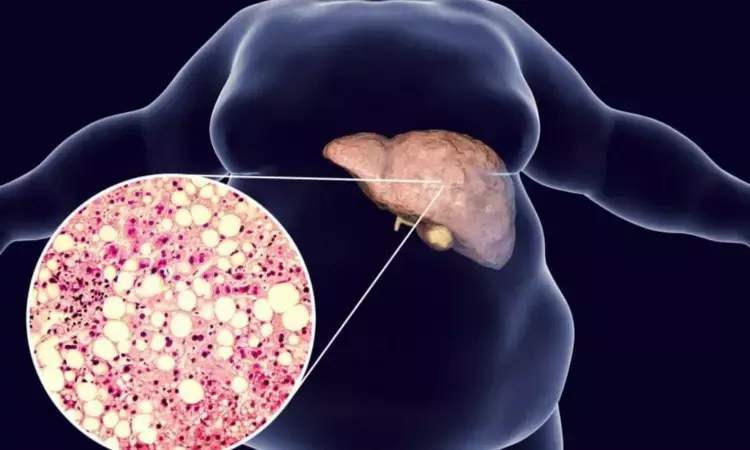


Hepatic steatosis is a core pathological feature of metabolic dysfunction-associated steatotic liver disease (MASLD). It not only drives disease progression to intrahepatic conditions such as cirrhosis but also elevates the incidence and mortality risk of cardiovascular diseases and extrahepatic malignancies. Importantly, hepatic steatosis is reversible in its early stages. Clinical practice guidelines recommend exercise intervention as the primary approach for treating the disease, and the concept of "exercise as medicine" is widely acknowledged.
In recent years, researchers have mainly evaluated how different components of exercise prescriptions affect health by using "dose-specific exercise interventions." Nevertheless, current evidence does not determine which type of exercise is best for reducing hepatic steatosis or explain how each type's dose relates to results. As a consequence, there is not enough information to confidently identify the optimal exercise dose that balances effectiveness and efficiency.
To address this gap, a systematic review made available online on January 12, 2026, in the Journal of Sport and Health Science by researchers from China, provides comprehensive evidence for refining key exercise doses and types to reduce hepatic steatosis in patients with MASLD. Titled "Dose‒response relationship between exercise and hepatic steatosis: A systematic review with Bayesian network meta-analysis of randomized controlled trials," this study synthesizes current randomized controlled trial evidence on exercise interventions for reducing hepatic steatosis.
Led by Associate Professor Chunxiang Qin's team from Central South University, with Dr. Xinyun Tan from the Xiangya School of Nursing as the first author, this study aims to address three core questions by evaluating the effects of different exercise types and doses on reducing hepatic steatosis: (1) Which exercise type is most effective for reducing hepatic steatosis? (2) What is the optimal dose for maximal efficacy? and (3) What is the minimum dose required to achieve a clinically significant difference?
To synthesize existing evidence, the authors conducted comprehensive literature searches across 12 Chinese and English databases, including PubMed, Web of Science, and Embase. They screened 1,892 records published from database inception to May 27, 2025, ultimately including 24 studies in the analysis. Two researchers independently performed a rigorous multi-stage screening process to minimize bias.
The results demonstrate a nonlinear dose-response relationship between exercise dose and hepatic steatosis. Initially, as exercise dose increases, hepatic benefits also increase: a dose exceeding 460 MET-min/week achieves the minimal clinical difference; benefits start to gradually plateau when the dose exceeds 630 MET-min/week; and maximum benefit is attained at 850 MET-min/week. Notably, this dose-response relationship exhibits type specificity, potentially linked to the distinct mechanisms by which different exercise types reduce hepatic steatosis. Specifically, engaging in a combination of aerobic and resistance exercise exceeding 130 MET-min/week is sufficient to produce clinically meaningful hepatic improvements.
Dr. Qin emphasizes that "combined aerobic and resistance exercise holds both therapeutic and dosage advantages for reducing hepatic steatosis," as it "may harness the complementary and synergistic effects of aerobic and resistance exercise to deliver more comprehensive benefits than either type alone." Additionally, the findings confirm that exercise intervention effects align with the "Extreme Exercise Hypothesis," indicating the existence of minimum and maximum safe doses for generating hepatic benefits.
The study also found that the efficacy of exercise in reducing hepatic steatosis may be influenced by factors such as individual disease status, medication use, and intervention duration. Therefore, it is advisable to tailor exercise prescriptions according to individual characteristics in order to optimize the outcomes achieved through exercise interventions.
Dr. Tan concludes that "while evidence-based synthesis has identified the optimal exercise dose and type for reducing hepatic steatosis, future research should validate the interaction between exercise dose and type through clinical trials." It is also necessary to develop and formulate personalized exercise prescriptions, refine exercise interventions into more precise, personalized tools, optimize individual exercise outcomes, and fully leverage the key role of exercise in enhancing population health.
Reference:
Xinyun Tan, Huihui Zou, Manjie Guo, Jiayu Liu, Xinjuan Huang, Ruoling Yu, Xuelian Liu, Chunxiang Qin,Dose‒response relationship between exercise and hepatic steatosis: A systematic review with Bayesian network meta-analysis of randomized controlled trials, Journal of Sport and Health Science, https://doi.org/10.1016/j.jshs.2026.101125.
