
COBRRA Trial: Apixaban Shows Lower Bleeding Risk Than Rivaroxaban in Acute VTE
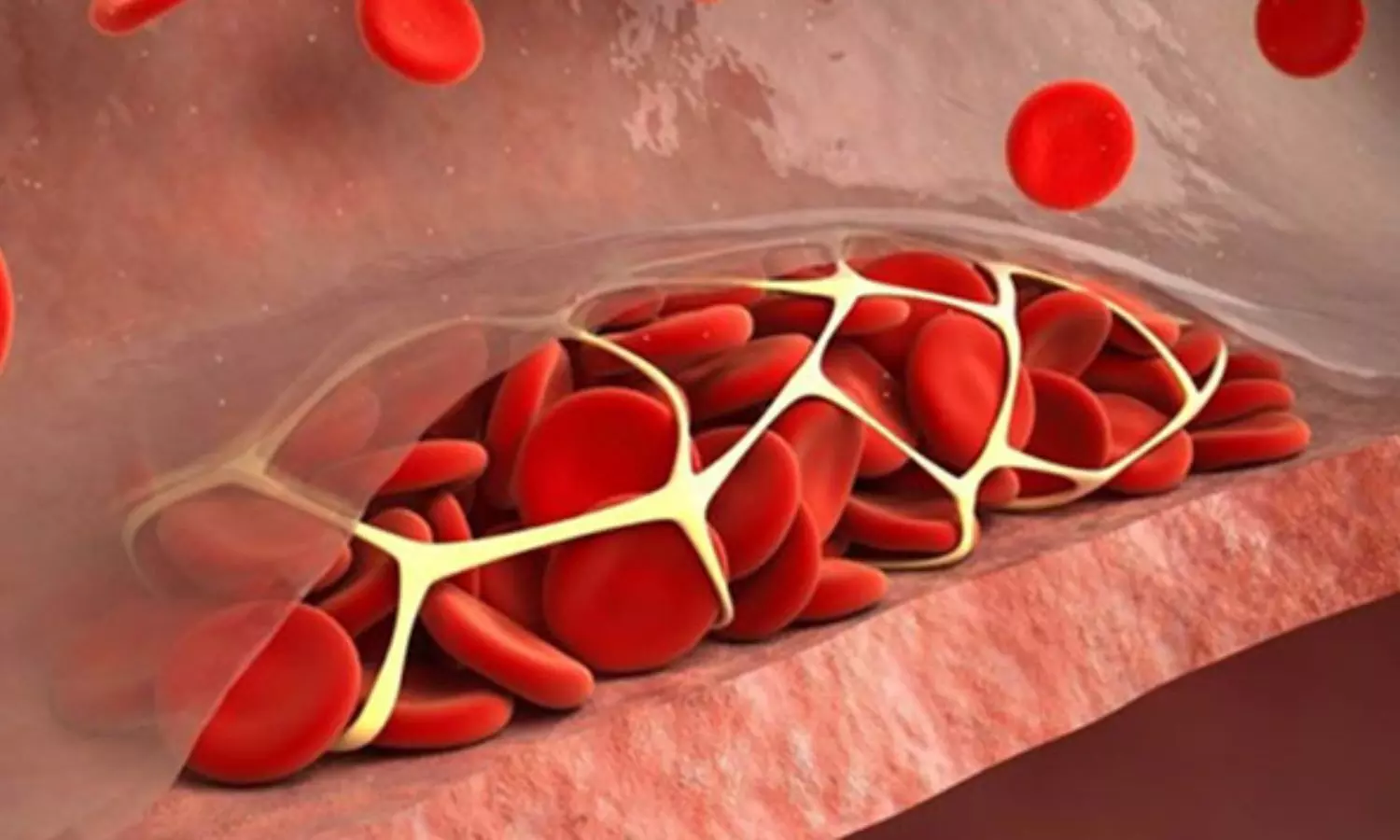


The COBRRA randomized trial that compared direct oral anticoagulants (DOACs) for acute venous thromboembolism (VTE), and found apixaban to be associated with a significantly lower risk of clinically relevant bleeding than rivaroxaban during the 3-month treatment period. The findings were published in The New England Journal of Medicine.
Both medications belong to a class of drugs known as DOACs and are widely prescribed globally against blood clots. However, physicians have long debated whether one carries a higher bleeding risk than the other, since anticoagulants can increase the risk of bleeding complications, while preventing clots.
Thus, this randomized clinical trial involving 2,760 patients diagnosed with acute symptomatic pulmonary embolism or proximal deep-vein thrombosis was carried out. The participants were randomly assigned to receive either apixaban or rivaroxaban for a treatment period of 3 months.
The trial had blinded evaluation of outcomes in patients assigned to apixaban received 10 mg twice daily for the first 7 days, followed by 5 mg twice daily. Those in the rivaroxaban group received 15 mg twice daily for 21 days, followed by 20 mg once daily. The primary goal of this study was clinically relevant bleeding during the 3-month treatment period. This included both major bleeding and clinically relevant non-major bleeding as defined by the International Society on Thrombosis and Haemostasis.
Clinically relevant bleeding occurred in 44 (3.3%) of 1,345 patients in the apixaban group and, 96 (7.1%) of 1,355 patients receiving rivaroxaban. The relative risk of this was translated to 0.46 and the bleeding risk in apixaban group was roughly half when compared to the rivaroxaban group.
All-cause mortality occurred in one patient in the apixaban group (0.1%) and 4 patients in the rivaroxaban group (0.3%). Although the numbers were small and the difference was not statistically conclusive, the results indicated no apparent safety disadvantage for apixaban.
Serious adverse events unrelated to bleeding or clot recurrence were reported in 36 patients (2.7%) receiving apixaban and 30 patients (2.2%) receiving rivaroxaban, which suggested broadly comparable safety profiles aside from bleeding risk.
While both medications remain effective options for preventing clot progression and recurrence, the lower bleeding risk observed with apixaban may influence prescribing decisions, particularly for patients already considered at higher risk of bleeding complications.
Reference:
Castellucci, L. A., Chen, V. M., Kovacs, M. J., Lazo-Langner, A., Greenstreet, P., Kahn, S., Côté, B., Schulman, S., de Wit, K., Douketis, J., Suryanarayan, D., Wan, T., Yeo, E., Le Templier, G., Tran, H. A., Willcox, A., Crowther, H. J., Prasad, R., Shivakumar, S., … Rodger, M. (2026). Bleeding risk with apixaban vs. Rivaroxaban in acute venous thromboembolism. The New England Journal of Medicine, 394(11), 1051–1060. https://doi.org/10.1056/nejmoa2510703

