
Exchange Transfusion Improves Outcomes in Severe Babesiosis, reveals research
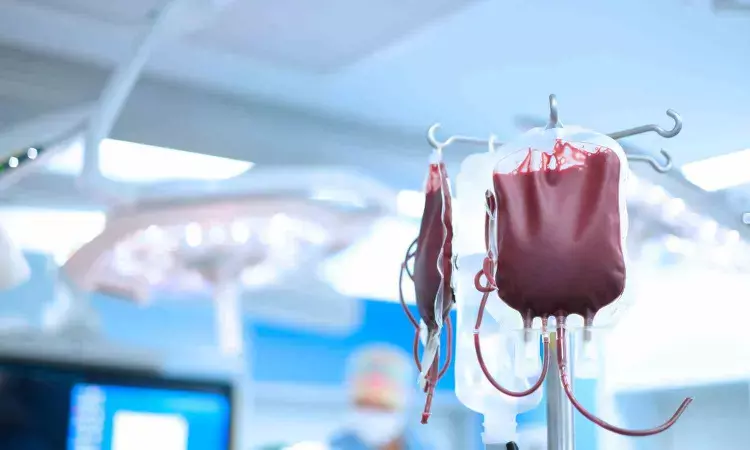
Blood transfusion


A new research published in the Journal of the American Medical Association showed that red blood cell exchange transfusion (ET) is associated with significantly improved clinical outcomes in patients with severe babesiosis.
Babesiosis, caused by parasites that infect red blood cells, can lead to life-threatening complications, particularly in older adults or those with weakened immune systems. Severe cases are often marked by high levels of parasites in the blood (parasitemia), organ damage, or significant hemolytic anemia.
While ET essentially replaces the infected red blood cells of a patient with healthy donor cells, it has long been used in critical cases where its true effectiveness has remained uncertain due to limited data. With tick populations expanding and cases rising globally, this study was set to justify early and aggressive intervention with ET in the most critically ill patients.
This trial emulation used data from 3,233 adults hospitalized with babesiosis between 2010 and 2024 across 82 medical centers in the northeastern US. From this group, 629 patients met criteria for severe disease and were included in the analysis. About one-third (33.2%) received ET within the first 7 days of hospitalization.
The patients who underwent ET were initially more severely ill, with significantly higher median parasitemia levels of 14.0% when compared to 7.2% in those who did not receive ET. However, advanced statistical adjustments were applied to balance differences in baseline severity between the groups, which allowed for a more accurate comparison of outcomes.
The results found only 3.6% of patients treated with ET to experience a composite of in-hospital death or 30-day readmission which was the primary endpoint when compared to 9.8% of those who did not receive the treatment. After adjustment, this translated to a nearly 5-fold reduction in risk (adjusted odds ratio of 0.22). The findings remained consistent across multiple sensitivity analyses, which reinforced the robustness of the results.
While the findings strongly support ET as a beneficial adjunct therapy in severe babesiosis, the study is observational in nature. This means that unmeasured factors could still influence outcomes. Further research is imperative to determine precisely which patients benefit most from the procedure and to refine treatment guidelines.
Source:
STOP-BABESIOSIS Investigators, Leaf, D. E., Monson, A. E., Dias, J.-A., Marcos, L. A., Wu, U., Rossi, M., Ng, J. H., Patell, R., Hundert, J., El Khoury, M. Y., Higgs, J., Smith, R. P., Ramsaroop, V., Green, A., Abdul Azim, A., Weisenberg, S., Kirkman, L. A., Ingram, D., … Krause, P. J. (2026). Red blood cell exchange transfusion for severe babesiosis. JAMA Internal Medicine. https://doi.org/10.1001/jamainternmed.2026.0244

