Humanized Medicine in 2026
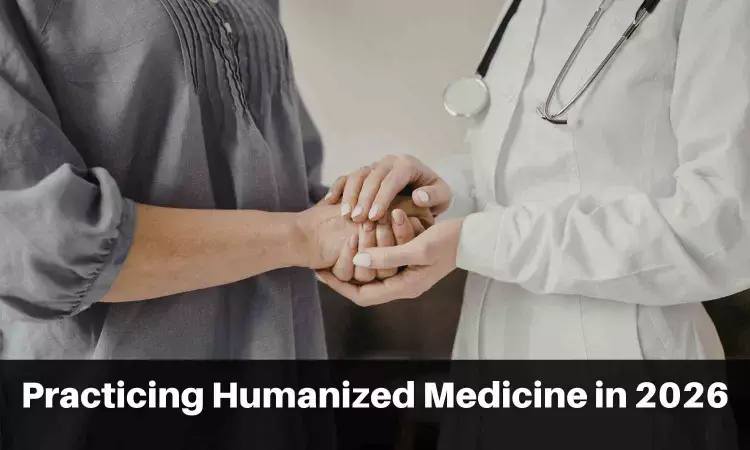


As health systems worldwide enter a new year marked by rapid technological expansion, rising costs, and ageing populations, a fundamental question confronts policymakers and healthcare leaders alike: Is modern medicine advancing in wisdom as quickly as it advances in capability?
Medicine has always mirrored the era that shaped it. In earlier centuries, philosophy guided medical thought, framing illness through ideas of destiny and meaning, influenced by thinkers such as Plato. While intellectually rich, this era often left suffering unrelieved and patients obscured by abstract ideals.
The scientific revolution transformed medicine decisively. Observation replaced speculation. Francis Bacon reframed knowledge as a tool for practical benefit and the relief of human suffering. This shift laid the foundations of modern healthcare—evidence-based, measurable, and increasingly effective.
Today, technology defines the global medical landscape. Diagnostics are more precise, interventions are more sophisticated, and guidelines are increasingly standardized across countries and systems. Outcomes are measured, benchmarked, and audited. By conventional indicators, medicine has never been more successful.
Yet this progress carries an emerging paradox.
Patients survive—but health systems are increasingly confronted with outcomes that data does not fully capture. Loss of independence, cognitive decline, emotional instability, and erosion of dignity frequently follow technically successful interventions, particularly among older adults and those with chronic illness. These consequences rarely appear in performance metrics, yet they profoundly shape post-treatment lives.
Policy Reflection: What We Choose to Measure Ultimately Defines What We Value
Humanized medicine does not reject science, technology, or guidelines. It seeks to complete them. Disease does not exist in isolation; it exists within a body—and that body is inhabited by a person with values, priorities, social roles, and limits. Treating disease without understanding its impact on the person leads not to failure, but to incompleteness.
This challenge is most visible in ageing societies—a global reality across high-, middle-, and low-income countries alike. As biological reserve declines, interventions carry broader consequences. Procedures that extend survival may increase dependency. Treatments that meet guideline criteria may conflict with personal values or societal contexts.
Policy Implications: Evidence Can Guide Systems; Judgement Must Guide Decisions
In this context, informed consent must evolve beyond legal compliance. It must become a process of alignment—between clinical possibilities and personal goals. Health policy must support time, structure, and training for such conversations, recognizing that ethical care is not an obstacle to efficiency, but a safeguard against unintended harm.
Humanized medicine calls for integration—not retreat. It asks health systems to complement technological excellence with ethical foresight, and population-level guidance with individual-level judgement. It encourages policymakers to value outcomes that include dignity, autonomy, and functional independence alongside survival and cost-effectiveness.
As global health leaders plan for the year ahead, the choice is not between innovation and compassion. The choice is whether innovation will remain technically impressive—or become meaningfully humane.
Final Word:
The future of healthcare will be defined not only by what systems can deliver, but by whether those systems remember the person living inside the body they serve.