
- Home
- Medical news & Guidelines
- Anesthesiology
- Cardiology and CTVS
- Critical Care
- Dentistry
- Dermatology
- Diabetes and Endocrinology
- ENT
- Gastroenterology
- Medicine
- Nephrology
- Neurology
- Obstretics-Gynaecology
- Oncology
- Ophthalmology
- Orthopaedics
- Pediatrics-Neonatology
- Psychiatry
- Pulmonology
- Radiology
- Surgery
- Urology
- Laboratory Medicine
- Diet
- Nursing
- Paramedical
- Physiotherapy
- Health news
- Fact Check
- Bone Health Fact Check
- Brain Health Fact Check
- Cancer Related Fact Check
- Child Care Fact Check
- Dental and oral health fact check
- Diabetes and metabolic health fact check
- Diet and Nutrition Fact Check
- Eye and ENT Care Fact Check
- Fitness fact check
- Gut health fact check
- Heart health fact check
- Kidney health fact check
- Medical education fact check
- Men's health fact check
- Respiratory fact check
- Skin and hair care fact check
- Vaccine and Immunization fact check
- Women's health fact check
- AYUSH
- State News
- Andaman and Nicobar Islands
- Andhra Pradesh
- Arunachal Pradesh
- Assam
- Bihar
- Chandigarh
- Chattisgarh
- Dadra and Nagar Haveli
- Daman and Diu
- Delhi
- Goa
- Gujarat
- Haryana
- Himachal Pradesh
- Jammu & Kashmir
- Jharkhand
- Karnataka
- Kerala
- Ladakh
- Lakshadweep
- Madhya Pradesh
- Maharashtra
- Manipur
- Meghalaya
- Mizoram
- Nagaland
- Odisha
- Puducherry
- Punjab
- Rajasthan
- Sikkim
- Tamil Nadu
- Telangana
- Tripura
- Uttar Pradesh
- Uttrakhand
- West Bengal
- Medical Education
- Industry
First Reported Case of Naproxen-Induced Renal Cortical Necrosis
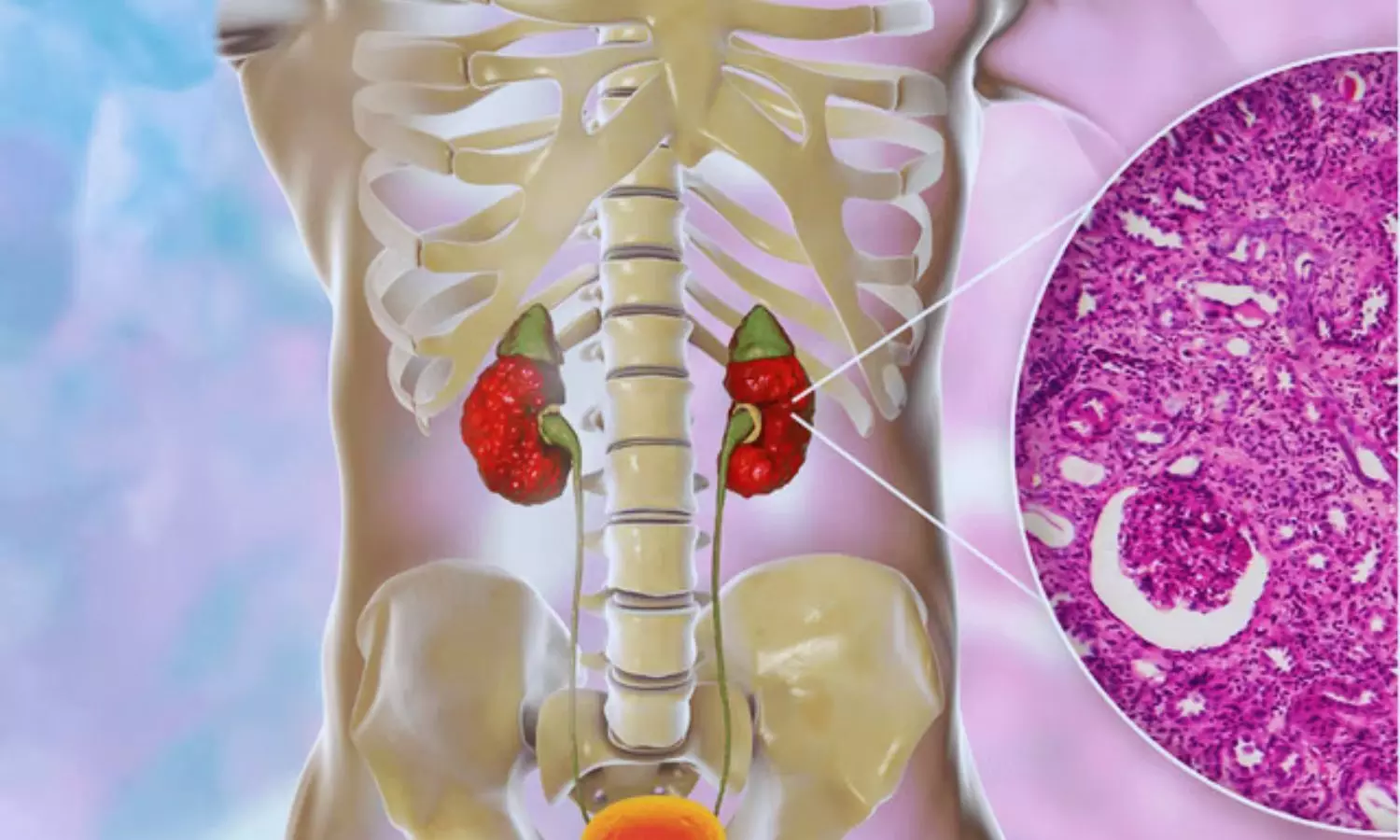


India: A rare case report describes the first documented instance of naproxen-induced renal cortical necrosis occurring alongside acute interstitial nephritis. This unusual combination highlights the potential for severe NSAID-related kidney injury and highlights the importance of early recognition. Clinicians should maintain a high index of suspicion for kidney dysfunction in patients presenting with signs of kidney dysfunction, as prompt diagnosis and treatment may significantly affect outcomes.
Drug-induced acute interstitial nephritis (AIN) is a well-recognized cause of acute kidney injury (AKI), commonly triggered by medications such as nonsteroidal anti-inflammatory drugs (NSAIDs), antibiotics, and proton pump inhibitors. Renal cortical necrosis (RCN), in contrast, is an uncommon cause of AKI resulting from prolonged and severe reduction in blood flow to the renal cortex. Although NSAIDs have previously been associated with several forms of kidney injury, reports of NSAID-related cortical necrosis are exceptionally rare.
In a case report published in the Indian Journal of Nephrology, Christine M. Jane and colleagues from the Department of Nephrology, Aster Medcity Hospital, Kochi, Kerala, described what they believe is the first reported case of renal cortical necrosis associated with naproxen use.
The case involved a 62-year-old man with poorly controlled type 2 diabetes, diabetic retinopathy, proteinuria, and hypertension who had taken naproxen 500 mg twice daily for one week to treat migraine. He later presented with fever, nausea, vomiting, breathlessness, bilateral flank pain, and leg swelling.
Investigations showed acute kidney injury with elevated serum creatinine, metabolic acidosis, electrolyte abnormalities, and marked eosinophilia. Imaging revealed mildly enlarged kidneys without obstruction. Although acute pyelonephritis was initially suspected and antibiotics were started, blood and urine cultures remained sterile, and extensive testing excluded infectious, autoimmune, vascular, and toxic causes. Despite treatment, renal function rapidly worsened, progressing to oligoanuric renal failure requiring hemodialysis.
Rising eosinophil counts prompted suspicion of a drug-induced reaction. A renal biopsy revealed patchy renal cortical necrosis along with eosinophilic inflammatory infiltrates and interstitial edema, confirming acute interstitial nephritis. No evidence of vasculitis, vascular obstruction, thrombotic microangiopathy, or immune complex disease was found.
Based on the clinical course, biopsy findings, and exclusion of other causes, the kidney injury was attributed to recent naproxen use.
The patient was treated with oral prednisolone and continued on dialysis. Kidney function gradually improved, with serum creatinine falling to 2.6 mg/dL, and dialysis was discontinued after six weeks. Steroids were subsequently tapered and stopped.
The authors highlighted that the coexistence of renal cortical necrosis and acute interstitial nephritis following NSAID exposure is exceptionally rare and stressed the importance of early recognition due to its potential impact on prognosis and management.
Reference:
Jane, C. M., Unni, V. N., Kumar, K. V., Kachare, N., Prasannan, B., & Pullockara, J. K. (2020). Naproxen Induced Acute Interstitial Nephritis with Renal Cortical Necrosis. Indian Journal of Nephrology, 30(5), 334. https://doi.org/10.4103/ijn.IJN_75_19

MSc. Biotechnology
Medha Baranwal holds a Bachelor’s degree in Biomedical Sciences from the University of Delhi and a Master’s degree in Biotechnology from Amity University. Since May 2018, she has been contributing to Medical Dialogues, writing and editing medical news articles that translate complex research into clear, accessible information for healthcare professionals.
Dr Kamal Kant Kohli-MBBS, DTCD- a chest specialist with more than 30 years of practice and a flair for writing clinical articles, Dr Kamal Kant Kohli joined Medical Dialogues as a Chief Editor of Medical News. Besides writing articles, as an editor, he proofreads and verifies all the medical content published on Medical Dialogues including those coming from journals, studies,medical conferences,guidelines etc. Email: drkohli@medicaldialogues.in. Contact no. 011-43720751