HCQ-Induced Renal Phospholipidosis linked to Proximal Tubulopathy: Study
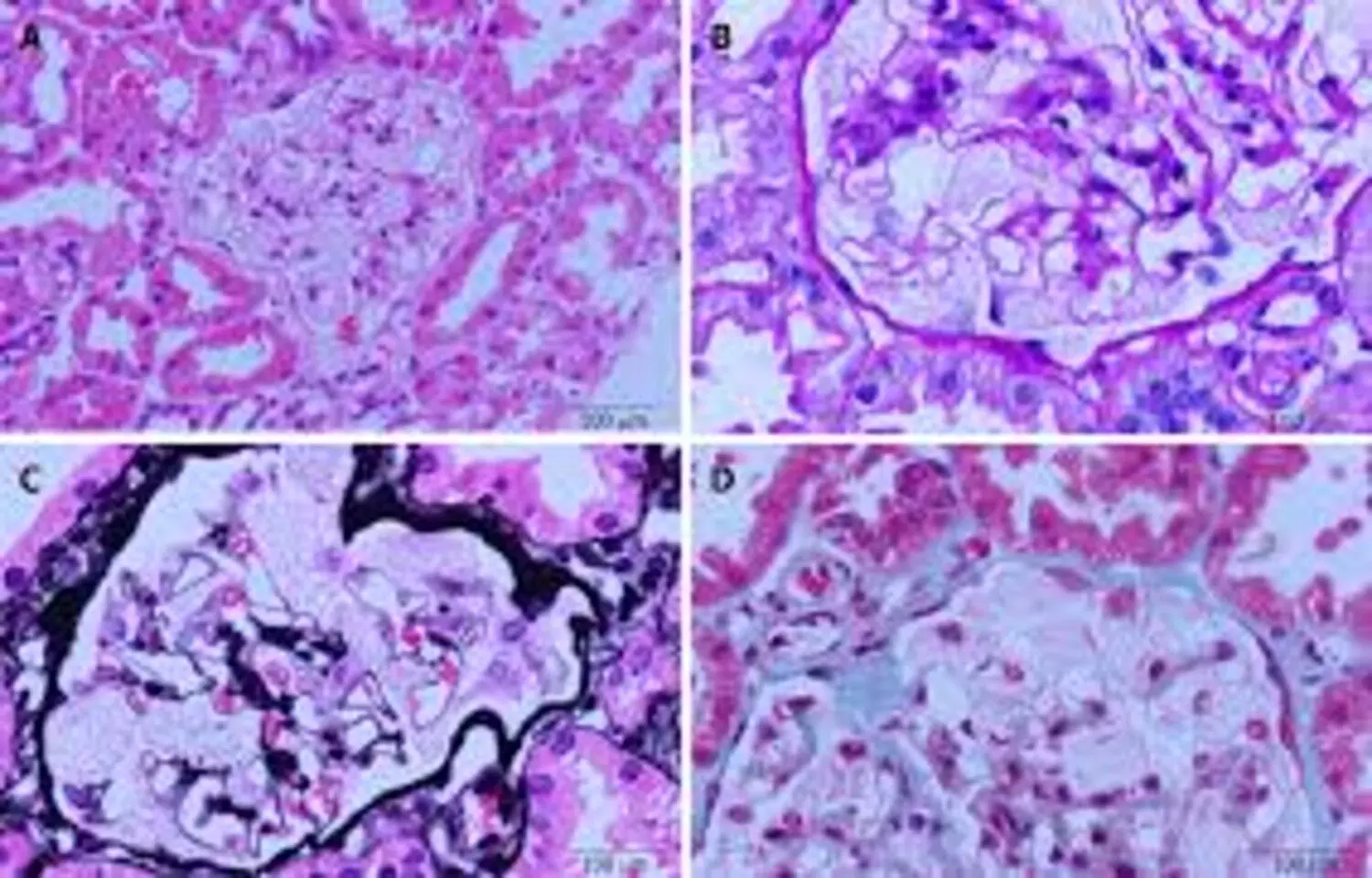


Researchers have found in a new study that HCQ-related renal phospholipidosis can present as clinically significant proximal tubulopathy, not just a silent histological finding.The mechanism likely involves tubular secretion of HCQ leading to lysosomal and transporter dysfunction, similar to LCPT without crystal formation and CINAC.
Routine monitoring focused on glomerular markers may miss this complication. Further assessment of tubular function markers in HCQ-treated patients may allow earlier detection. Hydroxychloroquine (HCQ)-induced renal phospholipidosis typically manifests as glomerular “zebra bodies”, “myeloid bodies”, and “curvilinear bodies” and is generally considered a benign histological mimic of Fabry disease. We report a case of HCQ-induced renal phospholipidosis with proximal tubulopathy presenting as slowly progressive kidney dysfunction and Fanconi syndrome, challenging the notion that renal phospholipidosis is clinically silent.
A 36-year-old woman with systemic lupus erythematosus (SLE) treated with HCQ for 18 months presented with slowly progressive kidney dysfunction. Urinalysis showed minimal proteinuria and no active sediment suggestive of a lupus nephritis flare; however, urinary markers of tubular injury were markedly elevated. She exhibited normoglycemic glycosuria, pan-aminoaciduria, hypophosphatemia, hypouricemia, and metabolic acidosis, consistent with mild but distinct Fanconi syndrome. Her estimated glomerular filtration rate (eGFR) slope rapidly declined at − 11.2 mL/min/1.73 m²/year during HCQ treatment. Kidney biopsy revealed glomerular z"zebra bodies”, “myeloid bodies”, and “curvilinear bodies” characteristic of HCQ-induced renal phospholipidosis, as well as lysosomes filled with electron-dense granules within glomeruli. Notably, lysosomes filled with electron-dense granules were also abundant in proximal tubular epithelial cells, resembling the “lysosomal accumulation of light chains” seen in light chain proximal tubulopathy (LCPT) without crystal formation and “lysosomes containing dark electron-dense aggregates” of chronic interstitial nephritis in agricultural communities (CINAC). Extensive clinical, biochemical, genetic, and histological evaluations excluded Fabry disease. Immunofluorescence demonstrated globotriaosylceramide (Gb3) minor and patchy positivity accumulation in both glomeruli and proximal tubules, suggesting that lysosomal metabolic dysfunction occurred similarly in glomerular cells and tubular epithelial cells. Based on these findings, a diagnosis of proximal tubulopathy secondary to HCQ-induced renal phospholipidosis was made. HCQ discontinuation resulted in the resolution of Fanconi syndrome and improvement of the eGFR slope to + 0.9 mL/min/1.73 m²/year.
This case indicates that HCQ-induced renal phospholipidosis is not merely a silent histological finding but can manifest as clinically significant proximal tubulopathy. The pathophysiology likely involves active tubular secretion of HCQ causing rapid lysosomal and transporter dysfunction analogous to LCPT without crystal formation and CINAC. While standard monitoring for lupus nephritis focuses on glomerular markers, monitoring tubular function markers in HCQ-treated patients may enable early detection of this potentially underdiagnosed complication.
Reference:
Manabe, S., Seki, M., Ushio, Y. et al. Hydroxychloroquine-induced renal phospholipidosis manifesting as proximal tubulopathy in systemic lupus erythematosus. BMC Nephrol (2026). https://doi.org/10.1186/s12882-026-05021-w
Keywords:
Manabe, S., Seki, M., Ushio, Y., Hydroxychloroquine-induced, renal, phospholipidosis, manifesting, proximal, tubulopathy, systemic lupus erythematosus.