Botulinum Toxin A Shows Benefit in Refractory Bladder Neck Obstruction in Women: Study
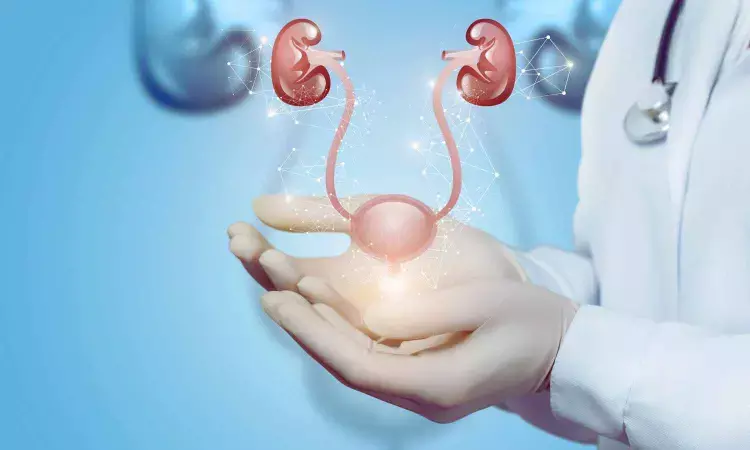


Bladder neck obstruction (BNO) in women has limited therapeutic options. Injection of botulinum toxin A (BoNT-A) into the bladder neck may be a viable treatment, as it has demonstrated improvements in pain, lower urinary tract symptoms (LUTS), and post-void residual (PVR) volumes in patients with refractory BNO.
Primary bladder neck obstruction occurs when the bladder neck fails to open during voiding. The cause of primary bladder neck obstruction is not fully understood but may be related to smooth muscle hypertrophy, increased collagen deposition, or sympathetically mediated high-tone smooth muscle of the urethra.
As there is symptom overlap with other urinary pathology, diagnosis is challenging, and there are limited treatments with a paucity of data. Onabotulinum toxin A to the bladder neck has shown improvement in symptoms caused by primary bladder neck obstruction in women in a small retrospective study. We aimed to prospectively analyze the therapeutic efficacy of onabotulinum toxin A to the bladder neck as a treatment option for women with primary bladder neck obstruction.
They performed a pilot study recruiting female patients with pelvic pain and primary bladder neck obstruction from September 2023 to July 2024. Patients were diagnosed with primary bladder neck obstruction using the urodynamic Nitti Criteria, patient symptoms of hesitancy, straining, and/or dysuria, and cystoscopic evidence suggesting primary bladder neck obstruction. Patients were assessed prior to onabotulinum toxin A injection to the bladder neck and 4–6 weeks post-procedure.
The procedure consisted of 100 units of onabotulinum toxin A reconstituted to 2 milliliters of Marcaine or saline, with 0.5 milliliters injected cystoscopically at 10, 2, 5, and 7 o'clock in the bladder neck. The primary outcome was the change in the Female Genitourinary Pain Index Scale (Female Genitourinary Pain Index, scores range from 0 to 44, lower scores are better). Secondary outcomes pre-procedure versus post-procedure included the Pelvic Floor Distress Index-20 (Pelvic Floor Distress Index-20, scores range from 0 to 300, lower scores are better), a pain visual analogue scale (visual analogue scale, ranging from 0 no pain to 10 worst pain), and post-void residual volumes. The Global Response Assessment (Global Response Assessment, −3 to +3, +3 better) was included post-procedure. Data were analyzed using descriptive statistics, and outcomes were compared using the Wilcoxon signed-rank test.
Twenty-two female patients with primary bladder neck obstruction were recruited to our study. Patients had significant improvement in the Female Genitourinary Pain Index with a decrease in scores from a median of 34.5 (interquartile range 31−36) pre-bladder neck onabotulinum toxin A to 26 (20.3–29.8) post-procedure (p = 0.002). The Pain, Urination, and Quality of Life subscales of the Female Genitourinary Pain Index all demonstrated significant improvement (all p < 0.05). Median improvement on the Global Response Assessment was 1.4 (standard deviation 1.4). Compared to baseline, there was improvement in the Urinary Distress Index-6 subscale (p = 0.012) but not in overall Pelvic Floor Distress Index-20 total scores, which includes prolapse and bowel symptoms in addition to the Urinary Distress Index-6 (p = 0.161). The median post-void residual prior to treatment was 126 milliliters (interquartile range 50−193), and after treatment decreased to 28 (14−59) (p < 0.001).
Primary bladder neck obstruction in women encounters limited therapeutic options. Onabotulinum toxin A to the bladder neck may be considered. Onabotulinum toxin A to the bladder neck demonstrated improvement in pain, lower urinary tract symptoms, and post-void residual volumes in those with refractory primary bladder neck obstruction.
Reference:
B. L. Roberts, D. Bibicheff, and E. J. B. De, “ Onabotulinum Toxin A Is a Viable Intervention for Bladder Neck Obstruction in Women: A Prospective Pilot Study of Patient Reported Outcomes,” Neurourology and Urodynamics 0 (2026): e70240. https://doi.org/10.1002/nau.70240.