
Higher Protein Intake Not Linked to Faster Kidney Function Decline: Study
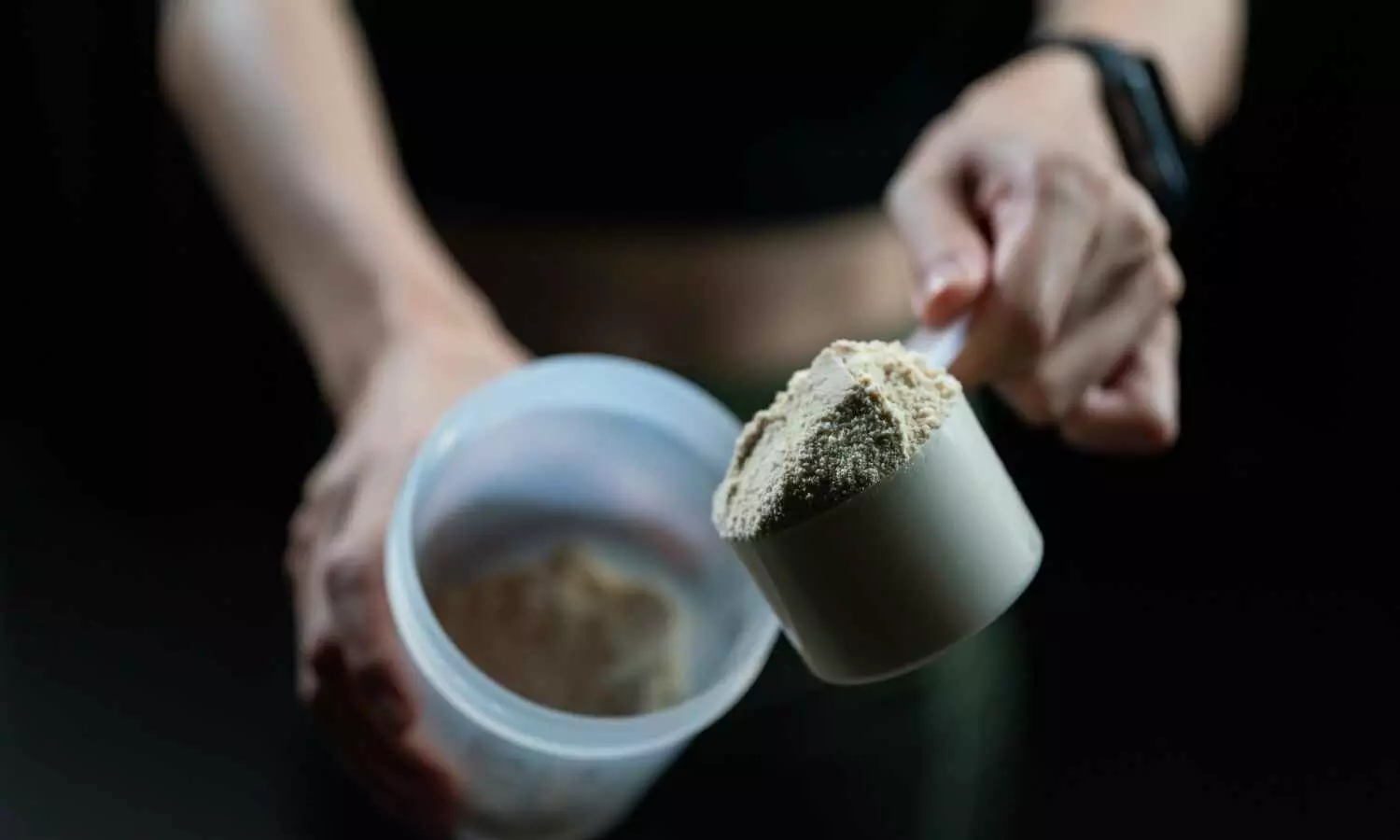


A new study published in Clinical Kidney Journal showed that among middle-aged and older persons, higher habitual protein consumption was not linked to a quicker deterioration in renal function.
Diets heavy in protein can momentarily increase the kidneys' workload and result in hyperfiltration, or an increase in glomerular filtration. This has sparked worries that consuming a lot of protein over time may hasten kidney impairment. It is still unclear if protein restriction helps prevent kidney disease in otherwise healthy persons, even though it is advised for some individuals with severe chronic kidney disease. Thus, using repeated measurements of iohexol-measured GFR (mGFR), this study investigated whether increased protein intake is linked to a deterioration in renal function.
The Renal Iohexol Clearance Survey, a population-based cohort with recurrent mGFR measurements across follow-up (n = 1324), provided the data for this analysis. A validated food-frequency questionnaire was used to assess baseline protein consumption. Logistic regression, interval-censored Cox regression, and linear mixed models were used to evaluate associations between protein consumption and GFR decline rate, accelerated GFR decline (the top 10% with the sharpest yearly declines), and incident mGFR <60 ml/min/1.73 m².
The mean baseline mGFR was 89 ml/min/1.73 m², the mean age was 64 years, and 50% of the participants were female. 10 years was the median follow-up. The lowest quartile consumed less than 0.9 g/kg/day, while the top quartile consumed more than 1.4 g/kg/day.
The average reported protein consumption was 1.2 ± 0.5 g/kg/day. There was no correlation between protein consumption and mGFR decrease [−0.01 ml/min/1.73 m² per year (95% CI −0.04 to 0.02) for 0.1 g/kg/day greater protein intake]. Protein consumption did not correlate with incident mGFR <60 ml/min/1.73 m² or accelerated GFR decline.
Overall, these data from a population-based cohort with recurrent iohexol-based GFR assessments over a ten-year period indicate that higher self-reported protein consumption is not linked with GFR deterioration. In middle-aged and older individuals without established chronic kidney disease, higher protein consumption within commonly consumed ranges was not associated with a faster decline in renal function. These results suggest that protein restriction may not be an effective lifestyle option for avoiding chronic kidney disease.
Source:
Rinde, L. B., Hopstock, L. A., Lundblad, M. W., Rinde, N. B., Brobak, K.-M., Norvik, J. V., Enoksen, I.-T., Solbu, M. D., Fuskevåg, O.-M., Carrero, J.-J., Carlsen, M. H., Eriksen, B. O., & Melsom, T. (2026). Higher habitual protein intake is not linked to decline of iohexol-measured GFR in adults ≥40 years. Clinical Kidney Journal, 19(8), sfag235. https://doi.org/10.1093/ckj/sfag235

