
Low-Position Double-Tunnel Surgery Reduces Early PD Catheter Displacement, Suggests Study
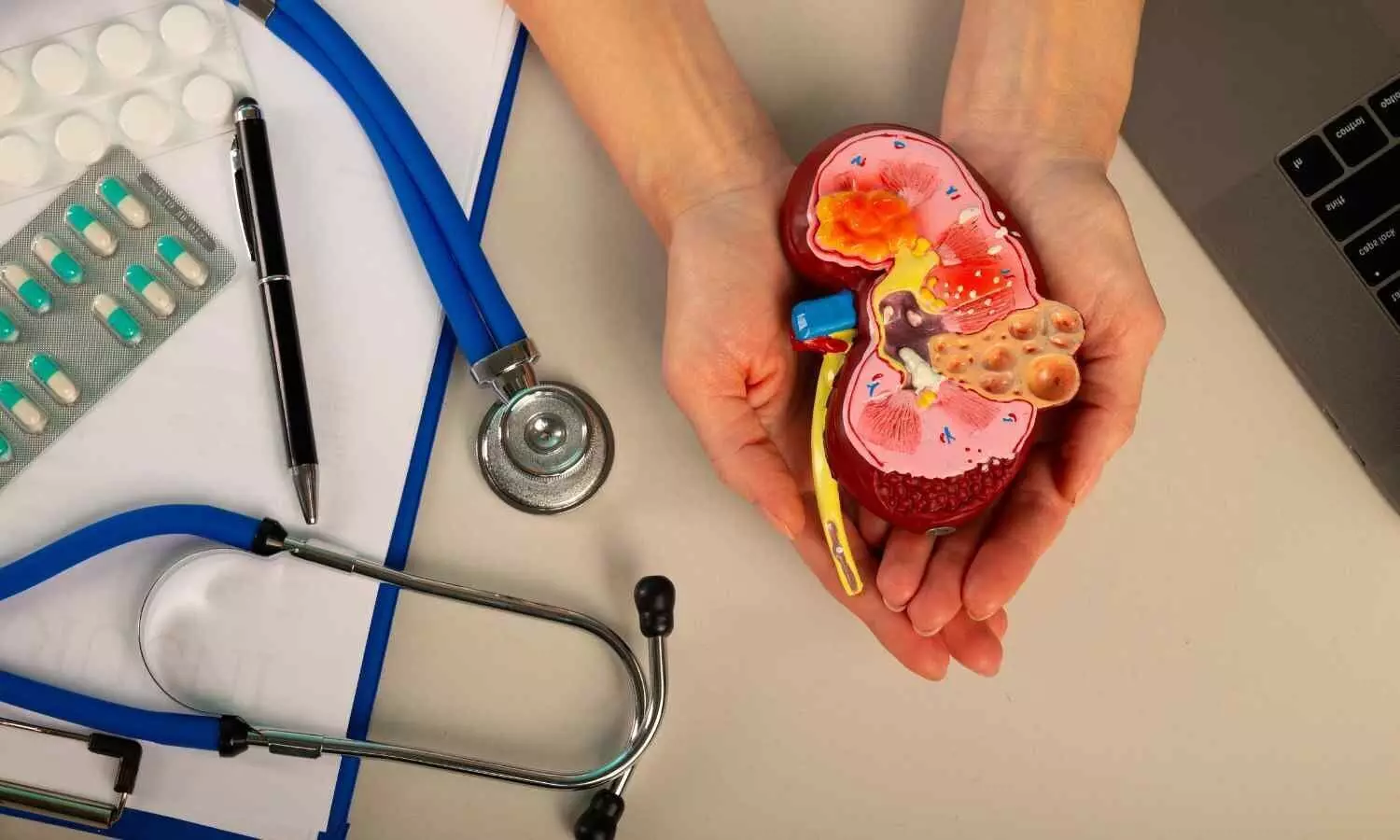


A recent retrospective study published in the Indian Journal of Nephrology in June 2026 reveals a breakthrough low-position double-tunnel surgery for end-stage kidney disease that eliminates early catheter displacements. This innovative approach outperforms traditional methods by maintaining a superior residual kidney function of 5.35 mL/min/1.73 m² during the crucial first six months.
Traditional peritoneal dialysis surgeries often pose risks of high catheter displacement and kidney toxicity. To reduce these complications, Dr. Hui Chen and colleagues evaluated an innovative low-position double-tunnel technique designed to minimize surgical trauma.
Therefore, the two-year retrospective study of 156 first-time peritoneal dialysis patients compared a novel low-position double-tunnel technique against traditional surgical approaches. After excluding high-risk candidates, researchers tracked key outcomes, including complication rates, residual kidney function, and patient survival.
Key Clinical Findings of the Study Includes:
Catheter Displacement: Investigators revealed that the double-tunnel surgical approach resulted in absolutely zero displacement cases at six months, presenting a clinically meaningful contrast to the 15 and three cases documented in the laparotomy and laparoscopic control groups, respectively.
Residual Renal Function: Analysis demonstrated significantly enhanced preservation of intrinsic kidney capabilities at six months for the experimental cohort, maintaining an average of 5.35 mL/min/1.73 m², outpacing the control groups' measurements of 3.10 and 3.79 mL/min/1.73 m².
Catheter Survival: Researchers observed markedly higher long-term catheter preservation rates utilizing the novel cross-fixation technique, where 39 patients successfully retained their catheters, thereby minimizing reoperations.
Other Complications: Evaluations showed no statistically significant differences among the three surgical cohorts regarding poor catheter drainage, peritoneal infections, or the overarching adequacy of the dialysis therapy throughout the entire two-year timeline.
The results suggest that strategically utilizing the low-position double-tunnel method for PD access effectively prevents mechanical catheter displacement while simultaneously facilitating superior preservation of the patient's residual renal capacity during the critical first half-year following the initial surgical intervention.
Thus, the study concludes that practicing clinicians might consider adopting this cross-fixation technique as a viable, less traumatic alternative for appropriate candidates, potentially reducing initial displacement events, circumventing repetitive hospitalizations, and subsequently mitigating further renal damage.
While these outcomes are encouraging, the study's retrospective design introduces an inherent time bias due to significantly differing enrollment periods spanning from 2016 to 2021 across the cohorts, and the COVID-19 pandemic may have impacted data collection consistency, subtly highlighting the mild need for future, well-controlled multi-center investigations to thoroughly validate these observations.
Reference
Chen H, Wang R, Chen D, Pan B. Clinical Efficacy Observation of Low-Position Double-Tunnel Peritoneal Dialysis Catheterization. IJN. 2026.
