
Stress Hormone Signals in Urine May Help Predict CKD Risk in Diabetes: Study Shows
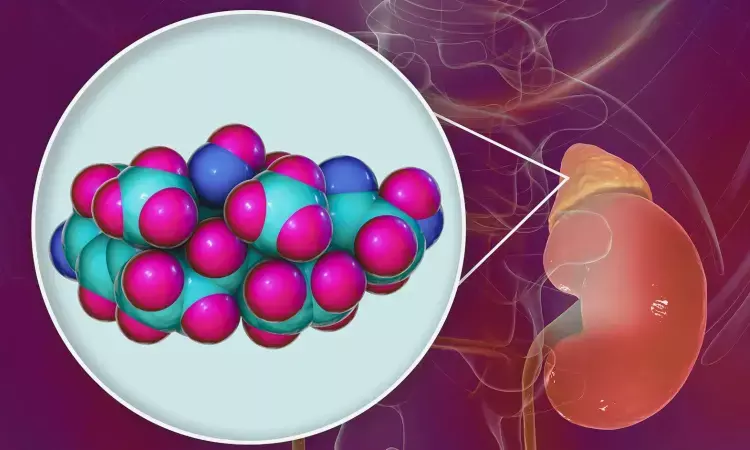


China: Researchers from China have reported that specific urinary stress hormones and their metabolites may serve as useful non-invasive biomarkers for identifying and assessing chronic kidney disease associated with diabetes, offering new insights into stress-related mechanisms underlying renal damage.
The findings come from a study published in BMC Nephrology by Yujie Jin from the Institute of Endocrine and Metabolic Diseases, The First Affiliated Hospital of Wannan Medical College, and colleagues.
Chronic kidney disease (CKD) remains one of the most serious complications of type 2 diabetes, yet early detection and risk stratification remain challenging. Stress hormones regulated by the adrenal system play an important role in metabolic balance, inflammation, and vascular function, all of which are closely linked to diabetic kidney damage. However, their role in CKD associated with diabetes has not been fully clarified. To address this gap, the researchers aimed to characterize urinary stress hormones and their metabolites and examine how these markers relate to renal function.
The study included a total of 735 participants, comprising 449 individuals with type 2 diabetes alone and 286 patients with CKD associated with diabetes. Urinary concentrations of norepinephrine, cortisol, aldosterone, and 17-ketosteroids were measured and analyzed. The investigators applied a range of statistical approaches, including correlation and regression analyses, receiver operating characteristic (ROC) curves, and orthogonal partial least squares discriminant analysis (OPLS-DA), to assess diagnostic performance and metabolic differences between groups.
The analysis revealed the following findings:
- Urinary norepinephrine, cortisol, and 17-ketosteroids levels were significantly lower in patients with CKD and diabetes than in those with diabetes alone.
- Lower norepinephrine levels were linked to poorer kidney function, showing negative correlations with albumin-to-creatinine ratio, urinary microalbumin, blood urea nitrogen, and serum creatinine.
- Norepinephrine levels showed a positive association with estimated glomerular filtration rate.
- Cortisol and 17-ketosteroids demonstrated similar correlations with renal function, supporting their relevance to kidney impairment.
- Aldosterone levels were inversely associated with urinary microalbumin and serum creatinine, indicating greater kidney injury with lower levels.
- Multivariate analysis revealed clear metabolic differences between CKD with diabetes and diabetes alone.
- OPLS-DA showed distinct metabolic profiles between the two groups, indicating metabolic heterogeneity.
- Logistic regression identified urinary norepinephrine as an independent protective factor against CKD in patients with diabetes.
- Higher diastolic blood pressure, urinary glucose, and homovanillic acid were associated with increased risk of CKD progression.
- A composite model combining norepinephrine, 17-ketosteroids, and homovanillic acid demonstrated strong diagnostic accuracy.
- The norepinephrine-based model showed high performance, achieving an AUC of 0.831 in validation analyses.
The authors conclude that urinary adrenal hormones and their metabolites offer valuable insight into stress-related pathways involved in CKD associated with diabetes. These markers may serve as complementary, non-invasive tools for disease assessment and risk evaluation, potentially aiding earlier detection and more personalized management strategies in patients with diabetic kidney disease.
Reference:
Jin, Y., Dong, S., Ma, Y. et al. Urinary stress hormones and their metabolites as predictive biomarkers for CKD with diabetes. BMC Nephrol (2025). https://doi.org/10.1186/s12882-025-04717-9

Next Story