
Study Identifies 350 Urinary Proteins Linked to Kidney Recovery After Living Donation
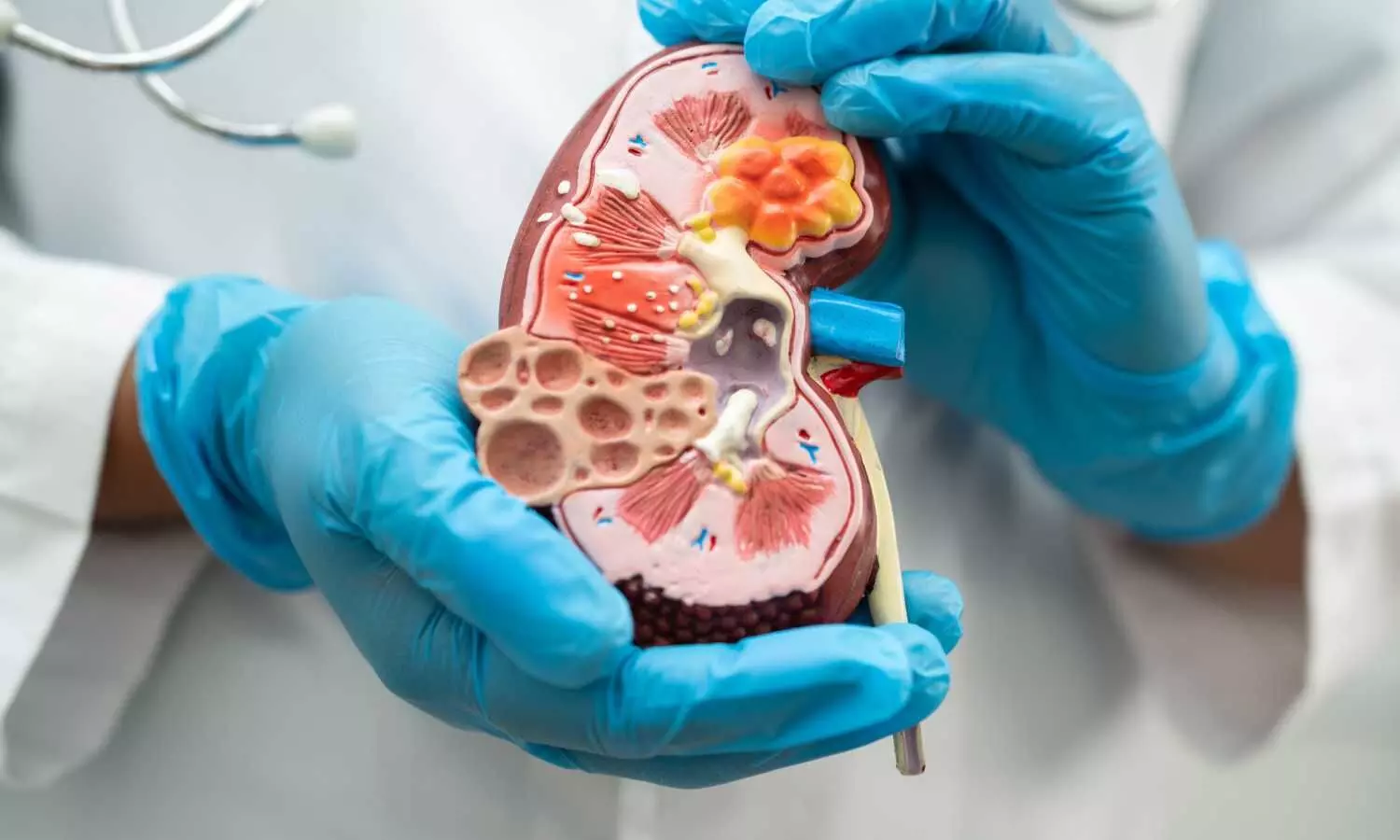


A recent prospective study published in the Indian Journal of Nephrology in June 2026 uncovers 350 unique urinary proteins that drive crucial renal adaptation and recovery in living donors following a 24% drop in glomerular filtration rate.
Despite the general safety of living kidney donation, donors face a slightly higher long-term risk of end-stage kidney disease (ESKD) compared to healthy non-donors. To understand the compensatory mechanisms of the remaining kidney, Kamboj et al. investigated post-operative urinary proteome changes to elucidate markers of renal adaptation.
Therefore, the 6-month prospective study evaluated 20 healthy living kidney donors using LC-MS to compare pre- and post-nephrectomy urine samples. Excluding patients with major comorbidities, the primary focus was to identify differentially expressed proteins (DEPs) alongside routine clinical and biochemical monitoring.
Key clinical findings of the study include:
• Glomerular Filtration Rate Decline: Researchers observed a significant functional shift in the subjects, with the mean estimated glomerular filtration rate safely dropping from 106 to 80 mL/min/1.73 m², settling at approximately 76% of the pre-donation baseline values.
• Hemoglobin Reductions: Investigators noted a mild but significant decrease in mean hemoglobin levels from 13.0 to 12.3 g/dL at the six-month mark, highlighting the importance of routine post-operative blood monitoring.
• Proteomic Alterations: Scientists successfully identified 350 specific DEPs, encompassing 149 upregulated and 201 downregulated proteins primarily involved in immune system regulation and cellular proliferation pathways.
• Renal Biomarker Shifts: Analysts highlighted the substantial upregulation of established acute kidney injury and repair indicators, including β-2 microglobulin and platelet-derived growth factor receptor alpha, suggesting an active, ongoing tissue repair process.
• Complement System Adaptation: Experts revealed a protective upregulation in CD55, a vital complement regulatory protein, which likely serves as a crucial adaptive mechanism to limit complement-mediated tissue damage in the remaining kidney.
The results suggest that the post-donation adaptive response is an intricately complex biological mechanism, involving significant expression shifts across 350 distinct urinary proteins that actively drive essential pathways such as tissue repair, immune system regulation, and cellular hypertrophy.
Thus, the study concludes healthcare professionals in the future toward utilizing targeted, non-invasive urinary biomarkers to more effectively monitor subtle shifts in renal health and compensatory functional adaptations in living donors over time.
While the pilot investigation is modestly limited by its small patient cohort size and a relatively brief six-month post-operative follow-up window, these encouraging preliminary findings naturally invite future extended research in larger, multi-center cohorts to thoroughly validate these proteins and better understand their long-term pathophysiological roles without detracting from the current safety of donation protocols.
Reference
Kamboj K, Naik SM, Kumar S, Kaur H, Singh S, Kenwar DB, Sharma A, Ramachandran R, Kohli HS, Kumar V, Yadav AK. Changes in Urine Proteome After Living Kidney Donation: A Prospective Cohort Study. Indian Journal of Nephrology. Published online June 12, 2026.
