
Cervical Spinal Cord Stimulation Shows Promise for Post-Stroke Upper Limb Recovery: Study
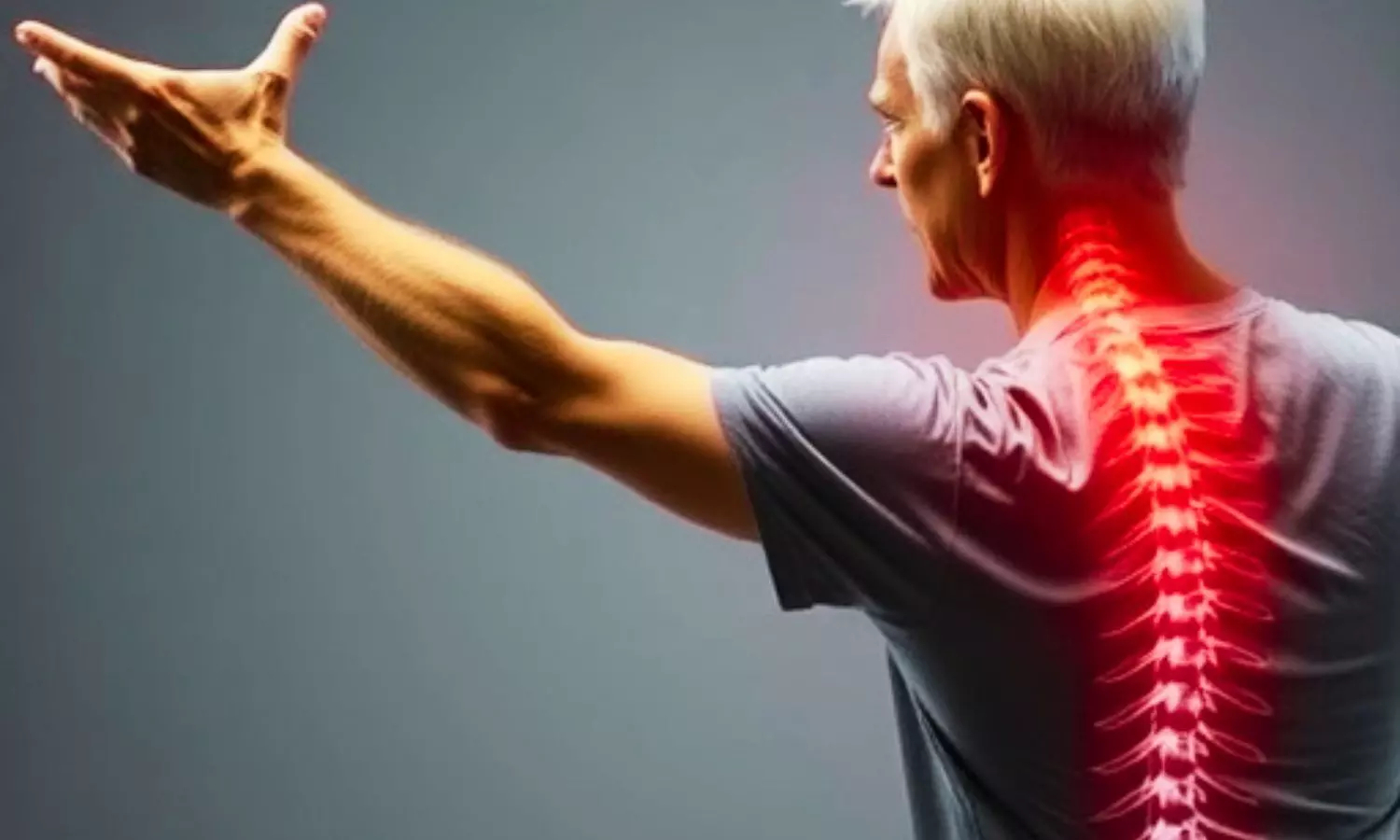


USA: A small study involving seven stroke survivors with chronic upper-limb hemiparesis has found that cervical epidural spinal cord stimulation (SCS) was safe, feasible, and potentially effective in improving arm and hand function during daily activities. The findings support the use of SCS as a neuroprosthetic approach to enhance motor recovery after stroke.
Researchers envision future permanent implants capable of lasting 10–20 years between battery replacements, although larger and more rigorous trials are needed to confirm long-term safety and effectiveness.
The findings were published in Nature Medicine by Roberto M. de Freitas from the Rehab Neural Engineering Labs, University of Pittsburgh, Pennsylvania, USA, and colleagues.
Upper-limb weakness and impaired hand function are common causes of long-term disability after stroke, and many patients continue to experience substantial limitations despite conventional rehabilitation.
To investigate a potential alternative, researchers conducted a feasibility study of cervical epidural spinal cord stimulation (SCS) in seven individuals with chronic post-stroke upper-limb hemiparesis and severe motor impairment (FMA scores 15–35).
Participants received two stimulation leads implanted unilaterally in the cervical spinal cord for four weeks. The study evaluated the safety, feasibility, and preliminary efficacy of SCS on motor function, strength, functional performance, and spasticity.
The trial revealed the following findings:
- No serious adverse events were reported during the study.
- Spinal cord stimulation produced immediate improvements in motor function regardless of baseline impairment severity.
- Muscle strength increased by an average of 32% when stimulation was activated.
- Fugl-Meyer Assessment (FMA) scores improved by an average of 5.6 points during active stimulation.
- Three of the seven participants showed improved hand and finger movement with SCS.
- Participants with preserved corticospinal connectivity to finger muscles appeared more likely to benefit from stimulation.
- Despite only 8.6 hours of motor activity on average, including 5.5 hours with SCS activated, participants achieved meaningful functional improvements.
- Average FMA scores increased by 6.6 points from baseline by the end of the study.
- Spasticity decreased in all participants.
- Preserved sensory function appeared to be associated with a better response to SCS.
- All participants experienced some degree of benefit from the intervention.
The researchers concluded that cervical epidural spinal cord stimulation shows promise as a neuroprosthetic technology to improve movement and reduce spasticity in individuals with chronic post-stroke hemiparesis. While the findings are preliminary and based on a small cohort, they provide early evidence supporting the safety, feasibility, and potential efficacy of this approach. Larger controlled studies will be needed to determine its long-term clinical value and establish its role in stroke rehabilitation.
Reference:
De Freitas, R. M., Bhatia, S., Sorensen, E., Verma, N., Carranza, E., Ensel, S., Borda, L., Boos, A., Goldsmith, J., Fisher, L. E., Fields, D. P., Powell, M. P., Gordon, S., Balzer, J., Friedlander, R. M., Wittenberg, G. F., Gerszten, P. C., Krakauer, J. W., Pirondini, E., . . . Capogrosso, M. (2026). Spinal cord stimulation for upper limb motor function in people with chronic post-stroke hemiparesis: A feasibility trial. Nature Medicine, 1-12. https://doi.org/10.1038/s41591-026-04435-1

Next Story