
Levacetylleucine Improves Neurologic Function in Ataxia-Telangiectasia: Lancet
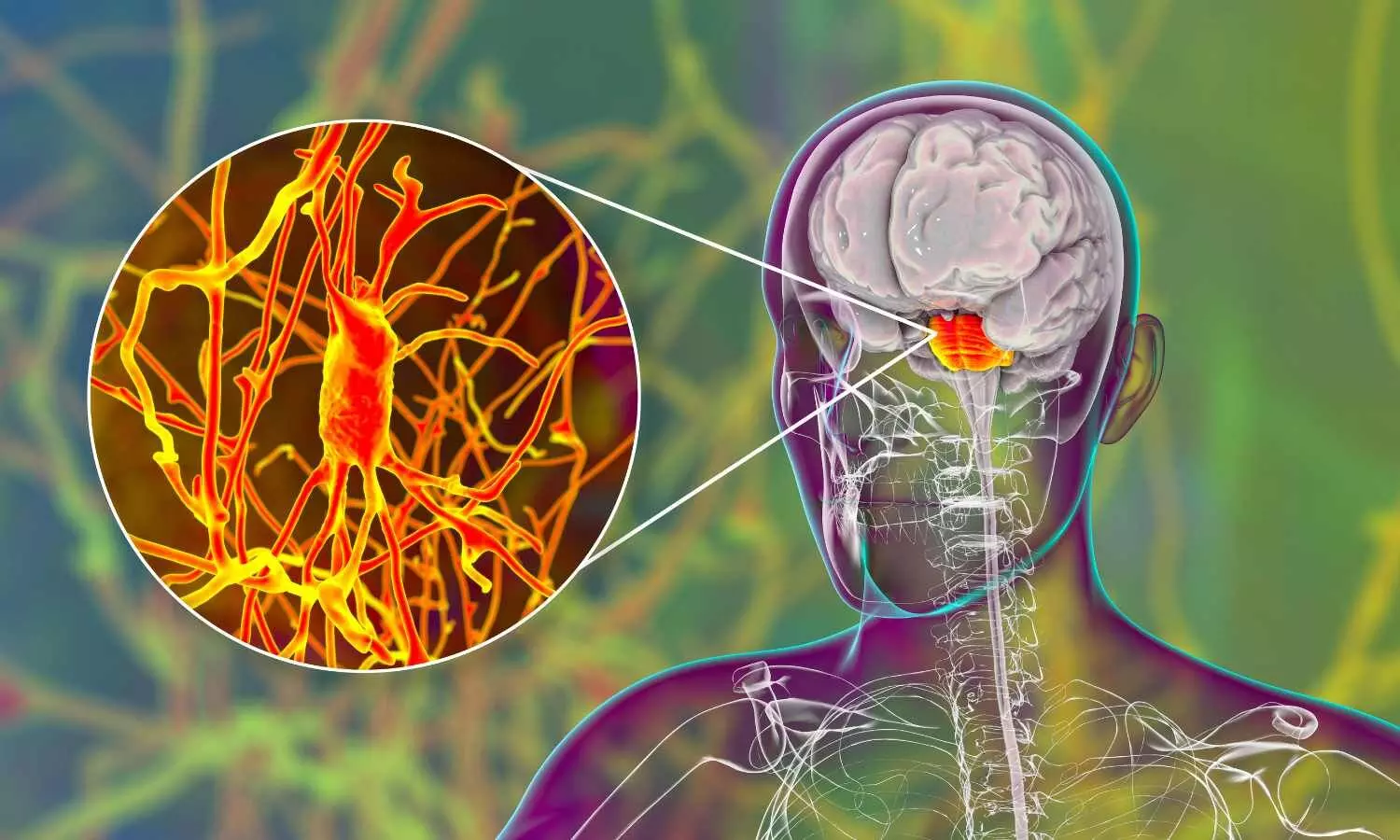


A new study published in the journal of The Lancet Neurology showed that in both adults and children with ataxia-telangiectasia, levacetylleucine improved neurologic symptoms and general functioning.
An uncommon neurological condition that is autosomal recessive is ataxia-telangiectasia. Levacetylleucine (N-acetyl-L-leucine) has been demonstrated to have a disease-modifying impact on lysosomal storage diseases such Niemann-Pick disease type C and to be effective in treating neurological symptoms. The purpose of this study was to evaluate levacetylleucine's safety and effectiveness for ataxia-telangiectasia in both adult and pediatric patients.
Participants were recruited from eleven research hospitals in Germany, Slovakia, Spain, Switzerland, the UK, and the USA for this trial. Over the course of two consecutive 12-week treatment periods, eligible patients aged 4 years or older with genetically confirmed ataxia-telangiectasia were randomly assigned (1:1) using interactive response technology to receive oral levacetylleucine or a matching placebo two or three times daily.
Patients weighing 35 kg or more received 4 g of oral levacetylleucine or a matching placebo three times daily, while patients weighing less than 0·1 g/kg per day.
The group assignment was concealed from all participants, researchers, and evaluators. The mean change on the Scale for the Assessment and Rating of Ataxia (SARA), measured at baseline and at the conclusion of each 12-week levacetylleucine or placebo treatment period, was the main endpoint.
All randomly assigned patients who received at least one dosage of the study medicine underwent safety and effectiveness assessments, and data missing at random were taken into account using a linear mixed-effects model.
73 out of 77 screened patients with genetically confirmed ataxia-telangiectasia were randomly assigned to receive either levacetylleucine followed by a placebo (36 patients) or the placebo followed by levacetylleucine (37 patients).
The group, which was fully examined for safety and effectiveness, was primarily White (75%), female (52%), and younger than 18 (64%).
Levacetylleucine produced a higher mean reduction in SARA total scores (–1.92, SD 2.81) than the placebo (–0.14, SD 2.38), according to efficacy data.
Levacetylleucine administration resulted in fewer overall adverse events (54 events among 29 patients) than the placebo phase (75 events among 25 patients), and there were no reported fatalities or treatment-related major adverse events. The medication was generally well tolerated.
Overall, levacetylleucine was safe, well-tolerated, and shown to have a notable and clinically significant improvement in functioning, offering a favorable benefit-risk profile for the treatment of ataxia-telangiectasia.
Source:
Martakis, K., Bremova-Ertl, T., Bolton, C., Foltan, T., Del Mar Garcia Romero, M., Gautschi, M., Han, V., Hahn, A., Kolnikova, M., Panagioti, O., Perlman, S., Prasad, M., Schmahmann, J., Skorvanek, M., Thakur, N., Thiel, M., & Hoche, F. (2026). Safety and efficacy of levacetylleucine in ataxia-telangiectasia: a phase 3, randomised, double-blind, placebo-controlled crossover trial. Lancet Neurology, 25(7), 633–644. https://doi.org/10.1016/S1474-4422(26)00158-4

