
Plasma exchange may help treat rare inflammatory disorder, suggests study
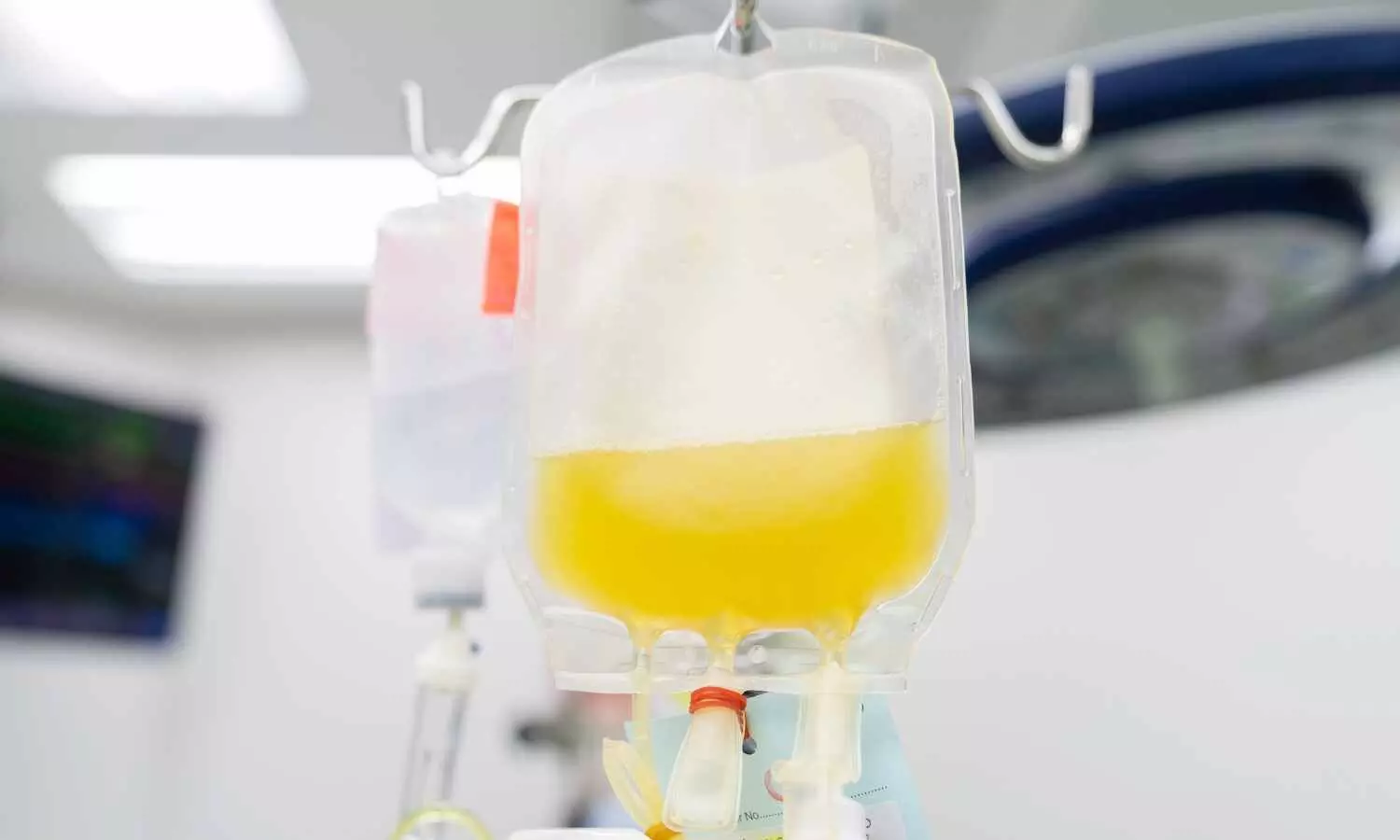


Plasma exchange can help treat people with a rare inflammatory disease that can cause blindness, according to a systematic review and meta-analysis published on July 22, 2026, in Neurology®, the medical journal of the American Academy of Neurology. Plasma exchange led to recovery for most people with the disease, which is called myelin oligodendrocyte glycoprotein antibody-associated disease (MOGAD), and side effects were rare.
Plasma exchange is a procedure where blood is removed from the body and filtered. The liquid plasma is separated from the blood cells and removed. The blood cells are mixed with a replacement fluid and returned to the body.
MOGAD affects the central nervous system. The immune system attacks protein in the myelin that protects the nerves. Symptoms include vision loss, muscle weakness, confusion, seizures and headache.
The systematic review and meta-analysis do not prove that plasma exchange causes the improvements; they only show an association.
The improvements were especially seen in people whose main symptom was optic neuritis, or inflammation of the optic nerve that connects the eye to the brain.
“This evidence is exciting, as many people do not respond well to the main steroid treatment for MOGAD, and without quick, effective treatment some of the damage can be irreversible,” said author Marina Vilardo, MD, of Harvard University in Boston, and a member of the American Academy of Neurology.
For the review, researchers analyzed all available studies on the topic, a total of 10 studies with 1,045 people who had 1,368 MOGAD attacks during the study period. Of the attacks, 41% involved optic neuritis; 29% had combined symptoms of optic neuritis, spinal cord symptoms such as muscle weakness and symptoms that affect the brain such as confusion and headache; and 12% had only spinal cord symptoms.
Participants were followed for an average of 11 months. They were tested for symptoms including visual acuity, or how well they could see details at a distance. Their recovery was considered excellent if they had complete or almost complete recovery of symptoms with visual acuity equal to or better than 20/25 vision or the disappearance of symptoms. Recovery was considered good if they gained function without reaching their baseline level before the attack.
People with optic neuritis had an excellent recovery after plasma exchange 81% of the time. People who also had spinal cord symptoms or brain symptoms had a good recovery 94% of the time. Only 3% of people had side effects related to plasma exchange.
“This analysis suggests that plasma exchange should be considered for people who do not respond completely to steroid treatment for MOGAD and for people who have severe attacks with symptoms such as complete loss of vision or paralysis,” Vilardo said.
Reference:
Marina Vilardo, Joao Vitor Mahler, Effectiveness and Safety of Plasmapheresis in MOGAD Attacks, A Systematic Review and Meta-Analysis, Neurology, https://doi.org/10.1212/WNL.0000000000218300
