
Radiotherapy significantly reduces the risk of recurrence in atypical meningiomas, suggests study
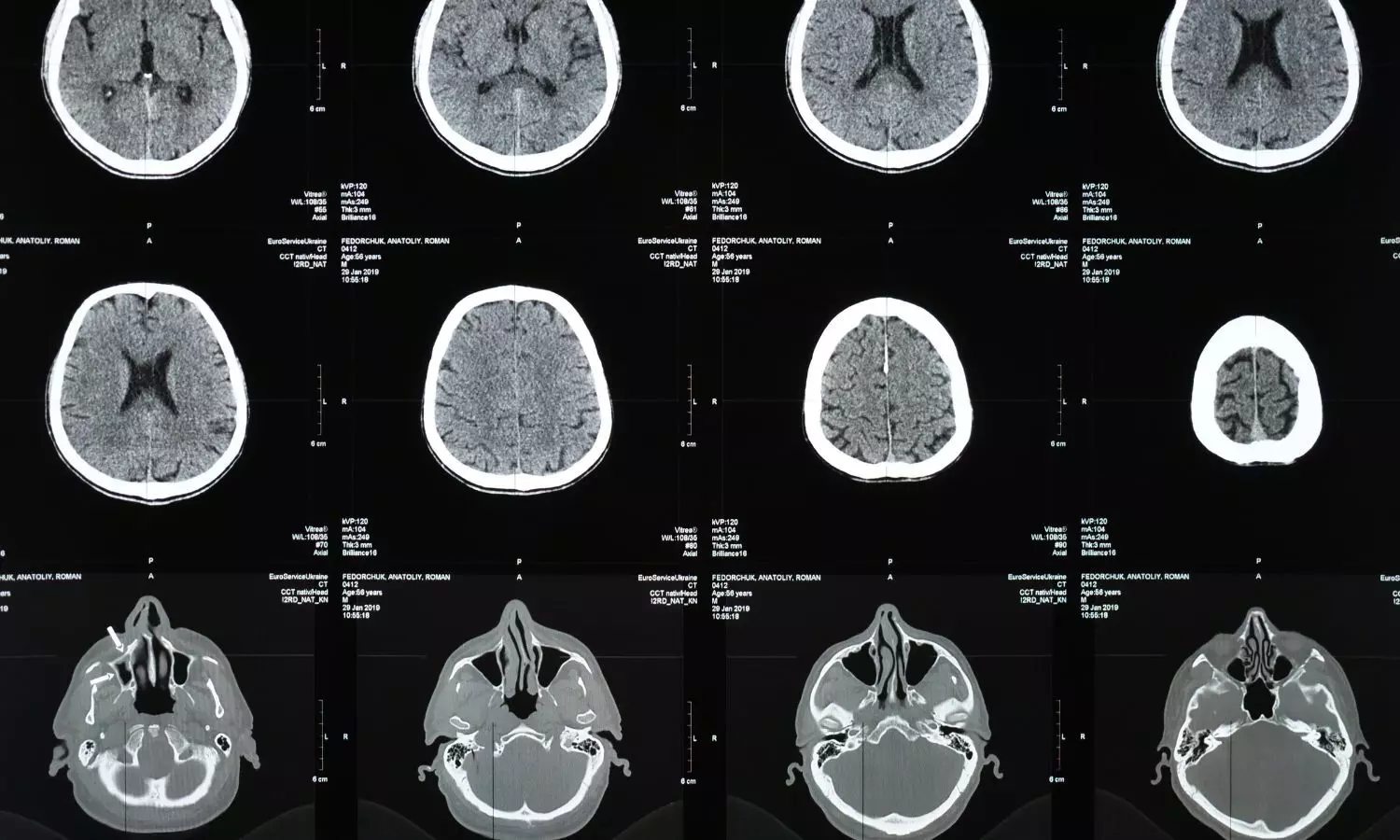


Atypical meningiomas are tumours originating in the meninges and are associated with a high risk of recurrence. Until now, it was not clear whether patients benefit from radiotherapy following complete surgical resection of the tumour. Now, an international study - in which MedUni Vienna played a key role - provides new scientific evidence for this therapeutic approach, which can significantly reduce the recurrence rate. The results, recently published in the leading journal The Lancet, are set to be incorporated into national and international guidelines.
The study, known as ROAM/EORTC-1308, involved 157 patients following the complete resection of an atypical meningioma. Of these, 78 randomly selected individuals each received 30 sessions of radiotherapy, whilst 79 were monitored regularly via imaging. The clinical trial was conducted at 58 hospitals in eleven countries (Austria, Australia, Belgium, Ireland, France, Germany, New Zealand, Italy, Spain, Switzerland and the United Kingdom). The Medical University of Vienna played a leading role in the study through the Division of Oncology at the Department of Medicine I and its head, Matthias Preusser.
The results provide, for the first time from a randomised trial, robust evidence that radiotherapy following the complete resection of an atypical meningioma significantly reduces the risk of recurrence: After a median follow-up period of around five years, 11 out of 78 patients (14 per cent) in the radiotherapy group experienced a meningioma recurrence, compared with 24 out of 79 patients (30 per cent) in the observation group. A clear difference was also observed in disease-free survival: after five years, 79.9 per cent of patients in the radiotherapy group were recurrence-free, compared with 64.3 per cent of those under imaging surveillance.
"The ROAM/EORTC-1308 trial has demonstrated a significant reduction in the recurrence rate and thus provides the best available evidence for the use of adjuvant radiotherapy in patients who have undergone complete surgical resection of an atypical meningioma. These findings will be incorporated into national and international guidelines," says Matthias Preusser, who led the study together with Michael Jenkinson (Liverpool Clinical Trials Centre, UK), Carrol Gamble (Liverpool Clinical Trials Centre, UK) and Damien C. Weber (Paul Scherrer Institute and Inselspital – University Hospital of Bern, Switzerland). However, the decision for or against radiotherapy must be made jointly with the patients, as the study authors emphasise. It is important to take into account possible side effects and long-term consequences of the treatment, even though serious radiation-related events occurred rarely during the study.
Meningiomas account for around one-third of primary brain tumours in adults – that is, those not caused by metastases. Atypical meningiomas are associated with a high risk of recurrence even after complete surgical resection. The benefit of additional radiotherapy following tumour resection had not previously been established by a randomised trial. The ROAM/EORTC-1308 trial now provides the first scientific evidence on this matter. Further studies will now seek to clarify, amongst other things, whether the benefit of radiotherapy persists beyond five years.
Reference: Prof Michael D Jenkinson, Anna Rosala-Hallas, Prof Felix Sahm, Prof Nicolaus Andratschke, Prof Keyoumars Ashkan, Damiano Balestrini, Helen Bulbeck, Sílvia Comas, Giovanna Culeddu, Kumar Das, Laura Fariselli, Karen Fowkerer, Priya Francis, Efstathia Gkioni, Vassilis Golfinopoulos, Thierry Gorlia, Neda Haghighi, Brian J Haylock, Prof Dyfrig A Hughes, Mohsen Javadpour, Philippe Martinive, Helen M O Mayles, Perry Moore, Emilie Le Rhun, Nicola Rosenfelder, Gail Ryan, Prof Michael Weller, Prof Carrol Gamble, Prof Matthias Preusser, Prof Damien C Weber, Radiotherapy versus observation following surgical resection of WHO grade 2 atypical meningioma (ROAM/EORTC-1308): an international, multicentre, open-label, phase 3, randomised controlled trial, Journal: The Lancet, DOI 10.1016/S0140-6736(26)01804-0
