Recurrent Hypomagnesemia Associated With Increased Risk of Dementia: Study
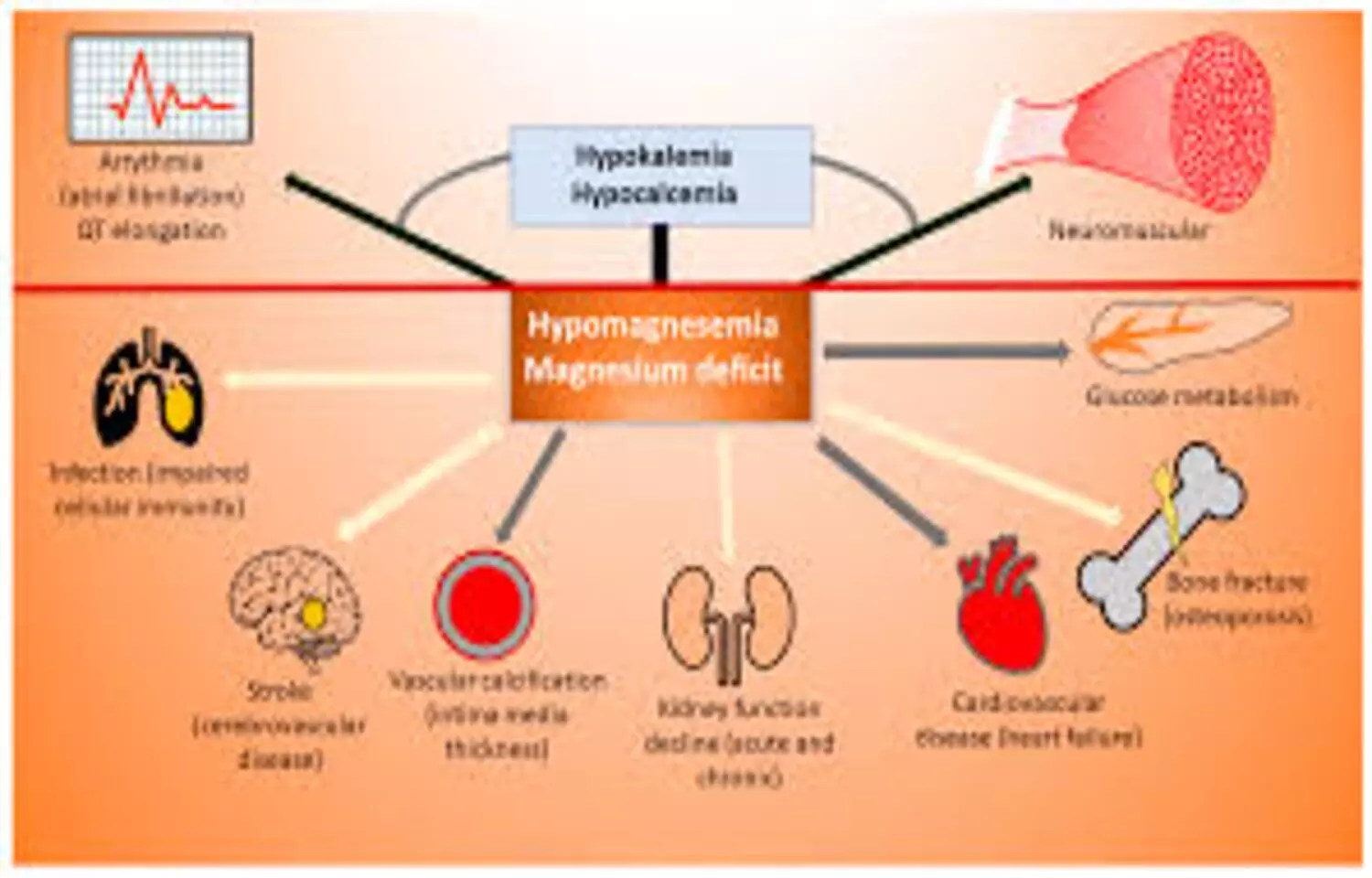


A matched cohort analysis published in Frontiers in Nutrition found that recurrent hypomagnesemia (serum magnesium <1.7 mg/dL) in adults aged 50 years and older was associated with an increased risk of developing all-cause dementia compared with normal magnesium levels. The strongest association was observed for vascular dementia (hazard ratio [HR] 1.63), suggesting that cerebrovascular mechanisms may contribute to this relationship. Recurrent low magnesium levels were also linked to a higher risk of stroke (HR 1.37) and all-cause mortality (HR 1.52). Interestingly, elevated magnesium levels were likewise associated with an increased risk of dementia (HR 1.25), underscoring the importance of maintaining optimal magnesium homeostasis for long-term neurological health.
Low magnesium status has been linked to cerebrovascular conditions that overlap with pathways implicated in dementia, yet prior studies have relied on single magnesium measurements obtained in earlier population-based cohorts. Whether repeatedly documented low magnesium status is associated with incident dementia in real-world clinical populations is unclear.Methods: This retrospective propensity score-matched cohort study used data from the TriNetX Global Collaborative Network (2016–2023). Adults aged ≥50 years with two serum magnesium values <1.7 mg/dL within a 1-year window were compared with matched controls with two normal values (1.70–2.20 mg/dL). A 1-year landmark period was applied before the outcome ascertainment. The primary outcome was incident all-cause dementia. The secondary outcomes included dementia subtypes, stroke, and mortality. Prespecified positive and negative control outcomes, subgroup and sensitivity analyses, sequential multivariable Cox regression, and an exploratory analysis of high magnesium status were conducted.
After propensity score matching, 162,936 patients were included in each group. Low magnesium status was associated with incident all-cause dementia (HR 1.33; 95% CI, 1.26–1.40, p < 0.001), with the strongest association observed for vascular dementia (HR 1.63; 95% CI, 1.42–1.88, p < 0.001). Associations were also observed for stroke (HR 1.37, p < 0.001) and mortality (HR 1.52, p < 0.001). The results remained consistent across the sensitivity and multivariable analyses. High magnesium status was associated with all-cause dementia (HR 1.25, p < 0.001) and vascular dementia (HR 1.40, p < 0.001), but not Alzheimer’s disease.
Repeatedly documented low magnesium status was associated with an increased risk of incident all-cause dementia, particularly vascular dementia, suggesting a potential role of magnesium homeostasis in long-term cognitive function.
Reference:
Chang Y-J, Kao C-L and Lan K-M (2026) Association between low magnesium status and new-onset dementia in the general population: a propensity score-matched cohort study. Front. Nutr. 13:1886820. doi: 10.3389/fnut.2026.1886820
Keywords:
Recurrent, Hypomagnesemia, Associated, Increased Risk, Dementia, Study, Chang Y-J, Kao C-L and Lan K-M