
Tenecteplase Before EVT Shows No Added Functional Benefit in Late Basilar Artery Occlusion: JAMA
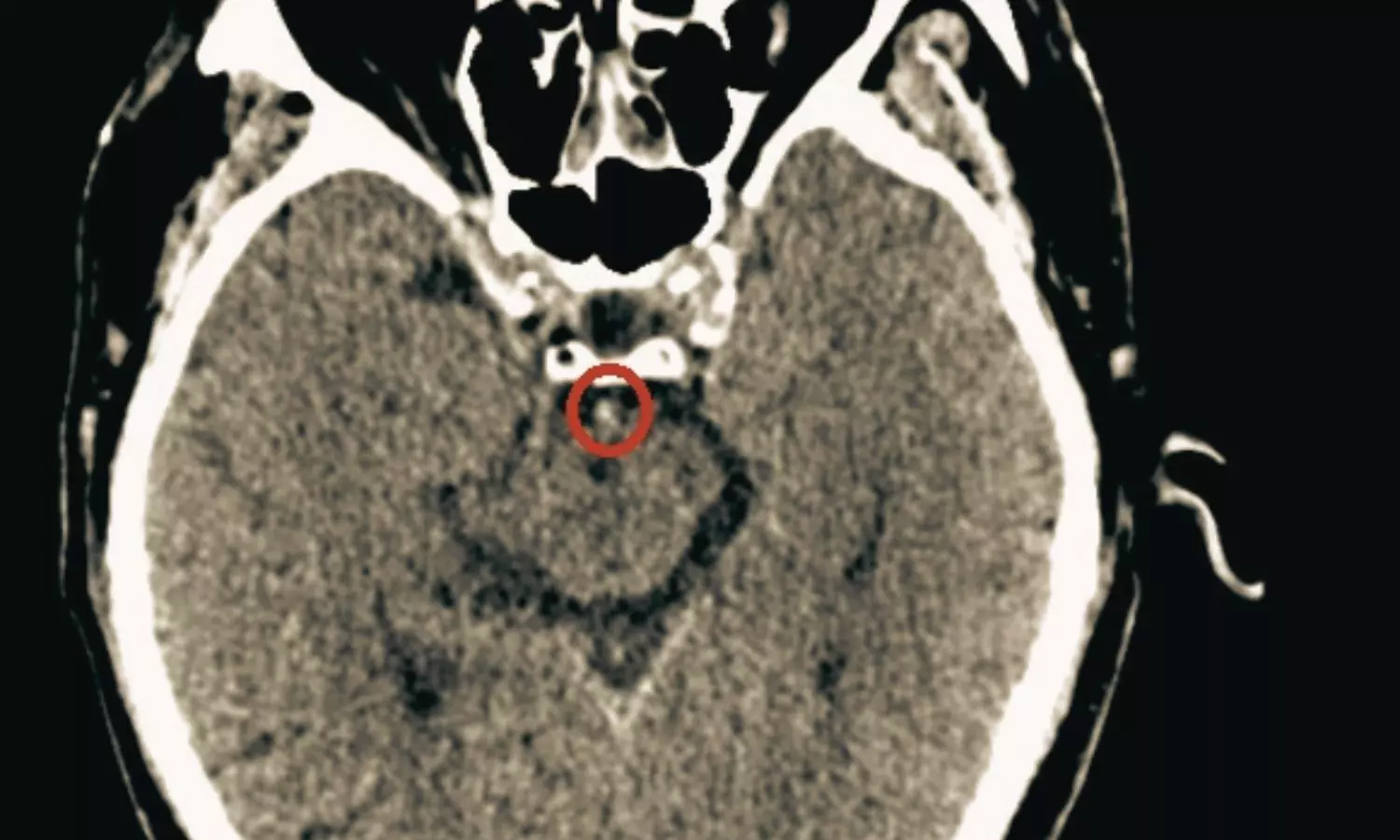


China: Researchers have found in a new research that among patients with moderate-to-severe basilar artery occlusion presenting 4.5–24 hours after stroke onset and treated directly at EVT-capable centers, intravenous tenecteplase before endovascular thrombectomy (EVT) did not improve functional outcomes compared with EVT alone.
The findings, published in JAMA, come from the ATTENTION LATE randomized clinical trial, led by Rui Li, MD, PhD, Department of Neurology, First Affiliated Hospital of USTC, Division of Life Sciences and Medicine, University of Science and Technology of China, and colleagues.
Basilar artery occlusion is a severe form of ischemic stroke involving blockage of the major artery supplying the brainstem and posterior circulation. EVT is an established treatment for eligible patients, while intravenous thrombolysis with tenecteplase may help dissolve the clot before thrombectomy. However, the benefit of administering tenecteplase in patients presenting several hours after symptom onset remained uncertain.
The multicenter, open-label trial with blinded outcome assessment was conducted across 40 stroke centers in China between March 16, 2023, and February 4, 2025. The study enrolled patients with moderate-to-severe basilar artery occlusion, defined by a National Institutes of Health Stroke Scale score of at least 10, who reached EVT-capable hospitals 4.5 to 24 hours after stroke onset.
A total of 332 patients were randomized, with two subsequently withdrawing consent. Among the 330 patients included in the analysis, the mean age was 66 years, and 241 (73%) were men. Participants were randomly assigned to receive either intravenous tenecteplase followed by EVT or EVT alone.
Patients in the thrombolysis group received a 0.25 mg/kg intravenous tenecteplase bolus, up to a maximum dose of 25 mg, before undergoing thrombectomy. The primary outcome was functional independence at 90 days, defined as a modified Rankin Scale score of 0 to 2.
Key findings:
- Functional independence at 90 days was achieved by 30% of patients in both groups: 50 of 165 receiving tenecteplase plus EVT and 50 of 164 receiving EVT alone.
- The adjusted rate ratio for functional independence was 0.92 (95% CI, 0.67–1.25), with a risk difference of −0.18% (95% CI, −10.13% to 9.76%).
- Symptomatic intracranial hemorrhage occurred in 5% of patients receiving tenecteplase plus EVT compared with 4% receiving EVT alone.
- Ninety-day mortality was comparable between groups, occurring in 40% of patients in the tenecteplase-plus-EVT group and 43% in the EVT-alone group.
- Follow-up at 90 days was completed by 329 of the 330 participants.
The researchers concluded that, among patients with moderate-to-severe basilar artery occlusion who presented directly to EVT-capable centers between 4.5 and 24 hours after stroke onset, adding intravenous tenecteplase before thrombectomy did not improve functional outcomes compared with EVT alone.
The study therefore provides evidence regarding the use of late-window tenecteplase in patients proceeding directly to thrombectomy, although the findings apply specifically to the trial population and treatment setting.
Reference:
Li R, Yao X, Nogueira RG, et al. Tenecteplase Before Thrombectomy at 4.5 to 24 Hours for Basilar Artery Occlusion: The ATTENTION LATE Randomized Clinical Trial. JAMA. Published online September 23, 2026. doi:10.1001/jama.2026.15496

Next Story