Merit can never be compromised: Bombay HC slams state for 'pick and choose' approach, orders private medical college fees reimbursement to 4 students
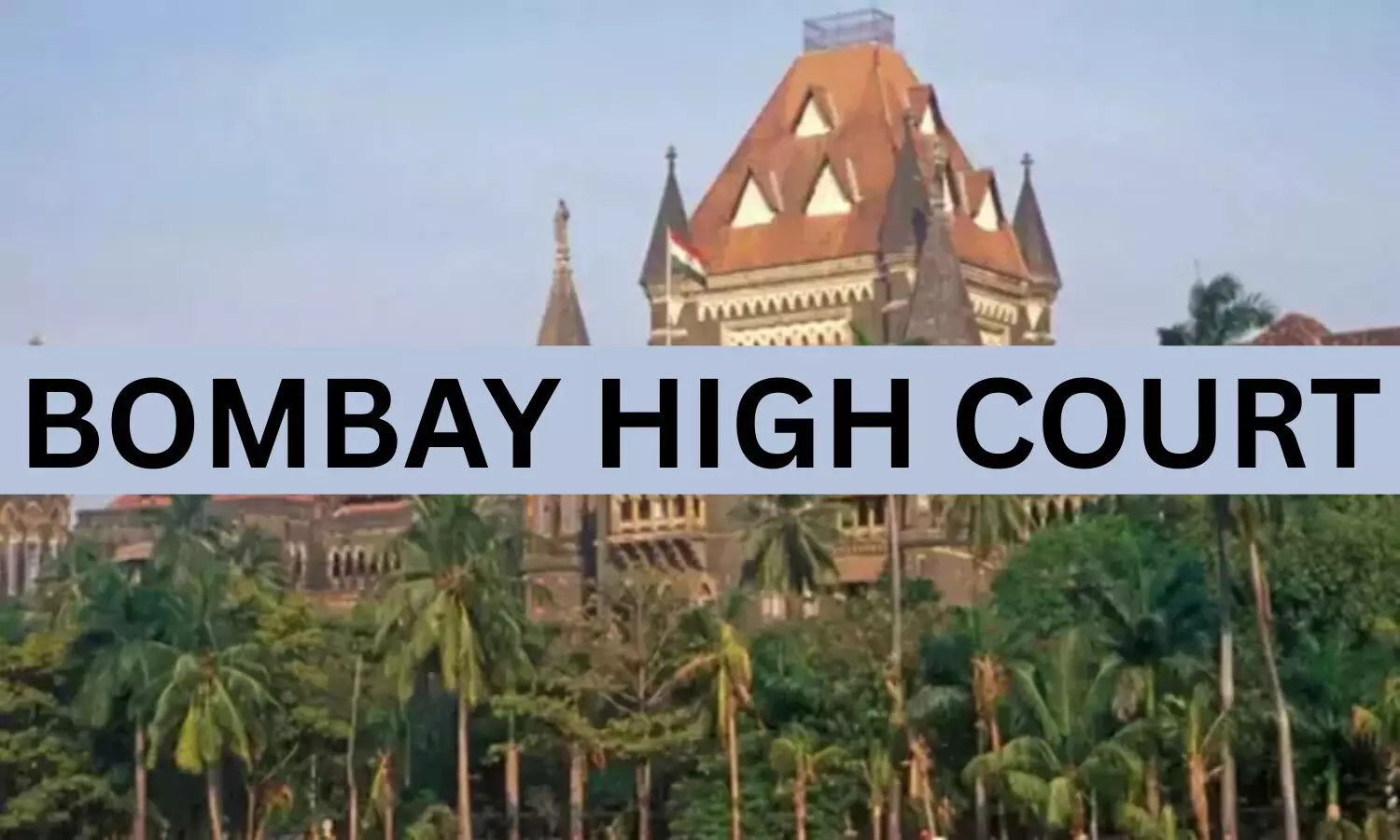


Mumbai: Observing that merit cannot be compromised, the Aurangabad bench of the Bombay High Court recently pulled up the State Government for its implementation of a medical fee reimbursement scheme in a 'pick and choose' manner.
"We are constrained to mark our serious displeasure against respondent State Authorities’ ‘pick and choose’ method while implementing a beneficial ‘one time scheme’. In fact while examining the matters in hand, we are shocked to see serious incongruity in admitting students in Government and Aided medical colleges," the HC bench comprising Justices Kishore C Sant and Ajit B Kadethankar observed in its August 3, 2026 order while considering the petitions filed by four general category medical students who were denied the benefit of the said scheme.
The students sought relief of reimbursement of their private medical college fees for over six years even after completing their medical courses. The Aurangabad Bench of the Bombay High Court has directed the Maharashtra government to reimburse the eligible fees paid by them.
The students were denied the benefit of a one-time scheme introduced in 2019 for general-category students and had to take admission in private medical colleges after losing government seats following the introduction of the Economically Weaker Section (EWS) and Socially and Educationally Backward Classes (SEBC) quotas.
Coming down heavily on the State authorities, a division bench of Justices Kishore C Sant and Ajit B Kadethankar said the admission process and the implementation of the fee reimbursement scheme was non transparent and suspicious.
Noting that the petitioners scored higher marks than those who were granted reimbursement under the scheme, the bench said, "Merit can never be compromised nor can it be on a second pedestal. If the Petitioner was on a higher rank, he could not have been denied such admissions."
It directed the state to reimburse the eligible amount with 6 per cent simple interest within eight weeks of receiving the claims, failing which the amount would carry 9 per cent interest. The Court further imposed a cost of Rs 50,000 each on the State for the four petitioners and directed the Principal Secretary of the Medical Education Department to conduct an inquiry into the issues highlighted in the judgment and take measures to prevent such incidents in future.
Background
The case is related to four medical students from Chhatrapati Sambhajinagar who secured NEET-UG scores of 527, 526, 524 and 522 out of 720 marks, as per the latest media report by the Indian Express.
The dispute dates back to the 2019 admission process when the central government introduced the 10 per cent reservation for Economically Weaker Sections (EWS) through a constitutional amendment, while Maharashtra introduced reservations for Socially and Educationally Backward Classes (SEBC), the Maratha quota, applicable in government or aided medical colleges.
At the time, these four petitioners had chosen government medical colleges in their preference lists during the admission process. However, they contended that they lost an opportunity to secure admission to government or aided medical colleges because the reservations were applied to the 85% state quota.
On September 20, 2019, the Maharashtra government issued a Government Resolution (GR) providing for reimbursement of private medical college fees over and above the government college fee for students who had lost government or aided college admission opportunities due to accommodation of EWS and SEBC students.
However, the four students were not included among the beneficiaries.
In this regard, the authorities stated that the students would not have secured government or aided medical college seats even if the EWS and SEBC reservations had not been implemented. Therefore, according to the State, they were not eligible for the reimbursement scheme.
For the petitioners, the prolonged dispute meant bearing the cost of private medical education since 2019–20 without the reimbursement they sought. According to the petitioners, some families were forced to take educational loans to meet fees of around Rs 25 lakh to Rs 30 lakh per student. The petitioners told the court they sought reimbursement based on merit, not as a “bounty”.
The private college initially accommodated them but later fixed an outer deadline for payment of the remaining fees. Having already paid half the fees, the petitioners said they could not pay the balance without reimbursement and apprehended disruption to their studies.
They said the college compelled them to deposit part of the fees under threat of being prevented from appearing for examinations, forcing them to pay the term fee while simultaneously challenging the State’s decision to deny reimbursement.
As a result, the students challenged the decision before the High Court in 2020 and 2021.
In the plea, the aggrieved petitioners pointed out that 25 of the 106 beneficiaries with lower NEET scores or ranks had received reimbursement under the same scheme and that not a single student from the Marathwada region figured among the beneficiaries.
This, the petitioners claimed, gave a "strong reason to doubt" whether the selection was comprehensive.
On this, the State argued that the petitioners would not have secured admission to government or aided colleges even without EWS and SEBC reservations, based on their college preferences, and were therefore not entitled to reimbursement.
However, Advocates Akshay Kulkarni and Milind Patil, appearing for the petitioners, argued that denial of the scheme’s benefits had forced some students to take educational loans to pay private college fees of at least Rs 25 to 30 lakh per student, causing an unnecessary financial burden.
Observation by court
Rejecting the State's stand, the bench held that the petitioners were also entitled to the benefit of the scheme since official records showed students lower in merit than the petitioners had been granted reimbursement under the same scheme.
The Court expressed “disappointment” over what it described as the “suspicious and non-transparent” stand of the State authorities.
The bench further observed, "In our society, we still believe and trust that we have proven our mettle if admission. This makes us proud of the rigorous efforts we took for the achievement… But when it is realised that despite having crossed the finish-line, you are not recognised to be a successful finisher, it deeply and adversely affects not only the career but the temperament of such a finisher. It is just like a fielder succeeds for a difficult catch, but is shown to have caught beyond the border. The surprise turns into agony when the fielder learns that the borderline is silently shrunken or bartered. The agony multiplies when it is realised that it is done without transparency."
Regarding the admission process and the implementation of the scheme, the court said that it utterly lacked transparency and accuracy, and that authorities had interfered with the students’ careers through the wrongful application of the quota system.
The bench also questioned the delay in the proceedings and the manner in which the authorities handled the matter. The Court observed that the pleas remained pending while the students' medical courses were continuing.
“We have every room in our minds to infer that it was to avoid the issue of allocation of seats in government medical colleges, to be surfaced before this court,” the bench noted.
The court noted that the trauma and pains suffered by the petitioners were intangible and the authorities' delay and failure to produce original records warranted “exemplary cost”.
The High Court also took serious note of the conduct of medical education officials during the proceedings. On June 25, before the final hearing, the Deputy Director of Medical Education and Research failed to remain present despite the Court's directions sending lower-ranking officers instead.
Calling their conduct "casual” and noting false statements about the availability of original records, the Court launched suo motu contempt proceedings. The officers later offered unconditional apologies; proceedings were recalled, but each was fined Rs 10,000.
The Court observed that the authorities’ conduct had “unfortunately extirpates trust” among citizens in the “transparency of the system”, despite the government’s “novel and benevolent objects”.
In conclusion, the High Court stated that the authorities had failed to implement the admission and reimbursement process in a fair and transparent manner and directed the State to take corrective measures to ensure that such an issue does not recur along with imposing fines on them and an order to reimburse the eligible amount to the petitioners with interest.