22 ICMR Scientists feature in Stanford World's top 2% scientists list 2026
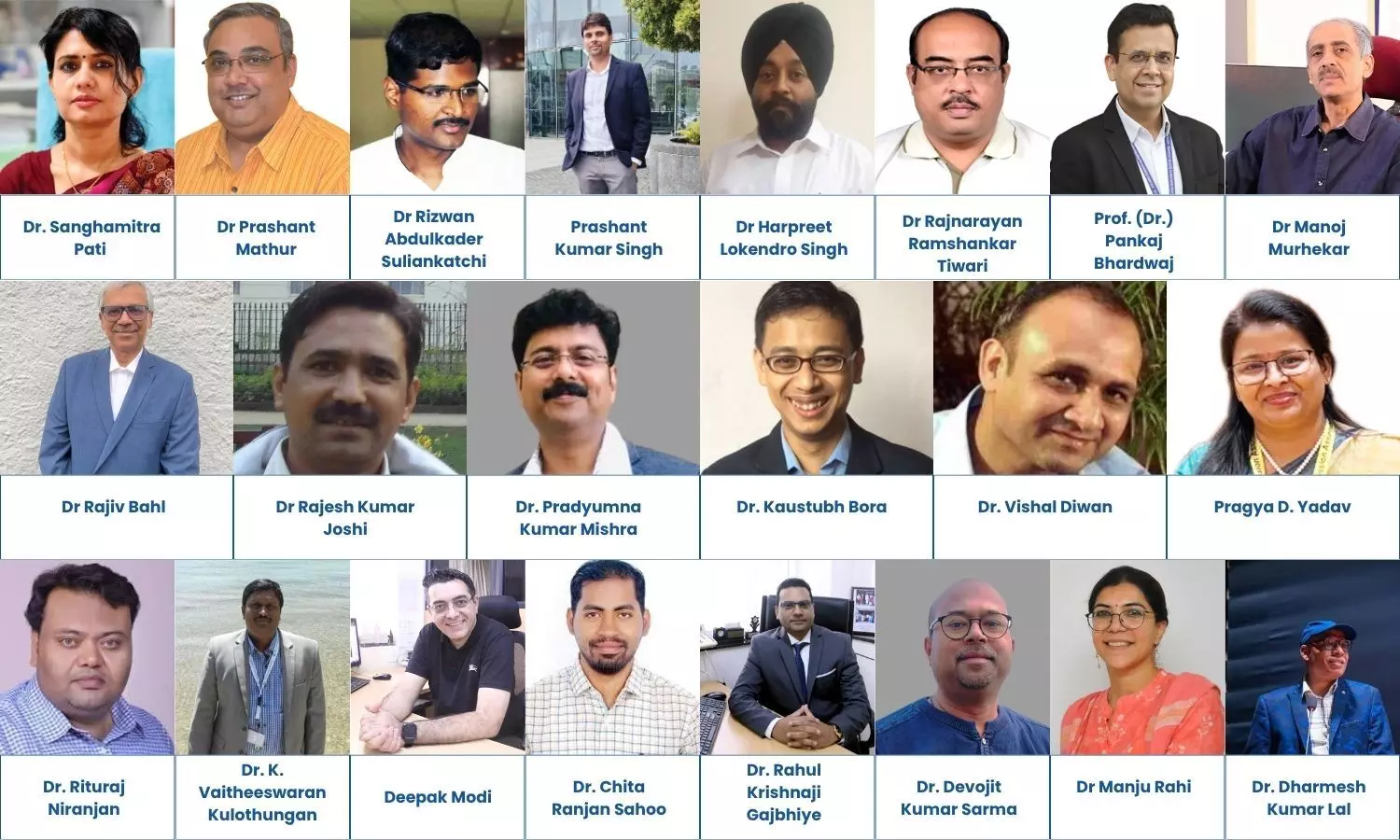


New Delhi: Altogether 22 scientists from the Indian Council of Medical Research (ICMR) have been recognised among the world's top 2 percent of scientists in the Stanford-Elsevier Global Ranking 2026.
The recognition highlights the contributions of ICMR scientists to medical research, public health and scientific advancement at the national and international levels. It also reflects ICMR's efforts to promote high-quality research and strengthen India's position in the global scientific community.
The Stanford University–Elsevier assessment draws on Scopus citation records available up to August 1, 2026. Researchers are evaluated using indicators including the composite citation score (c-score), h-index, and research impact, covering 22 major disciplines and 174 sub-fields.
According to the ranking list, Dr Sanghamitra C. Pati from ICMR Headquarters secured the highest position among the listed ICMR scientists, with a rank of 19,407, followed by Dr Prashant Mathur from ICMR-National Institute of Nutrition (NINE), ranked 35,982, and Dr Rizwan Suliankatchi Abdulkader from ICMR-National Institute of Epidemiology (NIE), ranked 60,564. Prashant Kumar Singh from ICMR-National Institute for Cancer Prevention and Research (NICPR) ranked 66,345. Dr Harpreet Lokendro Singh from ICMR Headquarters ranked 67,901.
Other scientists featured in the list include Dr Rajnarayan Ramshankar Tiwari from ICMR-National Institute for Research in Environmental Health, who ranked 96,691, Dr Pankaj Bhardwaj from ICMR-National Institute of Health Research and Development (NIHRJ), who ranked 97,800, Dr Manoj Vasant Murhekar from ICMR-NIE who ranked 1,04,806, Dr Rajiv Bahl from ICMR Headquarters who ranked 1,10,379 and Dr Rajesh Kumar Joshi from ICMR-National Institute of Traditional Medicine (NITM) ranked 1,49,819.
The list also include Dr Pradyumna Kumar Mishra from Indian Council of Medical Research – National Institute for Research on Women’s Health (ICMR-NIREH) ranked at 1,96,154, Dr Kaustubh Bora from ICMR-NIHRD ranked at 1,98,428, Dr Vishal Diwan from ICMR-NIREH ranked at 2,20,650, Pragya Dhruv Yadav from ICMR-NIOH ranked at 2,23,094, Dr Rituraj Niranjan from ICMR-NITHR ranked at 2,27,084, Dr Vaitheeswaran Kulothungan from ICMR-NINE ranked at 2,38,785, Deepak Narhari Modi from ICMR-NIRWoH ranked at 3,41,982, while Chita Ranjan Sahoo from ICMR-NIHRB secured a rank of 3,42,688.
Dr Rahul Krishnaji Gajbhiye from ICMR-NIRWoH was ranked 3,59,144, Dr D. K. Sarma from ICMR-NIREH secured a rank of 3,82,260, followed by Dr Manju Rahi from ICMR-NIVCR at 4,13,992 and Dr Dharmesh Kumar Lal from ICMR Headquarters was ranked 4,32,100.
1. Dr. Sanghamitra Pati: She is a distinguished physician, laboratory scientist, and public health researcher with over 33 years of experience in the field. She began her academic journey by earning an MBBS in 1992 and an MD in 1998 from MKCG Medical College in Berhampur, Odisha, India. In 2000, she was honored with the Joint Japan/World Bank Graduate Scholarship (JJ/WBGSP), which allowed her to pursue a Master of Public Health (MPH) at the University of Maastricht in the Netherlands. She further advanced her education and achieved a Ph.D. from the same university in 2023. Dr. Pati’s leadership roles have been impactful, particularly in her tenure as the Director of the ICMR- National Institute of Health Research, Bhubaneswar (renamed Regional Medical Research Centre in Bhubaneswar) from August 2016 to present. In December 2024, she took on the prestigious & responsible role of Additional Director General at the Indian Council of Medical Research (ICMR) in New Delhi, continuing her significant contributions to public health research and policy.
2. Dr Prashant Mathur: He is a Scientist-G and Director of the Indian Council of Medical Research–National Institute of Non-Communicable Disease Epidemiology (ICMR-NINE), Bengaluru. A renowned public health scientist, paediatrician, and epidemiologist, Dr. Mathur brings decades of expertise in health informatics, disease surveillance, and non-communicable disease (NCD) research. In his leadership role at the ICMR institute, he spearheads critical national disease registries and surveillance frameworks—including the National Cancer Registry Programme and the National NCD Monitoring Survey—driving evidence-based strategies for disease prevention, control, and health systems strengthening across India.
3. Dr Rizwan Abdulkader Suliankatchi: Dr. Rizwan is a medical doctor who graduated from the prestigious All India Institute of Medical Sciences, New Delhi with an M.D., in Community Medicine (Public Health).
4. Prashant Kumar Singh: He is a Scientist-E at the Indian Council of Medical Research–National Institute of Cancer Prevention and Research (ICMR-NICPR), Noida. He works in the Division of Preventive Oncology and Population Health, and his research interests include cancer prevention, tobacco control, non-communicable diseases, social determinants of health and nutrition, gender gaps in health and survival, and maternal and child health. He holds a PhD in Population Studies from the International Institute for Population Sciences (IIPS), Mumbai, and completed postdoctoral research at the Max Planck Institute for Demographic Research in Germany. His research includes studies on tobacco use, population health and cancer screening. He is also associated with the WHO Framework Convention on Tobacco Control (WHO FCTC) Knowledge Hub on Smokeless Tobacco.
5. Dr Harpreet Lokendro Singh: He obtained his Ph.D. in Bioinformatics from Jawaharlal Nehru University and Postdoctoral training at Cornell University. With 22 years of research experience, he started my career as a Bioinformatician, developed some popular tools for vaccine design such as Propred and pipelines for NGS data analysis such as data processing for GBS. Then he shifted to research program coordination, coordinated few large research programs at ICMR such as ICMR Biomedical Informatics Centres at 20 medical colleges and medical research institutes, ICMR-AIIMS Computational Genomics Centre etc. At present, he is working on establishing Health Research Data Ecosystem, developed accessible data systems for programs such as National COVID 19 Testing Database and developing and implementing ICMR Policy on Health Research Data Management. He published 168 peer-reviewed research papers, 10 copyrights of developed tools and databases and few book chapters.
6. Dr Rajnarayan Ramshankar Tiwari: He is a community physician who obtained his MD in Preventive and Social Medicine from Government Medical College, Nagpur and a PhD in Life Sciences from Gujarat University. In addition, he holds a Master’s degree in Public Administration, Economics and Sociology. He started his career as a Lecturer in Indira Gandhi Medical College, Nagpur, before shifting to the National Institute of Occupational Health, Ahmedabad, in 2000 as scientist, where he worked till 2015. He is the former Director of the National Institute of Miners’ Health, Nagpur, a Ministry of Mines, Government of India, institute and former Director (Additional Charge) of ICMR-National Institute of Occupational Health, Ahmedabad. Dr. Tiwari is currently the Director of ICMR-National Institute for Research in Environmental Health (NIREH), Bhopal with additional charge of Director, ICMR-National Institute of Research in Tribal Health, Jabalpur.
Dr. Tiwari has worked extensively on occupational health with a focus on occupational dust-related lung disorders such as silicosis, asbestosis, and coal workers' pneumoconiosis; occupational hazards of working children; and development of occupational health manpower. Currently, he is involved in air pollution-related research, developing competency-based environmental health resources and a context-specific heat action plan for Madhya Pradesh. He has 283 research publications in the field of occupational, environmental and public health in national and international journals. He is also the Editor of two books titled “Environmental and Occupational Exposures: Reproductive Impairment” and “Recent Trends in Environmental Health” and a reviewer for many national and international peer-reviewed journals. He has also guided 42 AFIH students and 26 MPH EOH students for their dissertation/thesis work. He is an adjunct/visiting faculty of Occupational and Environmental Health to Manipal University, Indian Institute of Public Health Gandhinagar, ICMR-National Institute of Occupational Health, Ahmedabad and ISTAR Anand.
7. Prof. (Dr.) Pankaj Bhardwaj: Prof. (Dr.) Pankaj Bhardwaj is currently serving as the Director of the ICMR–National Institute of Health Research (NIHR), Jodhpur. Prior to joining ICMR, he served at AIIMS Jodhpur for over 13 years, holding several key leadership positions including Professor, Academic Head of the School of Public Health, Dean (Officiating), Research Section. His research focuses on implementation research, health systems strengthening, epidemiology, NCD prevention and control, tobacco control, HIV/AIDS programme evaluation, geriatric health, and health policy. He has successfully led more than 63 nationally and internationally funded research projects supported by agencies including ICMR, WHO, NIH/NIHR, NACO, and Bloomberg Philanthropies. He has published 378 peer-reviewed scientific papers with an H-index of 85 and has been recognised among the Top 2% Most-Cited Scientists in the World (Stanford University rankings) for 2023, 2024, and 2025.
8. Dr Manoj Murhekar: He obtained his MBBS and MD in community medicine from Government Medical College, Nagpur, Maharashtra, India. He is currently the director of the National Institute of Epidemiology (NIE), Chennai, a permanent institute of the Indian Council of Medical Research. His research interests include Infectious disease epidemiology, vaccine-preventable diseases, and disease surveillance and outbreak investigations. He is also the course director for the field epidemiology training program (FETP) that the institute has conducted since 2001.
Prior to joining NIE, Dr. Murhekar worked at the Regional Medical Research Centre in Port Blair on the Andaman and Nicobar islands. He was awarded the Major General Saheb Singh Sokhey Award of the Indian Council of Medical Research for his contribution to the field of viral hepatitis among the tribal population of Andaman and Nicobar. Dr. Murhekar also worked with the World Health Organization (WHO) Western Pacific Regional Office as a consultant and professional staff member in Papua New Guinea and the Philippines. He has 140 publications in peer-reviewed journals to his credit. He is the associate editor of the journal BMC Infectious Diseases.
9. Dr Rajiv Bahl: A physician-scientist, with specialization in paediatrics (MD Pediatrics: University of Delhi) and public health (PhD: All India Institute of Medical Sciences), Dr Bahl received an Honorary Doctorate from the University of Bergen, Norway, in 2022 in recognition of his contributions to maternal and child health research. Dr Bahl has been serving as the Secretary, Department of Health Research & Director General, Indian Council of Medical Research (ICMR) since 7th October, 2022. Prior to this, he held the position of Head of Research on Maternal, Newborn, Child and Adolescent Health at the World Health Organization (WHO), Geneva (2013-22) and was responsible for Newborn and Child Health research at WHO (2003-2012). Earlier in his career, Dr. Bahl was a scientist in the ICMR Advanced Centre for Diarrheal Disease and Nutrition Research at All India Institute of Medical Sciences (AIIMS), New Delhi (1994-2002).
His expertise includes setting the research agenda, conceptualizing and implementing research studies with excellence, data analysis and translating research findings into public health policy and programmes. Dr Bahl has been instrumental in overseeing population-based, multi-country research studies in over 20 countries in Asia and Africa and has contributed to strengthening research capacity in over 50 institutions. Research conducted and coordinated by Dr Bahl has had significant impact on health policy and programmes, and has the potential of saving over 10,00,000 lives every year. His notable contributions to major innovations for newborn and child health includes use of zinc in treatment of diarrhea, early initiation and exclusive breastfeeding, outpatient treatment of newborns with severe infections and immediate initiation of Kangaroo Mother Care after birth in mother-newborn intensive care units.
10. Dr Rajesh Kumar Joshi: He is a PhD-qualified researcher and Head of Department at the Indian Council of Medical Research (ICMR)–National Institute of Traditional Medicine (NITM), formerly known as the Regional Medical Research Centre. His research interests include antibacterial activity, antioxidant activity, natural product chemistry, chromatography, mass spectrometry and the extraction of bioactive compounds.
According to his ResearchGate profile, Dr. Joshi has authored or contributed to 159 publications, which have received 2,539 citations and recorded 58,359 reads on the platform. His listed areas of expertise include antimicrobial agents, chemicals, liquid chromatography and spectrometry. His research profile indicates a focus on studying natural products and their potential biological activities, including antibacterial and antioxidant properties.
11. Dr. Pradyumna Kumar Mishra: Dr Mishra is a Scientist-G and Head of Environmental Biotechnology, Genetics and Molecular Biology. He joined the institute on November 30, 2015. He holds a PhD in Life Sciences from the University of Rajasthan, Jaipur, pursued in collaboration with the All India Institute of Medical Sciences (AIIMS), New Delhi. He also holds an MSc in Life Sciences from the University of Kalyani, West Bengal. Dr. Mishra has received several awards and fellowships in recognition of his scientific contributions. These include the Fellowship of the National Academy of Medical Sciences (FAMS) in 2020, the Africa-India Mobility Fellowship in 2020, the Dr. T. C. Anandkumar Gold Medal Oration Award in 2017, and nomination as a Foreign Affiliate Member of the Foundation for Polish Science in 2016. He also received the Labhsetwar Foundation Award in 2015, the Samanta Chandra Sekhar Award from the Odisha Bigyan Academy in 2013, and a Fulbright-Nehru Fellowship in 2013. His other honours include the Professor G. P. Talwar Gold Medal Award in 2012, the Young Investigator Award from the Department of Biotechnology in 2009, and the JEM Young Scientist Award at the International Symposium on Dendritic Cells in Kobe, Japan, in 2008.
12. Dr. Kaustubh Bora: Dr Bora is a prominent Physician-Scientist currently serving as a Scientist-D at the ICMR–Regional Medical Research Centre (RMRC), North East Region in Dibrugarh, Assam, India. He is affiliated with the Indian Council of Medical Research (ICMR), where he has been working since December 2016. Dr. Bora has been named among the world's Top 2% Scientists in a global list shared by the ICMR. He secured a global rank of 198,428, with his primary sub-field recognized under General and Internal Medicine
13. Dr. Vishal Diwan: He is a Scientist-E and Head of Environmental Monitoring and Exposure Assessment (Water and Soil). He joined the institute on September 23, 2019. He holds an MSc and a PhD in Limnology from Barkatullah University, India, completed in 1999 and 2008, respectively. He also holds a Master’s degree in International Health, completed through a programme involving University College London (UCL), CIG Bergen and the University of Copenhagen, Denmark, in 2007. He subsequently worked as a postdoctoral fellow at Karolinska Institutet in Sweden from 2008 to 2015.
Dr. Diwan has extensive experience in public health and environmental research. He has worked at R.D. Gardi Medical College in Ujjain, where he served as a research officer in the Department of Community Medicine from 2003 to 2008, assistant professor from 2008 to 2013, and associate professor in Public Health and Environment from 2013. He also served as a postdoctoral fellow and later an affiliated researcher in Public Health Sciences at Karolinska Institutet. His professional experience includes a professorship in Public Health and Environment at R.D. Gardi Medical College, listed from 2019.
His academic and research career has been supported by several scholarships and travel grants, including Erasmus Mundus scholarships for the Master of Science programme in International Health and postdoctoral studies at Karolinska Institutet, as well as a Swedish Institute scholarship. He has also received travel grants from the British Medical Journal (BMJ) and the Indian Council of Medical Research (ICMR) to attend and present research at international conferences in London, Beijing, Vancouver and Orlando.
Dr. Diwan has been associated with professional organisations including Health Systems Global and the International Health Economics Association. He has also served in editorial roles, including as an associate editor for PLOS ONE and BMC Health Services Research, where his editorial association was listed in 2017. His current research department at ICMR focuses on environmental monitoring and exposure assessment related to water and soil.
14. Pragya D. Yadav: Dr Yadav is an Indian scientist at the ICMR-National Institute of Virology (NIV), who is known for her research contributions in the field of communicable diseases and highly pathogenic viral infections, such as Crimean–Congo hemorrhagic fever (CCHF), Nipah, and Ebola, leading to improvements in national public health surveillance policy for interventions and management. Yadav is among the scientists who detected the first three COVID-19 pandemic cases in India.[1][2][3] She headed the team that developed Covaxin, the first indigenous COVID-19 vaccine in India.
She was conferred the 2017 Major Gen Saheb Singh Sokhey Award in October 2019 by the Indian Council of Medical Research, Ministry of Health and Family Welfare.[5] She was selected as a fellow of the Centers for Disease Control and Prevention, USA, and the Japan International Cooperation Agency, Japan. She was elected fellow of the National Academy of Agricultural Sciences, India.
15. Dr. Rituraj Niranjan: Currently working as Scientist-D in the area of immune system-associated disorders, Dr. Niranjan, by training, is a cellular and molecular immunologist. Beside cellular and molecular immunology research, he is engaged in the different immune system associated disorders like, immunopathogenesis of DENGUE fever, mechanisms of immune dysfunction in other vector borne diseases, allergy and immunology, tissue remodelling and fibrosis, autophagy, acute kidney failure, neuroinflammation, nanoparticle-based drug delivery system and immuno-compromise disorders. Dr. Rituraj Niranjan work focuses on the role of Interleukin-15 (IL-15) in the lungs, gastrointestinal and other immune disorders.
He earned his Ph.D. from Jawaharlal Nehru University, New Delhi, in the area of immuno-neuropharmacology, working at the CSIR-Central Drug Research Institute (CDRI), Lucknow, India. He completed his first post-doctoral fellowship at the University of Arkansas for Medical Sciences, Little Rock, USA and then did his second post-doctoral fellowship at Cincinnati Children's Hospital and Medical Research Center, Cincinnati, Ohio, USA and latter at the Case Western Reserve University, Cleveland, USA. Before joining to the Indian Council of Medical Research as a talent search scientist (TSS-ICMR), he was working as scientist at the Indian Institute of Technology, Kanpur (IIT-K), India.
16. Dr. K. Vaitheeswaran Kulothungan: He is a Scientist-E at the Indian Council of Medical Research's National Institute of NCD Epidemiology (ICMR-NINE), Bengaluru. According to his professional profile, he has close to 13 years of experience in medical and clinical, Epidemiological research and holds a PhD degree in Statistics. He has played various roles in technical and operational aspects of Data Management, Statistical Analysis & reporting functions. He has experience in driving statistical strategy of Health research studies and experience in the field of Ophthalmology Research, Non communicable disease (Cancer, CVD, Diabetes and Stroke) contributed to Planning, Design, Statistical analysis and publications. Thorough knowledge and experience in risk prediction of diseases and in specific to Diabetic Retinopathy and he had published 62 papers/articles in many peer reviewed national and international journals.
17: Deepak Modi: Dr. Modi is a Scientist F in the Molecular and Cellular Biology Department at the ICMR-National Institute for Research in Reproductive and Child Health (ICMR-NIRRCH), Mumbai. His research focuses on the mechanisms underlying embryo implantation and placental development, causes of implantation failure, pregnancy-related complications such as preterm birth, and mother-to-child transmission of infections. He also works on developing three-dimensional organ-on-chip and organoid models of reproductive tissues, as well as research into the genetics of sexual development and infertility. He completed her PhD in 2002 from BJ Wadia Hospital for Children, Mumbai, and obtained her MSc and BSc degrees from Wilson College in 1995 and 1993, respectively. He joined ICMR's reproductive health research institute as a Scientist B in 2002 and progressed through the positions of Scientist C, Scientist D, Scientist E and Scientist F. She also served as a visiting fellow at the University of Oulu, Finland, from March to June 2008.
18. Dr. Chita Ranjan Sahoo: He is presently availing ICMR-Centenary Post-Doctoral Fellowship (PDF) from ICMR-RMRC, Dept. of Health Research, Ministry of Health & Family Welfare, Govt. of India. He is an R&D Consultant, visiting R&D Professor, and Academic Counsellor of various institutions. He is also an External RDC (Research Doctoral Advisory Committee) member of several institutes. His Research Interests are Infectious microbes, AMR, Drug and herbal product development, Antibiotic and wastewater pathogen remediation and Bioprospecting of algae- upstream and downstream.
19. Dr. Rahul Krishnaji Gajbhiye: With MBBS, PhD, FNASc, Dr. Rahul is a physician-scientist and Scientist E (Deputy Director) at the ICMR National Institute for Research on Women's Health (ICMR-NIRWoH), Mumbai. He heads the Clinical Research Laboratory and Andrology Clinic, and serves as Nodal Officer of the Model Rural Health Research Unit (MRHRU), Vani, Maharashtra. He is a Fellow of the National Academy of Sciences, India (FNASc), and was recognised among the top 2% of scientists worldwide by Elsevier and Stanford University in 2024. Dr. Gajbhiye earned his MBBS from Dr. Panjabrao Deshmukh Medical College, Amravati, and a PhD in Applied Biology from Mumbai University, India, where his dissertation focused on proteins involved in the pathogenesis of endometriosis. He received advanced training as a Frontiers in Reproduction Fellow (USA, 2008) and an INSA Indo-Australia Early/Mid-Career Fellow (University of Queensland, 2017–2018).
20. Dr. Devojit Kumar Sarma: He is currently working as a Scientist - D, Environmental Biotechnology, Genetics and Molecular Biology at ICMR-National Institute for Research in Environmental Health (ICMR-NIREH), Bhopal. He has a Ph.D. (Biotechnology) and M.Sc. (Biotechnology). He has been conferred with ICMR-SRF in 2009, Awarded International Travel Award by IS Global, Barcelona, Harvard University and Swiss Tropical & Public Health Inst. to attend “Science of Eradication: Malaria Leadership Development Course” in June 2016 at Barcelona Institute of Global Health, University of Barcelona and International Travel Award by FHI360 to attend ICSSC “Study Design and Statistics Training” at Bangkok, Thailand in September 2016.
21. Dr Manju Rahi: She is a medical scientist with a post-graduation in public health. She joined the Indian Council of Medical Research as Scientist-C (medical) in 2006 and is currently the Director and Scientist-G, ICMR-National Institute of Vector Control Research, Puducherry. Her scientific contributions are distinguished by her focus health policy research. Her area of expertise is vector borne diseases and zoonotic diseases in OneHealth context. She spearheaded the development of first national guidelines on diagnostics and management of scrub typhus, use of ivermectin and adoption of triple drug therapy (Ivermectin, DEC, and Albendazole) in mass drug administration for lymphatic filariasis and policy recommendations on inclusion of DEC salt into the national lymphatic filariasis elimination policy, PCR in malaria diagnosis as a programmatic component, availability of insecticide bednets and rapid diagnostic kits in the commercial sector.
She conceptualised and steered Malaria Elimination Research Alliance-India, which works closely with national programme for malaria elimination. She has been instrumental in evaluating public health pesticides, newer tools of vector control which is a vital aspect in controlling vector borne diseases. Striving for the integration of biological and environmental management approaches for vector control, Dr. Rahi’s role was critical in initiating the laboratory research on dengue control via Wolbachia transfected Aedes aegypti at NIVCR. Additionally, her efforts in establishing NGCMA certified Good Laboratory Practice (GLP) facilities for testing insecticides have significantly bolstered research capabilities at National Institute of Malaria Research and NIVCR. She has more than 100 papers in peer-reviewed high impact journals and 4 book chapters and 2 awards to her credit.
22. Dr. Dharmesh Kumar Lal: He is a Scientist-E at the Indian Council of Medical Research (ICMR), headquartered in New Delhi. He is a public health specialist whose professional interests include strengthening health systems through research and capacity building. He is associated with ICMR's Descriptive Research division. He has an MD in Medicine, and a DNB in Hospital Administration.
Also read- Stanford's Top 2% Scientists List 2026 Names 5 Poona College of Pharmacy Faculty Members