Doctors cannot be treated as factory workers, regular employees: HC rebukes Chennai hospital, slaps Rs 1 lakh costs
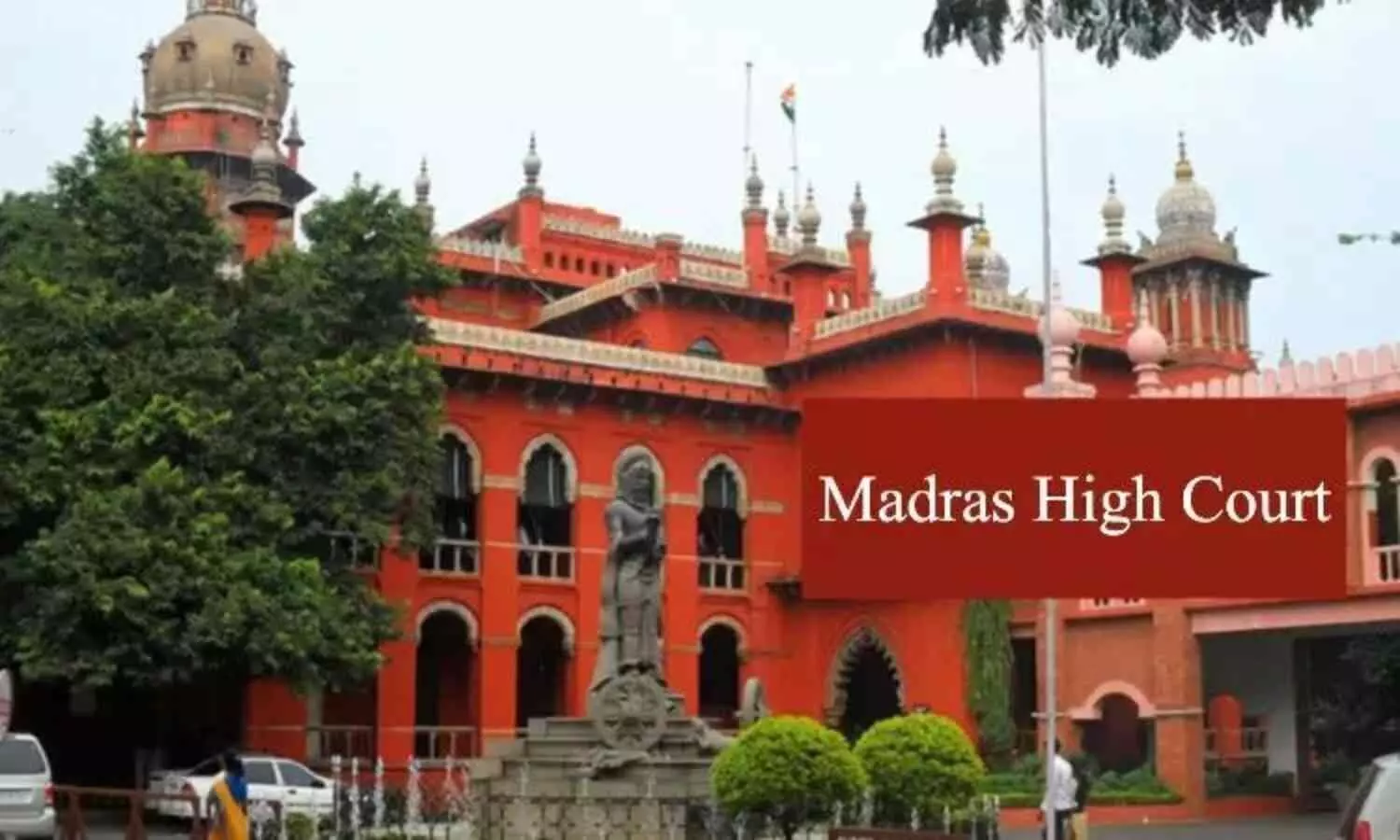
Madras High Court


Chennai: Holding that hospitals cannot treat doctors like a workman in a factory or a technical person or a regular employee, the Madras High Court dismissed the arbitration plea filed by a private hospital against a Chennai-based Cardio Thoracic Surgeon and imposed costs of Rs 1 lakh on the petitioner hospital, directing it to pay the amount to the doctor.
Medical Dialogues had earlier reported that the court had questioned whether hospitals are being run as businesses or healthcare institutions and had orally observed that non-compete and non-solicitation clauses appear "unlawful on the face of it."
The matter arose from a petition filed under Section 11(6) of the Arbitration and Conciliation Act, 1996, seeking the appointment of an arbitrator against the doctor who joined another hospital after leaving the petitioner hospital.
Slamming the hospital for treating the doctor like a 'regular employee', Single Bench Justice N Anand Venkatesh observed,
"Doctors can thrive without hospitals, whereas a hospital can never exist without doctors supporting such hospitals by rendering their services. Therefore, by no stretch, a hospital can treat a doctor like a workman in a factory or a technical person or a regular employee employed by an organisation in the field of technology and other service sectors."
The bench made it clear that a doctor’s professional status is fundamentally different from that of a regular employee. "It must be kept in mind that the respondent, who is a doctor by profession, cannot be construed as an employee of the petitioner hospital since, by the very nature of service provided by a doctor, at the best, a hospital can only utilize the services and cannot treat a qualified doctor like a regular employee of an organization," the court remarked.
Background
The arbitration petition arises from a professional agreement dated September 8, 2022, between the hospital and the doctor. The petitioner hospital, MIOT International, Chennai, appointed the respondent as a Consultant Cardio Thoracic Surgeon through a professional agreement dated 08.09.2022. The offer required him to serve for three years, including overseas secondments, and he was later sent on multiple assignments to Fiji.
After about two years and seven months, the doctor sent an email on 21.04.2025 expressing his intention to resign. The hospital relied on Clause 10.2 of the agreement, which required three months’ notice or payment of three months’ professional fees in lieu of notice. It also alleged that by joining Apollo Speciality Hospital, the doctor violated the non-compete clause (Clause 8.3).
Claiming breach of Clauses 10.2 and 8.3, the hospital demanded Rs 42 lakh as liquidated damages, equivalent to three months’ professional fees. A legal notice was issued, which the doctor denied through a reply dated 04.06.2025.
After attempts at amicable settlement failed, the hospital issued a trigger notice dated 04.07.2025 under Section 21 of the Arbitration and Conciliation Act, seeking appointment of a sole arbitrator under Clause 12.2 of the agreement. The present petition was then filed before the Court.
In response, the doctor argued that the dispute was not arbitrable and that the agreement violated Section 27 of the Indian Contract Act, 1872, making the petition liable to be dismissed.
Court's Observation
The Court strongly criticized Clause 8 of the agreement, which dealt with confidentiality, non-solicitation and non-compete covenants. Non-compete and non-solicitation clauses are restrictive covenants commonly used in employment or professional agreements. A non-compete clause typically prevents a doctor from joining a competing hospital or starting a similar practice for a specified period or within a particular geographic area after leaving employment. A non-solicitation clause usually bars the doctor from approaching or “poaching” the hospital’s patients, staff or business contacts after exit.
Calling it quite 'unfortunate', the court observed,
"It is quite unfortunate that a hospital has incorporated such a clause in an agreement entered into with a doctor. Either the above clause is as a result of cut, copy and paste syndrome from an agreement, which is regularly entered into between technology companies with their employees or the petitioner hospital has forgotten the fact that they are running a hospital to serve the patients and that they are indirectly admitting that the organization is nothing short of a profit making entity like any other business entity."
The judge underlined that hospitals depend on doctors and not the other way round, stating,
"Doctors are qualified and competent to discharge their duties to patients. Hospitals do not give them any special training nor equip them. On the other hand, it is the hospitals, which utilize the services of doctors in order to effectively run the operations."
The clause in question restrained the doctor from joining a so-called "rival hospital," setting up practice within 15 km for three years, and imposed liquidated damages in case of breach. The hospital argued that by joining Apollo Speciality Hospital, the doctor had joined a rival and might solicit patients or reveal confidential information.
Rejecting this stand, the court said,
"A doctor is an independent professional, who cannot be stopped from rendering his services wherever he wants to and also cannot be stopped from attending to patients just because those patients were earlier taking treatment in the petitioner hospital. When it comes to running a hospital, there is no question of a rival hospital, and each hospital is an independent entity, which is being run to serve the patients and the society at large."
Giving an example, the court said that just like an advocate cannot be prevented from independent practice after leaving a firm, a doctor cannot be restrained from practising elsewhere.
The court further ruled that the clauses are hit by Sections 23 and 27 of the Indian Contract Act, 1872. It ruled:
"An agreement entered into by a doctor with a hospital, which contains a non solicitation and/or non compete clause, is certainly opposed to public policy and such an agreement is squarely hit by Section 23 of the Indian Contract Act, 1872. Consequently, it must be held to be unlawful, unenforceable and void ab initio to that extent."
On the issue of notice period, the hospital claimed that the doctor failed to complete his contractual obligations and sought around Rs 42 lakh towards notice-period dues. However, the Court found that the doctor had submitted his resignation on 29.01.2024 and had clearly given three months’ notice up to 29.04.2024.
The Court noted that the hospital later requested the doctor to continue and undertake an assignment at Fiji, which he did. The hospital was “conveniently” treating a later email dated 21.04.2025 as the resignation letter, ignoring the earlier notice.
Holding that the doctor had complied with Clause 10.2 of the agreement, the Court concluded that there was no surviving dispute requiring arbitration.
"For all the above reasons, this Court holds that the above petition is devoid of merits and it has been filed to witch-hunt a doctor, whom the petitioner hospital expected to dance to their tunes for ever," observed the court.
Accordingly, the High Court dismissed the original petition and imposed costs of Rs 1,00,000 (Rupees one lakh) on the petitioner hospital, directing it to pay the amount to the respondent doctor.
To view the court order, click on the link below:
Also read- Non-compete clauses against doctors 'unlawful': Madras HC