Resident doctors' duty hours implementation lies with states: NMC tells Supreme Court
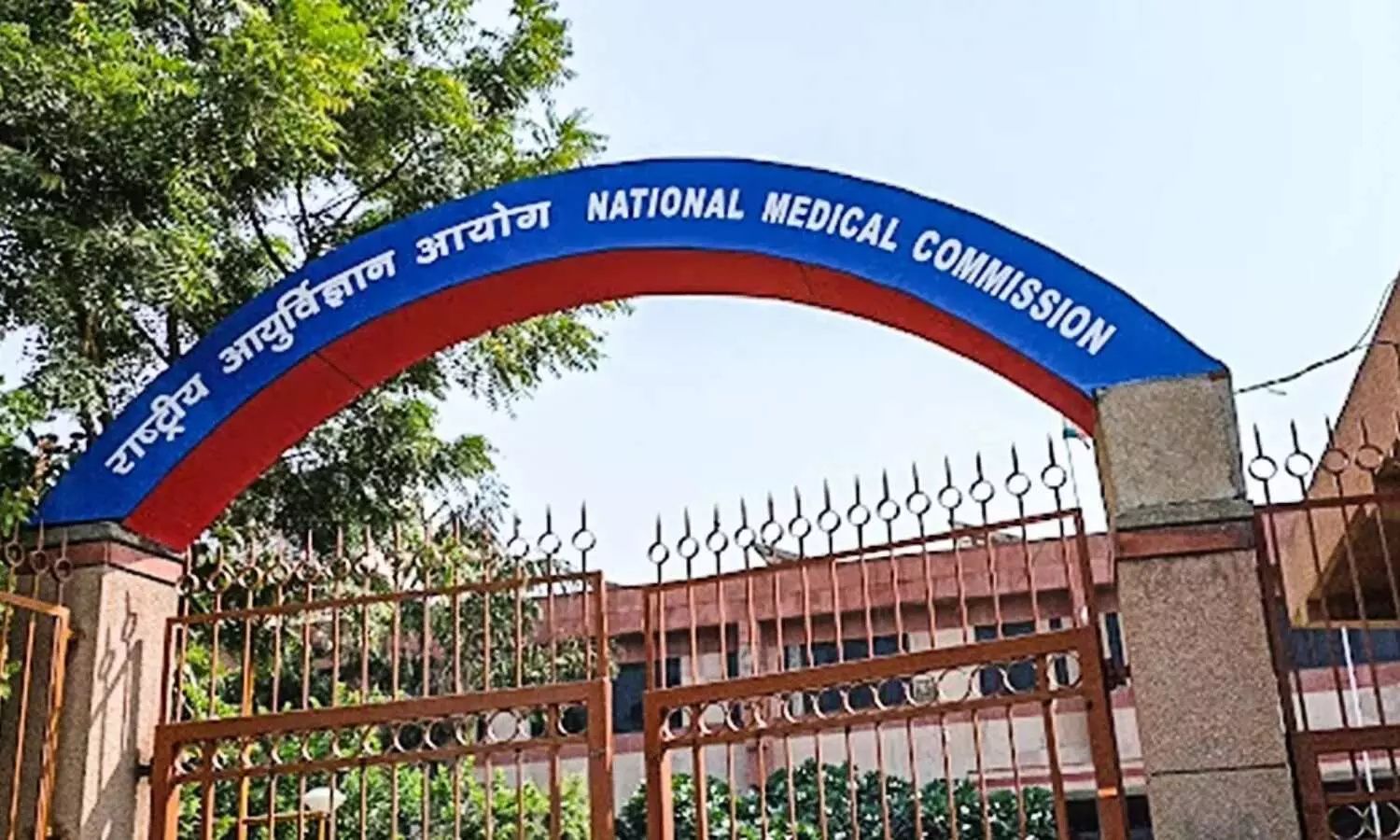
National Medical Commission


New Delhi: In the ongoing case concerning working hours of resident doctors, the National Medical Commission (NMC) has filed its counter affidavit before the Supreme Court, stating that it has already taken necessary steps to regulate working hours and improve the mental well-being of medical students and resident doctors.
Along with this, the commission informed the apex court that the state governments and medical institutions are responsible for the implementation of duty hours because NMC's primary role is to regulate medical education and academic standards under the National Medical Commission Act, 2019.
Medical Dialogues had earlier reported that the Supreme Court issued notice to the Union Government and NMC on the Public Interest Litigation (PIL) filed by doctors under the United Doctors' Front (UDF) against the "inhumane working hours of resident doctors". The association challenged the "exploitative and unconstitutional working conditions imposed on resident doctors across the country".
The plea, filed through Advocates Mr Satyam Singh and Ms Neema AOR, sought urgent intervention from the Apex Court to enforce compliance with the Ministry of Health and Family Welfare's 1992 directives notification, which mandates that resident doctors should not work more than 12 hours per day and 48 hours per week.
1. NMC refers to PGMER 2023
In its reply, NMC said it has made a conscious adoption of reasonable working and rest hours under the Post Graduate Medical Education Regulations (PGMER), 2023, in compliance with the Residency Scheme, 1992. to balance the training needs with local institutional constraints.
The Commission clarified that it deliberately used the terms "reasonable working hours" and "reasonable time for rest" instead of fixing rigid numerical limits since every institution faces diverse local constraints or realities, including patient load, human resource constraints, and speciality-specific requirements and therefore, imposing a rigid numerical limit that may compromise patient care and training.
By doing so, NMC stated that it allowed the college authorities/institutions to adapt their schedules to local realities while still maintaining humane working conditions in institutions for medical students and resident doctors.
Also read- Supreme Court issues Notice to Centre, NMC on Plea against 'Inhumane' duty hours for doctors
2. National Task Force on Mental Health
NMC also informed the court that in response to rising depression and suicides among medical students, it constituted the National Task Force on Mental Health and Well-being of Medical Students in 2024, comprising 15 members, to assess the mental health issues faced by medical students and Resident Doctors and to propose evidence-based strategies for the improvement of mental health.
The 15-member Task Force visited medical colleges across India and held focused group discussions with administrators and heads of departments to understand challenges and best practices related to student mental health.
It also conducted an online survey among undergraduate and postgraduate students and faculty members to gather detailed insights into mental health issues.
The National Task Force recommended that, based on feasibility and available resources, residents should work no more than 74 hours per week, with no more than 24 hours at a stretch. This schedule includes one day off per week, one 24-hour duty, and 10-hour shifts for the remaining five days.
3. Responsibility lies with States and Institutions: NMC
In its affidavit, NMC argued that the framing of regulation in issues relating to 'Public health and sanitation; hospitals and dispensaries' is entrusted to the State Governments.
"During parliamentary debates and question hours, the Union Government has repeatedly clarified that Health and Hospitals are a State List subject under the Constitution of India. Therefore, the state governments are empowered to make and ensure implementation of laws relating to public health and hospitals, including working hours of doctors within their jurisdiction," NMC stated.
The Commission referred to a 2018 Lok Sabha Unstarred Question (No. 3175), where the Union Government clarified that fixing working hours for doctors in government hospitals is primarily the responsibility of State and Union Territory governments.
The 2018 reply also stated that in certain central government hospitals, such as AIIMS New Delhi, Safdarjung Hospital, Dr Ram Manohar Lohia Hospital, and Lady Hardinge Medical College, working hours normally do not exceed 40 hours per week. However, duties depend on work exigencies and emergency requirements.
Poiting out that the government and medical institutions are responsible for managing the regulation of service conditions of the Resident doctors, NMC informed the court that its primary role is to regulate medical education and academic standards under the National Medical Commission Act, 2019.
NMC has submitted that the writ petition and relief sought by the petitioner should be decided based on the facts and circumstances of the case.
The matter is currently pending before the Supreme Court.
Commenting on the update, UDF President Dr Lakshya Mittal said, "We are awaiting the next hearing, expected later this month, and remain hopeful that the Supreme Court will ensure strict enforcement of these long-standing directives in the interest of patient safety and doctors’ well-being."
He further stated that, "Resident doctors are the backbone of both government and private hospitals, yet they continue to be overworked and exploited. As per the 1992 directives of the Ministry of Health & Family Welfare, resident doctors should not work beyond 48 hours a week and 12 hours per shift. Despite repeated representations, including a letter to the Prime Minister and a meeting chaired by the Director General of Health Services, these norms are being routinely violated."
Also read- Doctors move Supreme Court against 'inhuman' working hours for resident doctors