Health Ministry organises national workshop to strengthen compliance, enforcement against sex selection
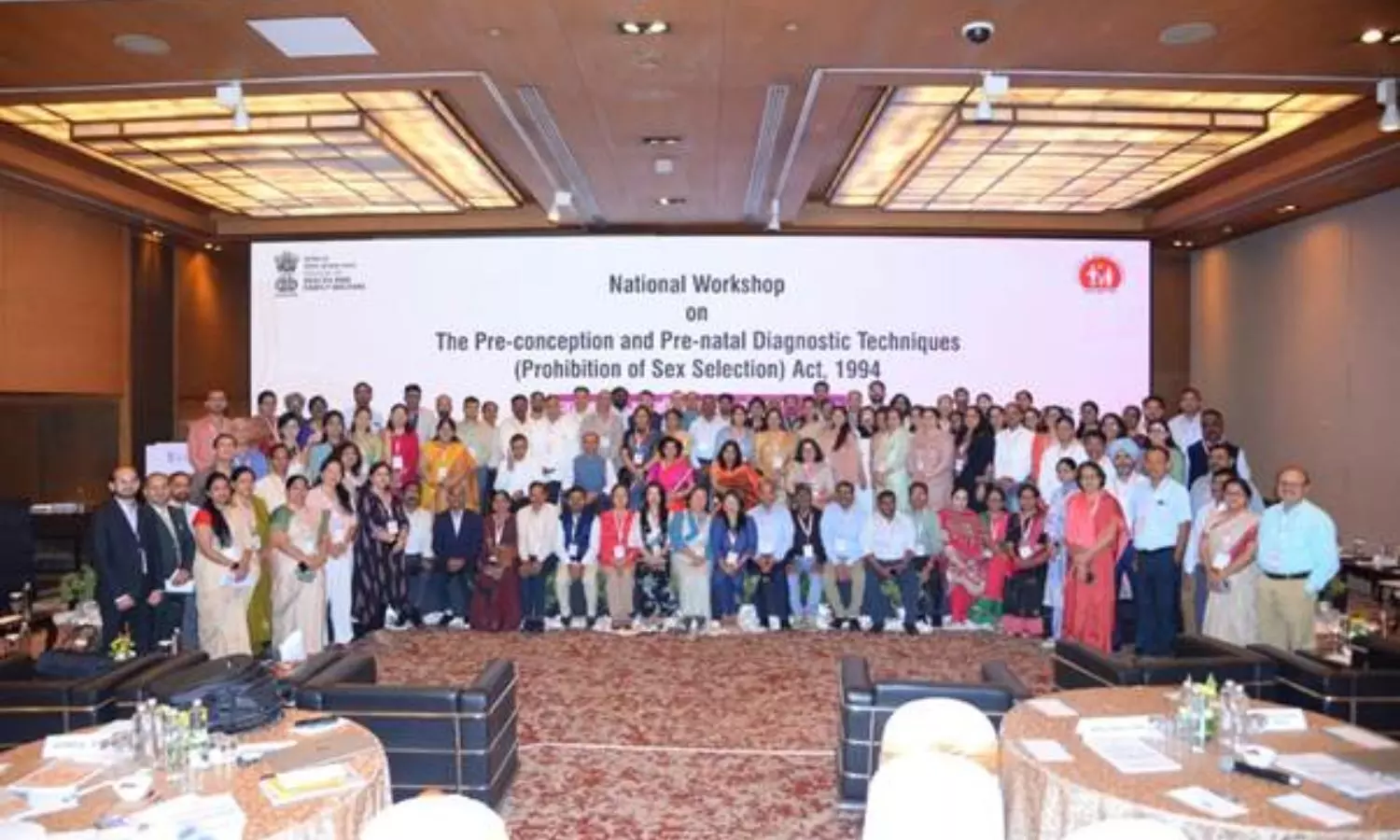


New Delhi: The Union Ministry of Health and Family Welfare organised a National Workshop on Strengthening the Implementation of the Pre-conception and Pre-natal Diagnostic Techniques (Prohibition of Sex Selection) Act, 1994 (PC&PNDT Act) in New Delhi.
The workshop brought together representatives from all 36 States and Union Territories, along with senior officials of the Ministry of Health and Family Welfare and the Indian Cyber Crime Coordination Centre (I4C), Ministry of Home Affairs.
The workshop focused on strengthening regulatory compliance, enhancing digital governance and ease of doing business, addressing emerging challenges in the digital ecosystem, and sharing State-level best practices to improve implementation of the PC&PNDT Act.
Delivering the keynote address, Smt. Aradhana Patnaik, Additional Secretary & Mission Director (NHM), Ministry of Health and Family Welfare, emphasised the need for strict and effective enforcement of the PC&PNDT Act, complemented by sustained Information, Education and Communication (IEC) initiatives to reinforce the equal value of the girl child, the PIB stated.
Highlighting the opportunities and challenges arising from emerging technologies, Ms. Patnaik noted that portable diagnostic devices, online platforms and social media have significantly expanded access to healthcare and information, but can also be misused for activities prohibited under the law. She stressed that technology must be leveraged to advance healthcare and social inclusion and must not be allowed to facilitate sex selection or gender discrimination.
Highlighting the progress made in improving the Sex Ratio at Birth (SRB), Ms. Patnaik noted that the national SRB has shown a steady improvement over the years. As per the Sample Registration System (SRS) Report 2024, the national SRB increased by 20 points, from 898 females per 1,000 males during 2014–16 to 918 females per 1,000 males during 2022–24. The improvement reflects the continued efforts towards effective implementation of the PC&PNDT Act, regulatory oversight and community-level interventions.
The workshop also deliberated on emerging challenges associated with the digital ecosystem, particularly online advertisements and content relating to sex selection and sex determination.
A dedicated session on Section 22 of the PC&PNDT Act highlighted the role of States and Union Territories in identifying, flagging and restricting prohibited digital content. The discussions also covered the use of the Sahyog Portal and the need for proactive coordination with digital intermediaries to address online violations and prevent misuse of technology for activities prohibited under the Act.
Deliberations were also held on standardising and strengthening State/UT PC&PNDT portals. The discussions focused on integrating digital modules for regulatory processes, monitoring and compliance to strengthen oversight while facilitating ease of doing business. Live demonstrations of digital initiatives undertaken by Telangana and Gujarat provided practical insights and enabled participating States and UTs to examine replicable models for strengthening digital governance under the PC&PNDT framework.
The workshop also provided a platform for States and UTs to share their experiences and innovative practices. Representatives from Andhra Pradesh, Chhattisgarh, Haryana, Jharkhand, Odisha and Tamil Nadu, among others, presented State-level initiatives and best practices. The exchange facilitated peer learning and discussions on actionable measures to further strengthen implementation of the PC&PNDT Act.
Ms. Meera Srivastava, Joint Secretary (RCH), MoHFW; Dr. Pawan Kumar, Additional Commissioner (PC&PNDT), MoHFW; senior officials from the Indian Cyber Crime Coordination Centre (I4C), Ministry of Home Affairs; and senior officials from all States and Union Territories were present during the workshop.
Also Read:Maharashtra Govt to set up task force against illegal abortions, sex determination