Himachal to create reserve quota of 300 doctors to ensure uninterrupted services
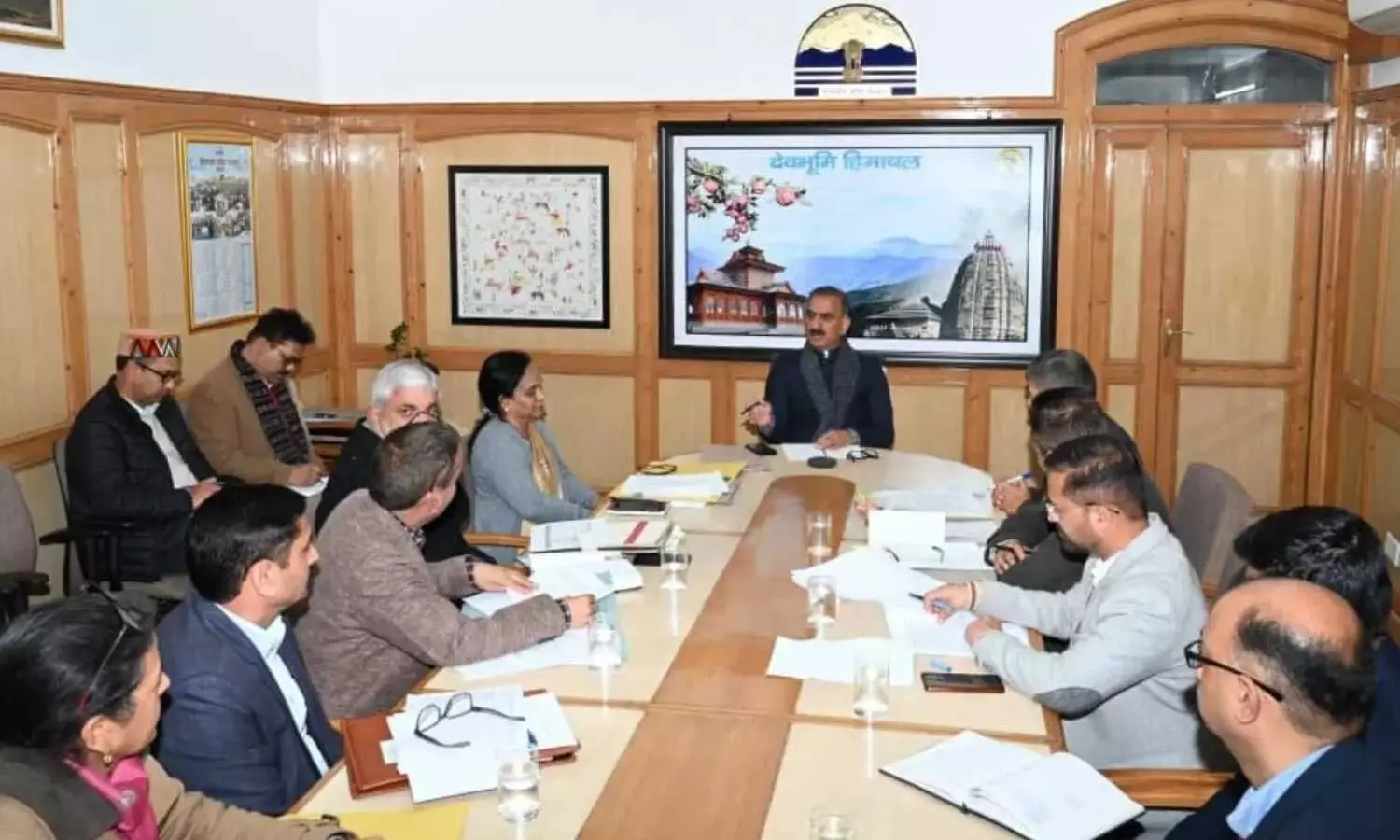


Shimla: Himachal Pradesh Chief Minister Thakur Sukhvinder Singh Sukhu, during a review meeting of the Health Department on Tuesday, said that the state government was making sustained efforts to strengthen healthcare services and upgrade facilities in government health institutions across the state.
The Chief Minister said that from April onwards, the process of procuring world-class, technology-enabled medical equipment would be initiated in health institutions throughout the state, involving an estimated expenditure of around Rs 3,000 crore.
He stated that the government was focusing on strengthening diagnostic services and addressing the shortage of doctors and paramedical staff to ensure better healthcare delivery.
The recruitment process to fill vacant posts in health institutions was already underway, and additional posts would be created wherever required, he added.
Sukhu said that PET scan and robotic surgery facilities would soon be introduced at Indira Gandhi Medical College (IGMC), Shimla.
He added that robotic surgery services were already available at the Super Speciality Hospital, Chamiyana, and Dr. Rajendra Prasad Government Medical College (RPGMC), Tanda.
The chief minister further said that the state government is strengthening the ‘Aadarsh Swasthya Sansthan’ initiative to provide improved healthcare services closer to people’s homes.
To ensure uninterrupted healthcare delivery, he directed the creation of a training and leave reserve quota of 300 doctors in the Department of Health Services.
He said that this arrangement would help promptly fill vacancies arising when doctors proceed on postgraduate courses, thereby preventing any disruption in patient care.
Emphasizing the importance of quality medical education, he directed that smaller batches be formed for medical students, with no class exceeding 60 students.
He said that the state government would assist in the construction of new lecture theatres to facilitate better learning environments and ensure quality education in medical colleges.
Sukhu also stressed the need for the upgradation of infrastructure and facilities in all medical colleges across the state.
Reiterating that strengthening healthcare infrastructure was a top priority of the state government, the Chief Minister said that the induction of modern medical equipment would significantly improve diagnosis and treatment outcomes.
He underlined that the government’s focus was to provide quality healthcare services in all regions of the state, particularly in remote and rural areas, so that patients do not have to travel long distances for advanced medical care.
He said that the government was working with a clear roadmap to ensure that every health institution was equipped with better facilities, adequate manpower and enhanced diagnostic services.
"The measures being taken would not only improve patient care but also create a better working environment for doctors and healthcare staff," he said.
He directed the Health Department to ensure the timely implementation of all initiatives so that their benefits reach the public at the earliest. Improving medical education and strengthening infrastructure in medical colleges were equally important for producing skilled doctors and ensuring long-term improvement of the healthcare system, he added.