
AI models in healthcare must be tested on diverse populations: NHA CEO
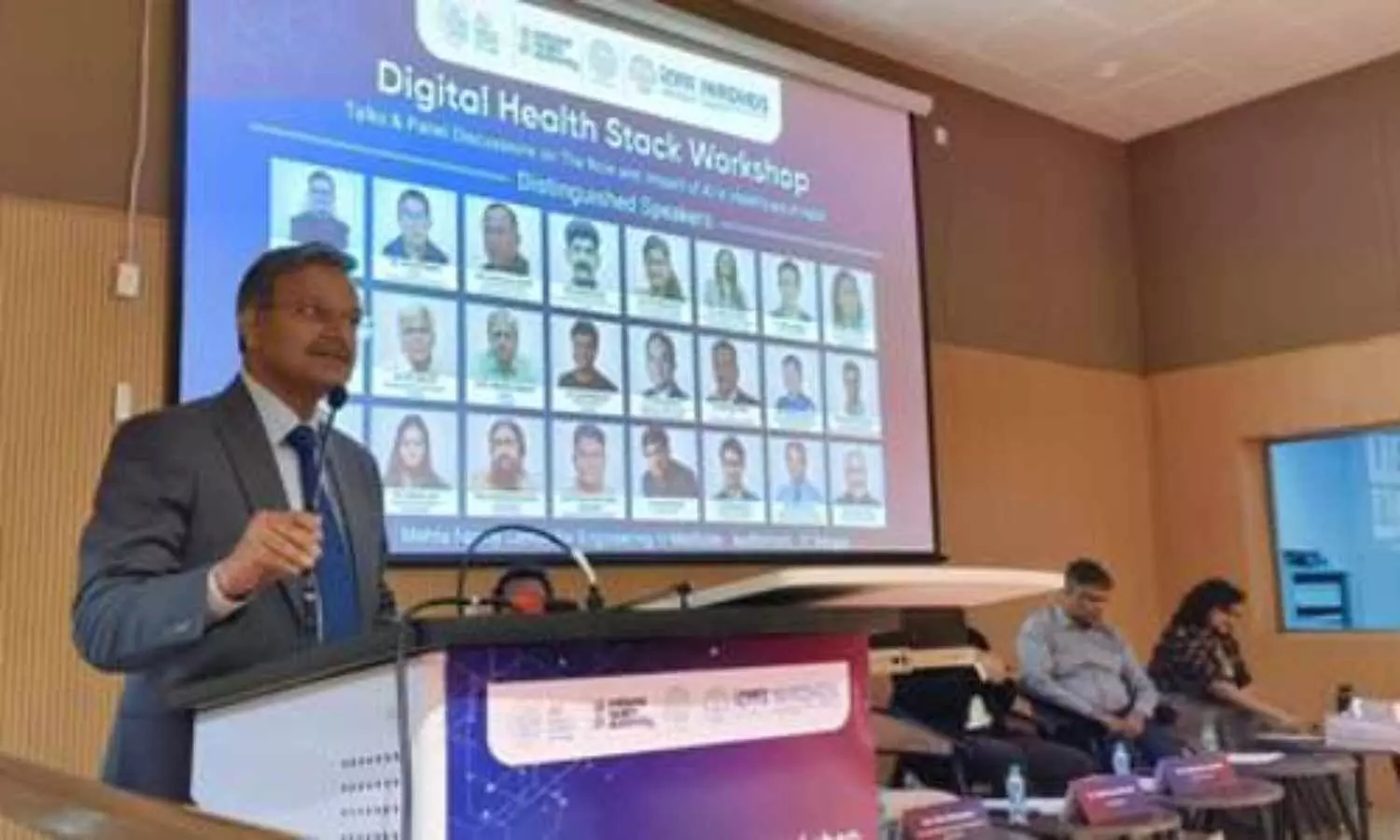


New Delhi: The National Health Authority organised the national-level hackathon in collaboration with the ICMR-National Institute for Research in Digital Health and Data Science (NIRDHDS) and the Indian Institute of Technology (IIT) Kanpur for Health AI.
Artificial intelligence models in healthcare must be tested on large and diverse population datasets before being deployed on the ground to ensure trust, accuracy and inclusion, National Health Authority (NHA) Chief Executive Officer Dr Sunil Kumar Barnwal, said on Sunday.
Speaking at the Federated Intelligence Hackathon on Health AI, organised as a pre-event to the India AI Impact Summit 2026 at IIT Kanpur, Dr Barnwal said India is now moving from experimentation to building benchmarked and reliable AI models for healthcare.
He stressed that federated and consent-driven AI systems allow innovation to scale without centralising sensitive health data, thereby protecting privacy and strengthening public trust, news agency IANS reported.
Also Read:Rekha Gupta inspects Rajiv Gandhi Super Speciality Hospital, calls for timely treatment
Highlighting Ayushman Bharat Pradhan Mantri Jan Aarogya Yojana (AB PM-JAY) and the Ayushman Bharat Digital Mission (ABDM), he said AI solutions must be context-ready and reflect India’s demographic and regional diversity.
The national-level hackathon was held from January 19 to January 24, 2026, with a focus on developing secure, privacy-preserving and scalable Digital Public Goods for Health AI.
The inaugural session also saw addresses by Prof Sandeep Verma, Head of the Gangwal School of Medical Sciences and Technology, IIT Kanpur Director Manindra Agrawal, and Ritu Maheshwari, Secretary, Medical Health and Family Welfare and State Mission Director, ABDM–Uttar Pradesh.
The speakers highlighted the growing role of technology, research institutions and governments in shaping India’s digital health ecosystem.
Dr R S Sharma, Distinguished Visiting Professor at IIT Kanpur and former CEO of the National Health Authority, said Digital Public Infrastructure and interoperable Digital Public Goods are key to building secure, scalable and citizen-centric health data systems.
He underlined that such frameworks ensure both innovation and accountability. Vivek Raghavan, CEO and Co-founder of SarvamAI, spoke about the importance of India’s layered digital health architecture in enabling AI-driven healthcare at both the population and individual levels, according to IANS.
He said the availability of high-quality data, strong privacy safeguards and security are essential for effective AI adoption. He also emphasised the need for indigenous, open-source AI models to ensure local AI sovereignty and reduce dependence on external systems.
