Corporate hospitals are industries, not service! SC suggests uniform 16 percent margin on medicines
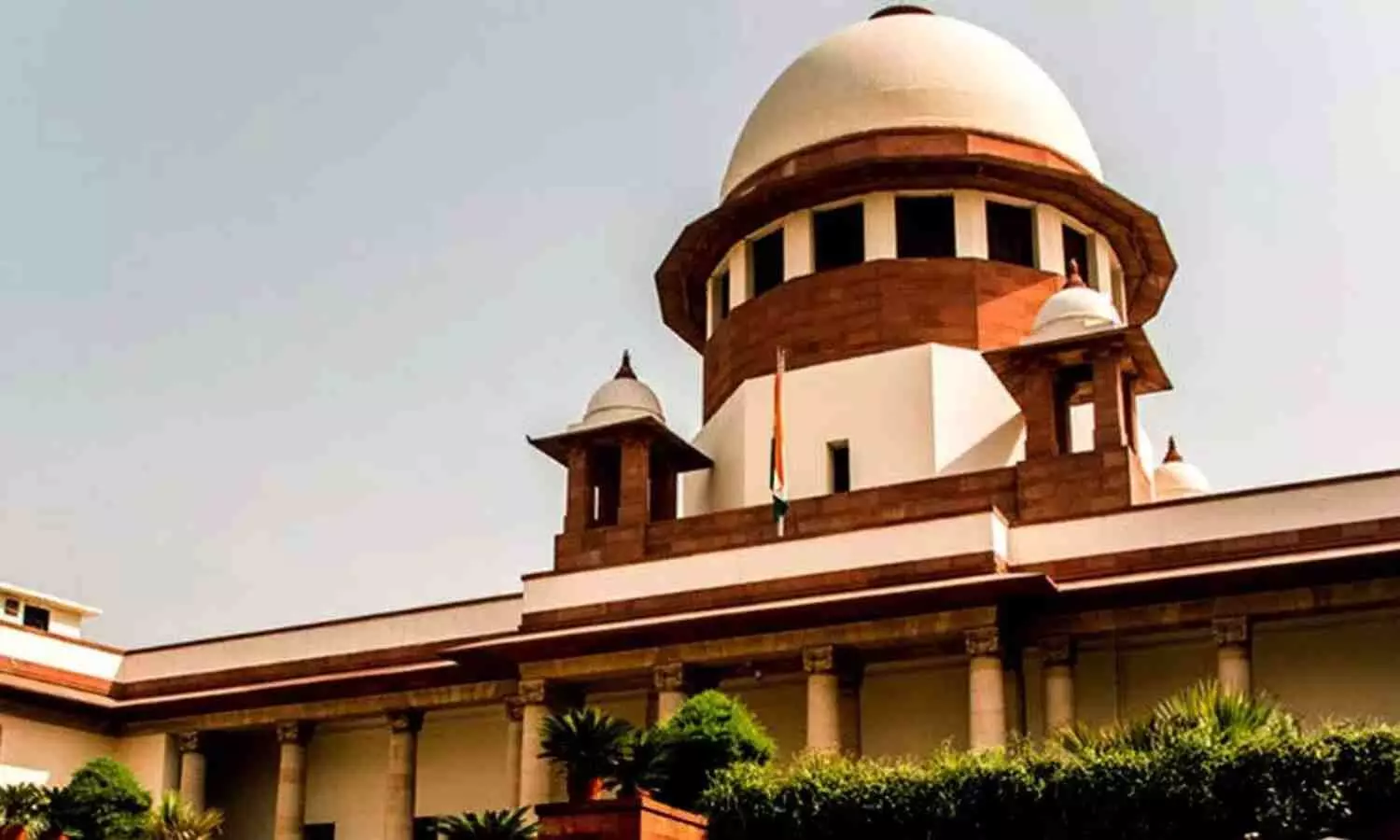
Supreme Court of India


New Delhi: Criticising the commercialisation of private healthcare, the Supreme Court of India on Tuesday observed that corporate hospitals operate as profit-driven industries rather than service providers, while common citizens and taxpayers foot the bill for exorbitant drug markups.
The top court bench comprising Justices Vikram Nath and Sandeep Mehta noted that while patients have to buy medicines from in-house pharmacies at corporate hospitals at inflated retail prices, the hospitals get full reimbursement from the exchequer.
Suggesting a uniform pricing margin for medicines, the Apex Court bench observed, "In corporate hospitals... ₹27,000 MRP. PTR is around ₹3,000. Just see the difference. Corporate hospital says you have to buy from our chemist. If you bring it from outside, we are not assuring treatment. If that patient is taking treatment under a government scheme, who reimburses? The taxpayer pays. Why not uniform criteria?"
The Apex Court's observations are a continuation of the case proceedings from last week, when the Court had highlighted a ten-fold price difference in life-saving cancer medicines.
Medical Dialogues had earlier reported that, noting the lack of adequate price controls on medicines, the Apex Court flagged the wide disparity between the Price to Retailer (PTR) and Maximum Retail Price (MRP) of life-saving drugs, particularly cancer medicines. The bench questioned how a 10-fold difference between the PTR and MRP could be permitted and whether there should be a fixed criterion to limit the disparity. Referring to the impact of such pricing on patients, Justice Mehta had described the practice as “absolute rampage and carnage and broad daylight dacoity with the patients.”
The bench took note of the practice where the essential cancer medicines are being sold to the retailer for Rs 2,700, the MRP for the same is Rs 27,000. The bench had held that it is nothing short of daylight robbery being committed on vulnerable patients by the drug manufacturers and retailers.
According to a Bar and Bench report, during the hearing of the case on Tuesday, the counsel appearing for the Central Government, Solicitor General (SG) Tushar Mehta, acknowledged the issue and submitted that the government needed to find a balanced resolution.
"We will have to find a way out. Some way that balances equities... let me sit with the officers and then respond," submitted SG Mehta, while requesting a short adjournment.
At the outset, the bench questioned why the government maintains a distinction between scheduled essential drugs and non-scheduled medicines, and asked why a uniform 16 per cent margin cap cannot be enforced across all pharmaceutical products under the Essential Commodities Act.
"Why this distinction? Essential, non essential? Why not keep 16 per cent margin on MRP on everything?" asked the bench.
Further, the bench flagged the severe crisis of consumer trust caused by inflated pricing. It pointed out that even when an honest retail chemist is willing to sell a Rs 27,000 MRP medicine at its fair price of Rs 3,000, vulnerable patients are afraid to buy it as they have suspicion that the discounted drug might be fake or spurious.
"Suppose there is a medicine, the patient goes to the chemist; chemist says MRP may be ₹27000, I will give for ₹3000. Will the patient think it is genuine? He will think it will be a spurious one. Where does this huge chunk of money go?" the bench questioned.
In response, SG Mehta pointed out that pharmaceutical manufacturers are often not the primary gainers from these price spreads and margins are absorbed by private hospitals.
However, reiterating that the ultimate loss is borne by taxpayers and patients, the Court remarked, "Corporate hospitals are industries. It is not a service at all. Why should common man suffer all this."
The plea before the top court bench seeks mandatory generic drug prescriptions, strict initial price controls on non-scheduled medicines, regulation of medicine prices, and maximum retail price caps on medical devices
The matter has been listed for further hearing on October 12, as the Court granted some more time to the Solicitor General to hold inter-departmental consultations on the issues flagged on Tuesday.