GIMS Greater Noida opens India's first government AI clinic
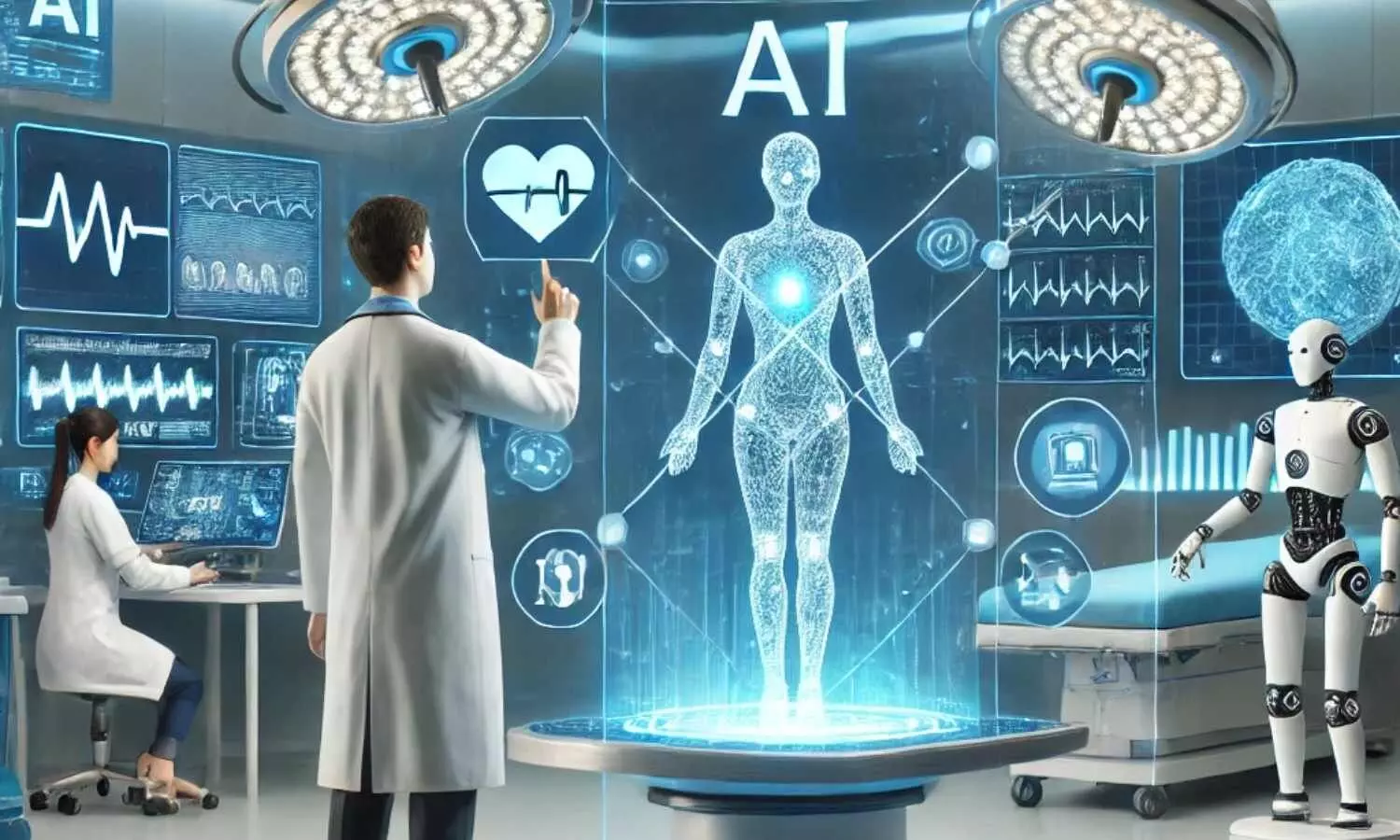


New Delhi: The Government Institute of Medical Sciences (GIMS) in Greater Noida has taken a major step in integrating advanced technology into the country's public health system by launching India's first government-run artificial intelligence (AI) clinic.
The initiative aims to enhance early detection of diseases, diagnostics, and treatment, which can be crucial to improving outcomes and survival rates.
The clinic will reportedly perform genetic screening using AI, which can help in faster detection of diseases such as cancer, heart disease, kidney disease, and liver disease. AI tools at the centre will also assist in interpreting X-rays, ultrasounds, CT scans, MRI reports, and laboratory investigations, helping doctors improve accuracy and speed of diagnosis, news agency IANS reported.
Also Read:AI must complement, not replace doctors: NMC Chairperson
“The clinic will use artificial intelligence along with genetic screening to analyse blood tests, imaging scans, and other clinical data,” Brigadier (Dr) Rakesh Kumar Gupta, Director of GIMS, was quoted as saying.
He added that the initiative would also open new opportunities for healthcare startups.
Typically, an AI clinic works using advanced algorithms and automation. They support doctors in diagnosis, treatment planning, and patient management.
The AI health centres also function as standalone units or integrated hospital departments, where AI systems analyse patient data in real time to support clinical decision-making, the report said.
Another key advantage is that it improves access to quality healthcare, especially in remote and underserved areas, where the availability of specialists is limited.
While AI tools are already used in select private hospitals and diagnostic labs, this marks the first dedicated government AI clinic. The report stated that the AI model could be replicated across government hospitals in other states.
AI tools are known to play a significant role in healthcare delivery, particularly in labs, radiology, and cancer screening.
In pathology, doctors can use AI for analysing tissues and detecting diseases that can be missed by the human eye. This not only reduces processing time but also improves diagnostic precision, reports IANS.
AI has shown significant potential in identifying early signs of cancers such as breast and lung cancer by reducing false positives and negatives. The early diagnosis improves survival rates and treatment outcomes.
The advanced technology has also demonstrated its skill in processing vast genomic datasets to identify disease-linked biomarkers and predict how patients will respond to treatment. It can aid in precision therapy with customised drug dosages and lifestyle changes, by analysing medical history, lifestyle, and genetic data.
Also Read:Mumbai Study Reveals 86 percent MBBS Students Using AI Chatbots for Academics