Domestic medical devices under PLI scheme cheaper than imports, says Govt
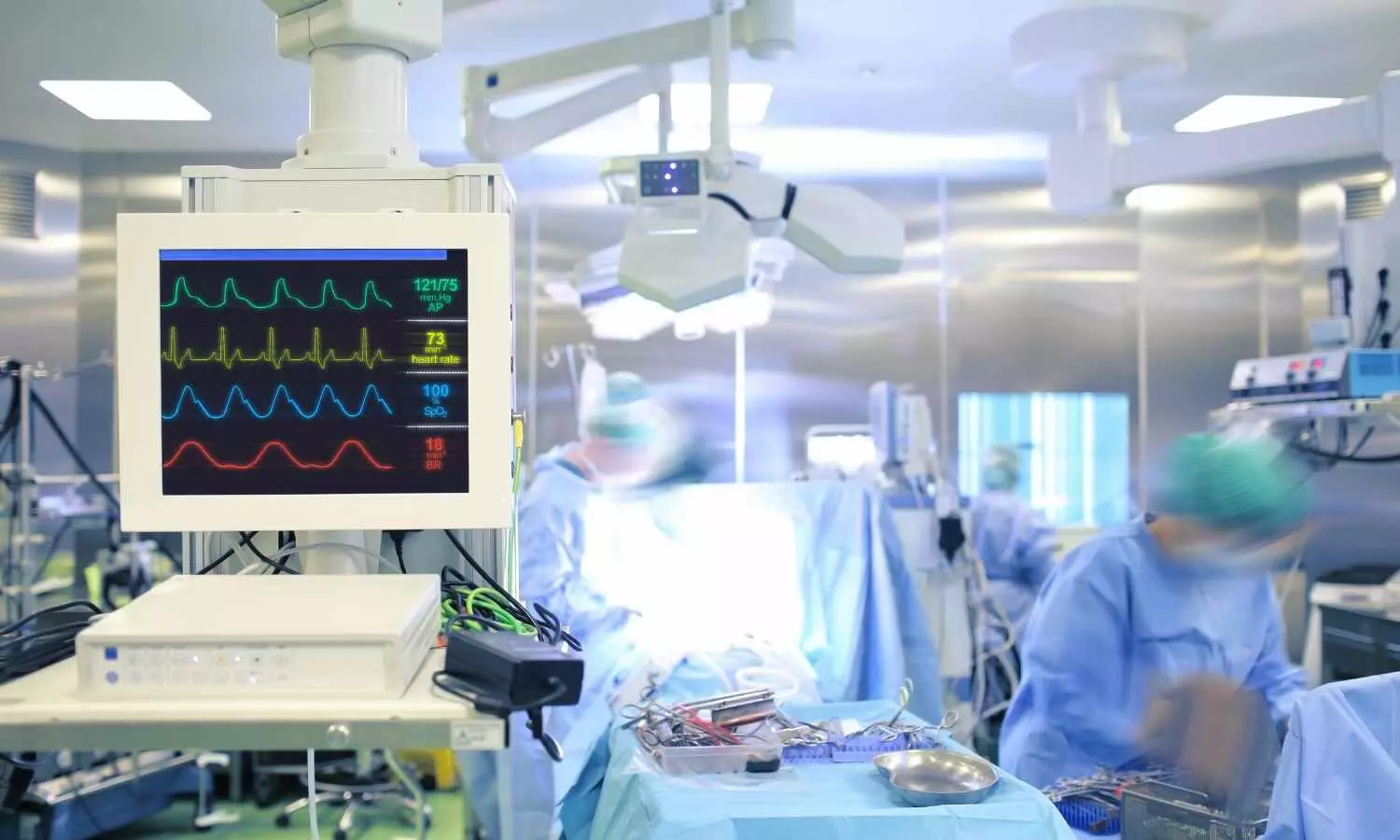


New Delhi: The medical devices produced in the country under the Production Linked Incentive (PLI) Scheme for Promoting Domestic Manufacturing of Medical Devices are about 10% to 30% cheaper in comparison to imported products, thereby helping reducing domestic healthcare costs, Minister told Parliament.
In a written reply in Rajya Sabha, Union Minister of State in the Ministry of Chemicals and Fertilizers, Anupriya Patel said the Production Linked Incentive (PLI) Scheme for Promoting Domestic Manufacturing of Medical Devices aims to promote domestic manufacturing of medical devices by attracting large investments for creation of domestic manufacturing capacity and incentivising domestic production.
As per Minister, the high-end medical devices that are being manufactured in the country under the scheme include Linear accelerator (LINAC), Laser ablation system, Rotational cobalt machine, C-arm machine, Cath lab, CT scan machine, Mammography machine, MRI machine, MRI coils, PET detector, Surgical X-ray C-arm, Ultrasonography, X-ray including fixed line frequency (LF) and high frequency (HF) X-ray product, X-ray panels, X-ray equipment.
The domestically produced portfolio also covers Anaesthesia kits, Anaesthesia unit gas scavengers, Anaesthesia unit vaporisers, Anaesthesia unit ventilators, Anaesthesia workstation, Automated external defibrillators (AED), Bi-phasic defibrillators, Defibrillators and AED, Dialysis machine, Emergency ventilators, Haemodialysis catheter, High flow oxygen devices, Intensive care ventilators, Intravascular lithotripsy catheter system, Micro-catheter tubing (neurovascular), Oxygen concentrators, Heart valves, Hip implants, Knee implants, PTCA balloon catheter, and Stents.
The setting up of a medical device park each in the States of Uttar Pradesh, Madhya Pradesh and Tamil Nadu, under the aforesaid scheme, is aimed at developing a highly competitive domestic manufacturing ecosystem by creating a state-of-the-art manufacturing ecosystem that offers plug-and-play facilities to greenfield units set up in these parks. Each park offers land at substantially subsidised rates, often coupled with exemptions or concessions on stamp duty, which significantly reduces initial capital outlay on land acquisition and project establishment. This upfront cost relief is particularly important for greenfield investors, as it allows a larger share of their capital to be directed towards plant and machinery, technology acquisition, automation and quality systems, rather than land costs and costs of establishing facilities that become available as common facilities.
A common feature of these parks is the development of robust common infrastructure facilities, which typically include centres for 3D design and printing, electronic assembly, electromagnetic interference and compatibility centre, moulding, sterilisation, biocompatibility testing, toxicology, electronic parts testing, component testing, gamma radiation facility and animal lab, especially for micro, small and medium enterprises (MSMEs). By providing such facilities on shared basis, the parks eliminate the need for individual companies to invest in expensive, capital-intensive infrastructure that is often under-utilised if set up in-house. This significantly reduces the per-unit cost of manufacturing, testing and validation, while also shortening product development timelines.
In addition, all three parks are structured around subsidised tariffs for key utilities, including power, water, warehousing and park maintenance. The combination of low cost of land, shared common infrastructure facilities and subsidised utilities improves both capital and operating efficiency. Collectively, these measures enable manufacturers to achieve economies of scale, enhance price competitiveness and position India as a strong global hub for medical device production.
The Capacity Building and Skill Development in the Medical Device Sector sub-scheme of the Strengthening of Medical Device Industry scheme is currently in the implementation phase. Under this sub-scheme, 18 applications have been approved for conducting two-year degree programmes and short-term courses in disciplines related to medical devices, with a view to address skilled manpower requirements of medical device industry and significantly enhance the availability of qualified technical personnel for the medical device sector. These approved programmes entail creation of a total of 750 training seats over the three-year period of the scheme, covering both postgraduate degree programmes and short-term skill development certificate courses. At present, a total of 187 candidates is enrolled in the first academic session.
The Promotion of Research in Pharma-Medtech Sector (PRIP) scheme has been launched by Department of Pharmaceuticals to provide financial assistance for research and development projects of industry, MSMEs and startups in priority areas, including novel medical devices. The strategies under the scheme to promote industry-academia collaboration for continuous innovation and next-generation MedTech development include the following:
With a view to help build specific research capacities in medical devices, tapping industry-academia linkage, institutional strengthening of research infrastructure and nurturing of talent pool has been undertaken through the setting up of a centre of excellence with advanced facilities at the National Institute of Pharmaceutical Education and Research (NIPER), Ahmedabad, which is an institute of national importance for imparting postgraduate and doctoral education and conduct high-end research in various specialisations in pharmaceutical sciences and medical technologies.
Industry and startups are encouraged under the scheme to collaborate flexibly with reputed Government academic and research institutions specified in the Scheme guidelines to develop, translate and commercialise institutional intellectual property and to augment institutional research capacities in India.
Further, the NIPER Council has set up a NIPER Academia-Industry Coordination Committee as an institutional mechanism to promote strategic coordination between NIPERs and pharmaceuticals and medical devices industry by, among other things, facilitating greater synergies between NIPERs and industry and supporting research-driven growth, innovation, skilling and translation of academic research into industrial applications.
Read also: Odisha Pharma Summit 2025 on December 16; policy launch, parks expected