India Must Move from Volume to Value in Pharma, says Biocon Chief Kiran Shaw
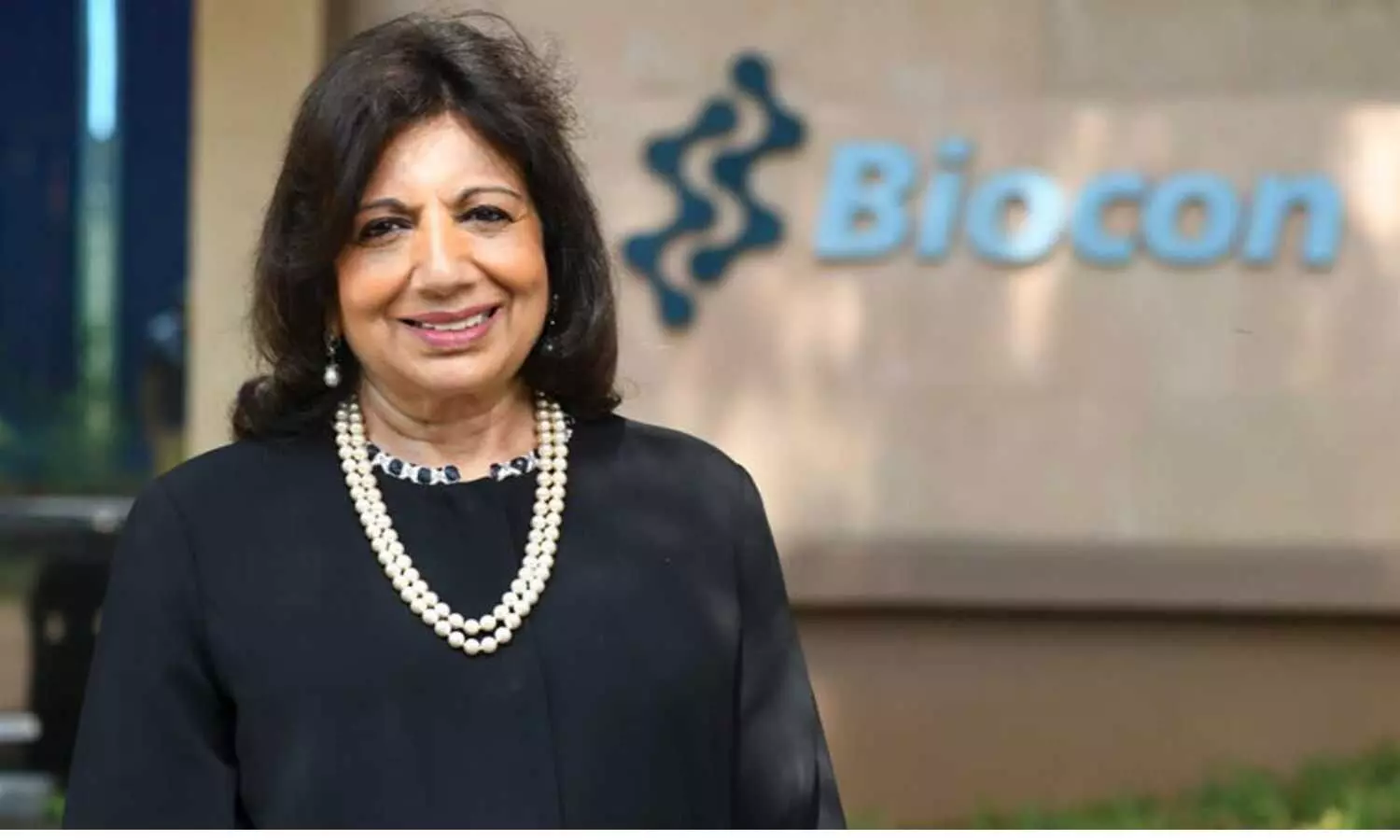


New Delhi: India must move beyond its success in generic medicines and build an innovation-led pharmaceutical industry by strengthening research, speeding up regulatory approvals and consistently investing in new drug development, Biocon and Syngene International Executive Chairperson Kiran Mazumdar-Shaw said on Tuesday.
Speaking virtually at the Indian Foundation for Quality Management (IFQM) Symposium 2026, Mazumdar-Shaw said India had the talent and capabilities to take innovations from laboratories to clinical development and commercial markets, but needed a credible ecosystem to compete with global leaders.
"Generics is a great success story for India but we need to follow this with innovation and an innovation led strategy," she said, adding that the country should benchmark its progress against China.
Mazumdar-Shaw said quality must remain central to research, clinical development and manufacturing as India seeks to expand its presence in innovative medicines. She also stressed that investment in research and development must be sustained rather than treated as a one-time effort.
"In bio pharma and in pharma in general, the pipeline is the lifeline," she said, calling for continuous investment to replenish the drug development pipeline and help the industry move "from volume to value".
She said an innovation-led approach could also help India address unmet medical needs earlier in the drug development process, instead of receiving new treatments towards the end of the global development cycle.
On regulation, Mazumdar-Shaw said she was beginning to see positive changes in the regulatory system and greater alignment between regulators and industry requirements. However, she called for faster reforms to help India keep pace with other countries in drug development.
She said artificial intelligence and other digital technologies could help shorten review timelines and speed up regulatory approvals.
"This is the time for really deep diving into what regulatory reforms can be done fast," she said, urging India to study approaches adopted by countries such as China and Australia to move new medicines more quickly through clinical development and approval.
Mazumdar-Shaw said research and development incentives were encouraging companies to invest in innovation, describing the trend as a positive sign. She also said closer cooperation between industry and regulators would be important to sustain the momentum.
Pointing to Biocons efforts in innovative drug development, she said the company had taken one of its assets into Phase III clinical development in the United States and referred to another cancer drug programme.
She said India had an opportunity to become part of the global innovation ecosystem, but would need continued investment, regulatory improvements and a sustained focus on developing new medicines to achieve that goal.