Supreme Court Raps PCI Over Repeated Delays in Pharmacy College Approval Schedule
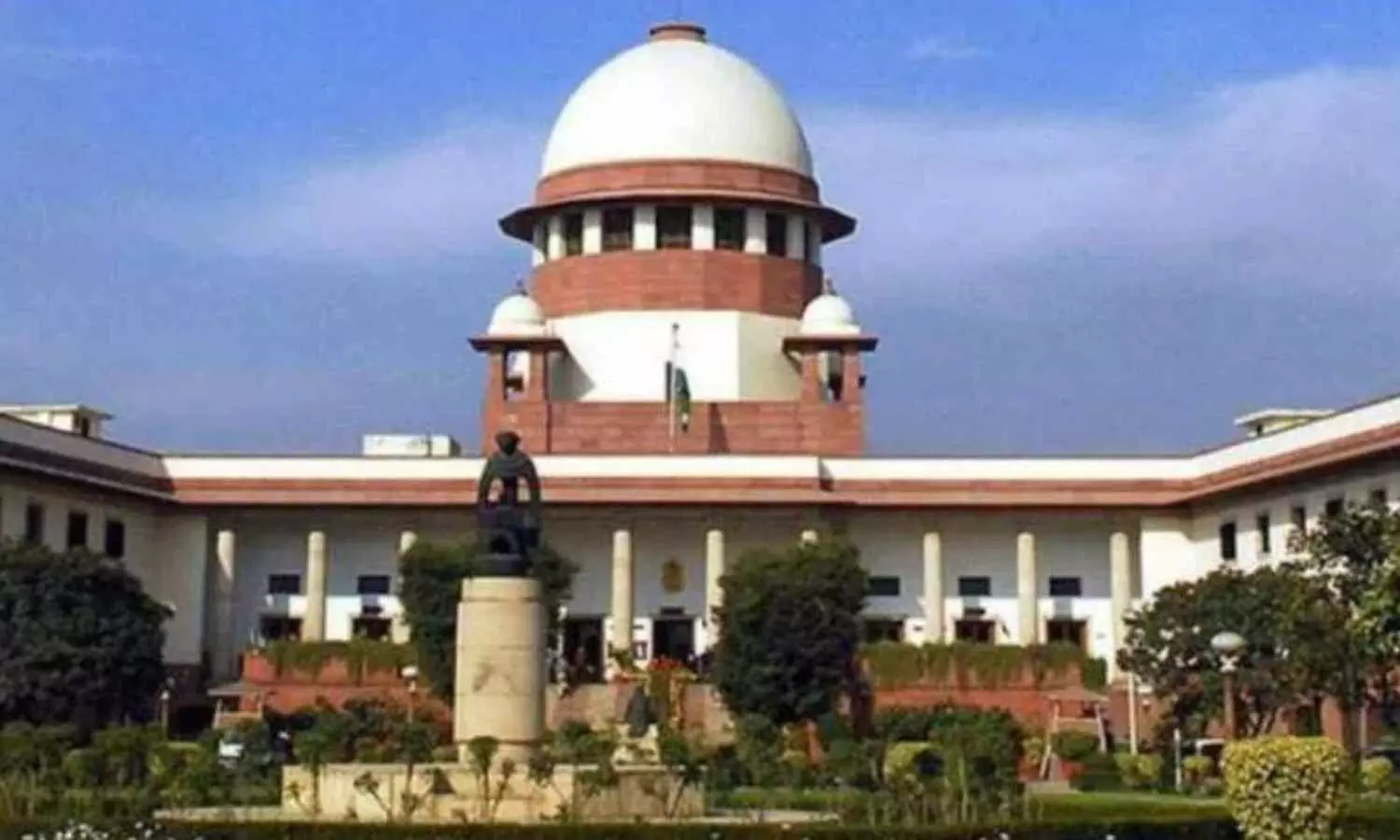


New Delhi: The Supreme Court has strongly condemned the Pharmacy Council of India (PCI) for repeatedly approaching the Court to seek extensions of the regulatory approval and admission schedule for pharmacy institutions, observing that the regulator's failure to adhere to court-mandated timelines has itself contributed to the decline in educational standards.
A partial working days Bench comprising Justice Manmohan and Justice K. Vinod Chandran expressed dissatisfaction with the PCI's continued inability to comply with the academic calendar prescribed by the Supreme Court in its landmark 2012 judgment in Parshavanath Charitable Trust v. All India Council for Technical Education, India Legal reported.
The Bench noted that despite the schedule remaining operational for nearly 14 years, the regulator had continued to seek relaxation of deadlines almost every academic year.
During the hearing, the Court questioned the reasons behind the repeated delays and observed that the functioning of the regulatory body reflected poorly on the administration of professional education. The Bench orally remarked that the regulator's approach was improper and even suggested that the manner in which approvals were being processed created an impression that the authority was working in tandem with private educational institutions. It further observed that if statutory regulators and governments themselves ignored prescribed timelines, it would be unrealistic to expect private colleges to maintain discipline. According to the Court, the erosion of educational standards was largely the result of regulatory lapses.
The Bench recalled that the uniform academic calendar introduced through the 2012 judgment was intended to streamline approvals, affiliations and admissions, ensuring that academic sessions commence on time and that students are not affected by delayed admissions. However, despite these clear directions, the PCI has repeatedly sought extensions from the Court instead of adhering to the prescribed schedule.
The Court also pointed out that even after obtaining an extension during the previous academic session, the PCI had once again moved a miscellaneous application seeking further extension of the approval timeline for pharmacy institutions for the current academic year.
Appearing for the PCI, counsel submitted that administrative constraints had led to the delay, including the decision to extend the deadline for submission of Standard Inspection Format (SIF) applications until February 28, 2026. The Supreme Court, however, was not convinced by the explanation, observing that the regulator had been aware of the prescribed timelines since 2012 and should have established a proper administrative mechanism to ensure compliance.
Questioning the repeated requests for indulgence, the Bench asked why the Court should continue extending deadlines when the statutory schedule had remained unchanged for over a decade. It also rejected the PCI's attempt to attribute the delays to the Covid-19 pandemic, observing that the pandemic could not be cited as a justification years after normal functioning had resumed.
Nevertheless, considering the interests of students and educational institutions, the Supreme Court agreed to grant a one-time extension of the approval and admission schedule for the current academic session. The Bench made it clear that the relief was being granted only under exceptional circumstances and should not be treated as a precedent for future years.
The Court directed the Pharmacy Council of India to file an affidavit within three days, undertaking that it would strictly follow the timelines prescribed by the Supreme Court from the next academic year onwards. The matter has been listed for further hearing next week.
The miscellaneous application before the Court sought extension of the timelines relating to regulatory approvals, affiliation, counselling and admissions that were originally fixed by the Supreme Court in the 2012 Parshavanath Charitable Trust judgment. That decision had established a uniform academic calendar for technical and professional educational institutions across the country with the objective of ensuring timely admissions and maintaining academic discipline.
While considering the application, the Supreme Court observed that repeated deviations from the judicially prescribed schedule undermine the sanctity of the academic calendar and unfairly transfer the consequences of regulatory inefficiency onto students and educational institutions.
India Legal reports that the Supreme Court ultimately granted the extension only as an exceptional measure while cautioning the Pharmacy Council of India against seeking similar relaxations in future. The Court emphasised that regulatory authorities must put in place effective administrative systems to ensure strict adherence to the timelines laid down by the judiciary.