At-Home Self-Performed Transvaginal Ultrasound Shows High Diagnostic Quality: JAMA
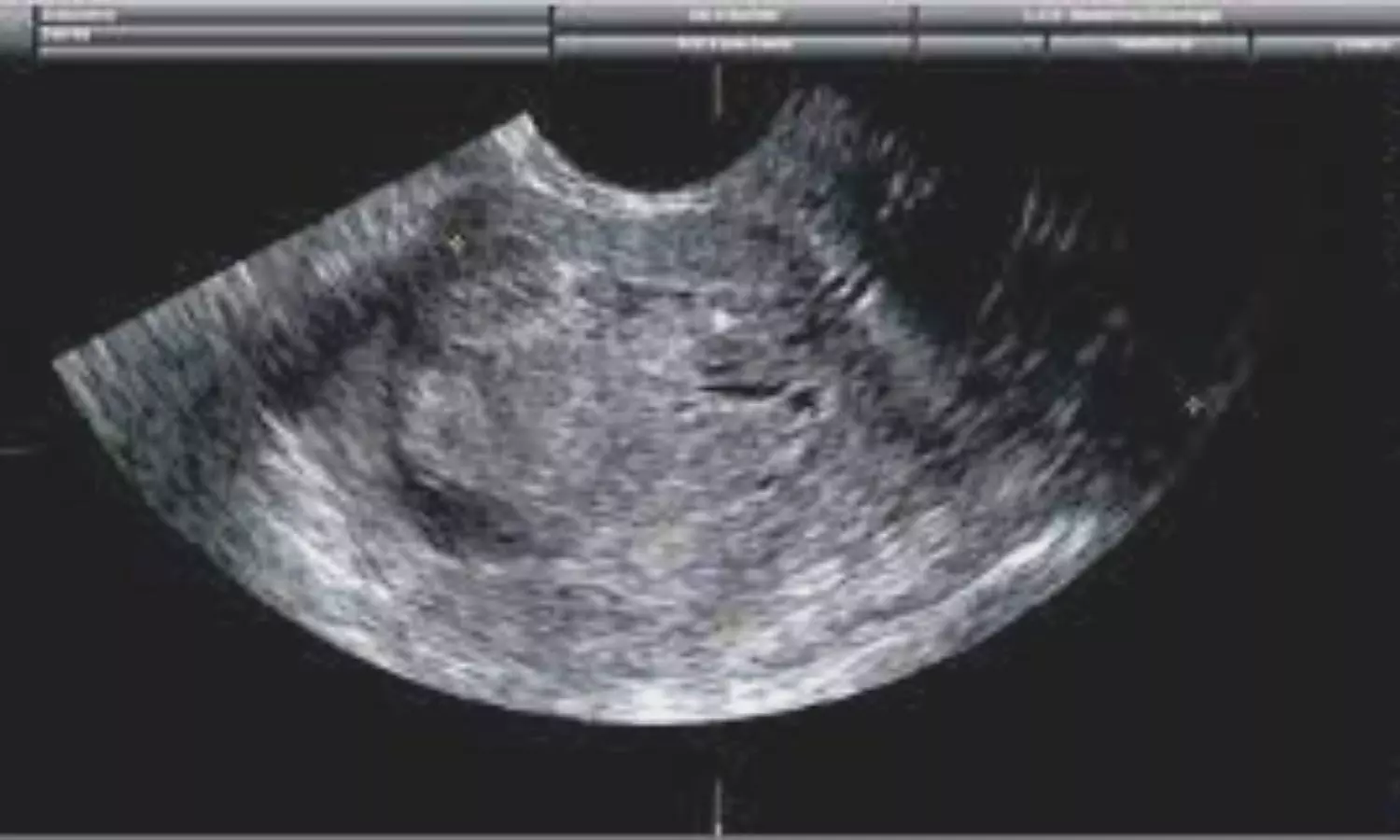


According to a nonrandomized clinical trial, most patients were able to successfully perform self-administered transvaginal pelvic ultrasound at home with real-time guidance from a remote sonographer, producing images of diagnostic quality. Many participants also preferred the at-home approach over traditional in-clinic ultrasonography. The study highlighted that the quality of remote sonographer guidance was crucial for successful imaging, although experts cautioned that the findings may not be readily generalizable to emergency or rural healthcare settings. The study was published in JAMA Network Open by Alessandra J. and colleagues.
In order to test the clinical feasibility of this remote diagnostic approach, researchers identified pre-menopausal females in geographically very diverse areas, including Florida, Massachusetts, Maryland, Maine, Minnesota, New Hampshire, Texas, Utah, Virginia, Vermont, and Washington DC. The ultrasonographic images were collected between July 2022 and July 2023, while the database was subjected to a blinded review with data analysis done between April 2025 and September 2025.
Clinical intervention included at-home trans-vaginal ultrasound guided exclusively by real-time voice communication with a fully trained remote sonographer, who had access to live-streamed images of the study. The participants acquired standard views of the uterus, ovaries, cervix, and posterior cul-de-sac through continuous cine clips. Primary outcomes included objective image quality of the diagnostic images and participant net promoter score (NPS), whereas secondary outcomes involved mild pain/discomfort, sonographer experience, and adverse events.
Key findings:
- The total number of participants included in the study through the single group design was 265, and 263 completed the home-based ultrasonographic scanning.
- The mean age of the participants was 32 years, with the standard deviation being 6.7 years (32 ± 6.7).
- Meanwhile, the mean body mass index of the participants was 27.0, with the standard deviation of 5.6 (27.0 ± 5.6).
- The blinded assessments revealed that 253 home-based ultrasonographic scans (96.2%) met the necessary quality criteria, and only 10 scans (3.8%) did not comply with the requirements of the diagnostic quality.
- Participant net promoter score of the home-based ultrasonography was significantly better than that of the clinic-based scans with 59 vs. 24.
- This positive rating of the home-based procedure was supported by the adjusted NPS difference of 33.7 (95% CI, 23.3-44.0; z = 6.35; P < .001).
- There was no any single adverse event reported among 263 successful home-based imaging procedures.
In summary, the current nonrandomized clinical trial conducted on at-home pelvic ultrasound scanning in premenopausal women has shown that the widespread implementation of gynecological ultrasound technologies in at-home practice is not only possible but also safe and more preferred than in-clinic ultrasound. The amazing empirical statistical results of the study become the indispensable basis for the digital medicine of the future, confirming that telemedicine can control even the most complex diagnostic procedures.
Reference:
Ainsworth AJ, Sacha C, Vagios S, et al. At-Home Transvaginal Pelvic Ultrasonography and Image Quality in Premenopausal Women: A Nonrandomized Clinical Trial. JAMA Netw Open. 2026;9(7):e2621476. doi:10.1001/jamanetworkopen.2026.21476