PCOS to PMOS: Indian Doctors Divided Over Historic Change
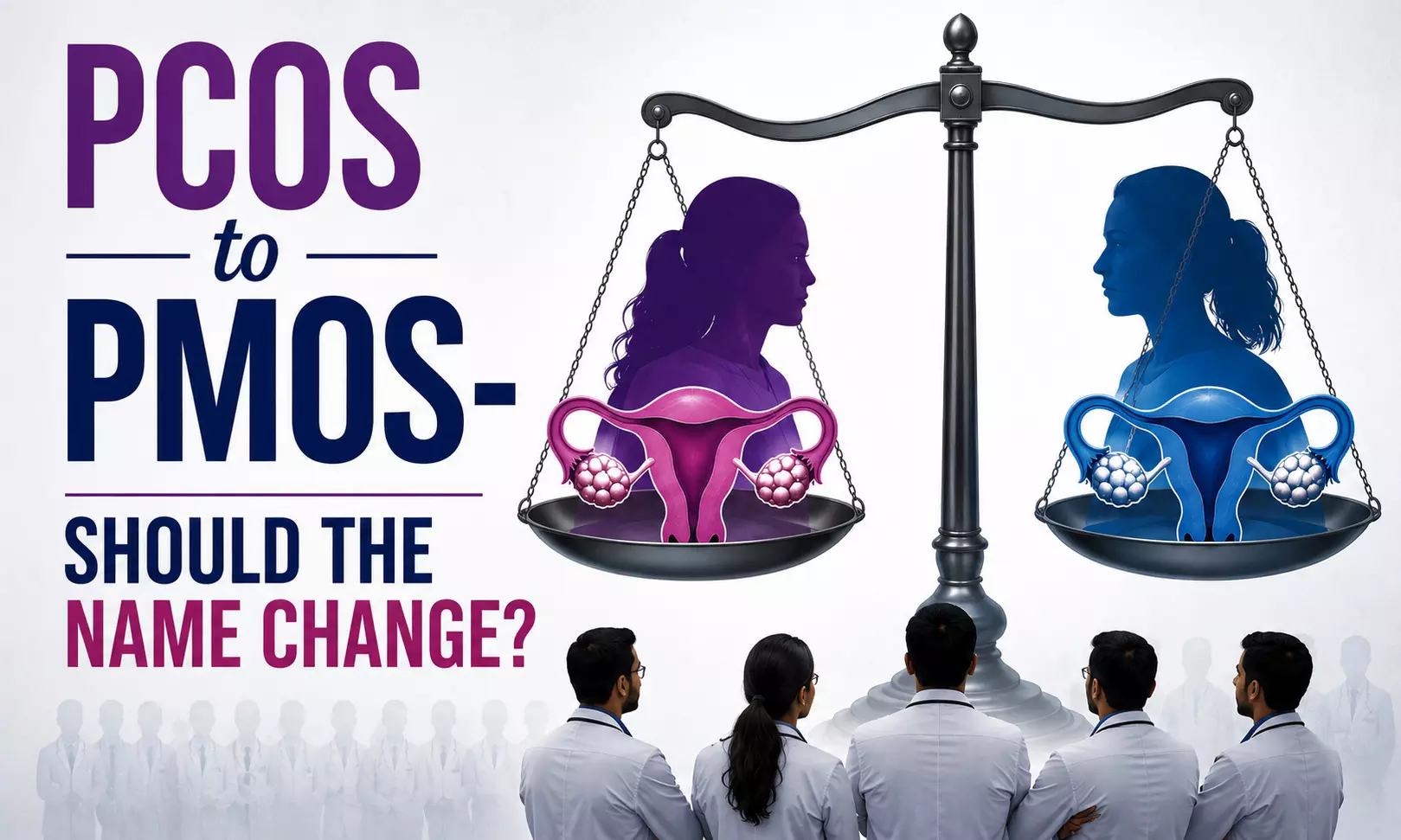


New Delhi: In a historic move that could reshape how one of the world's most common women's health disorders is understood and managed, an international consensus paper published in The Lancet has proposed renaming Polycystic Ovary Syndrome (PCOS) as Poly-Endocrine Metabolic Ovarian Syndrome (PMOS).
The paper, which was published on May 12, 2026, contends that the term "PCOS" is scientifically inaccurate because the condition is primarily characterized by complex endocrine and metabolic dysfunction that includes insulin resistance, androgen excess, reproductive abnormalities, and cardiometabolic risks rather than ovarian cysts. More than 14,000 people from various countries, including patients, endocrinologists, gynaecologists, reproductive experts, researchers, and advocacy groups, participated in a multistep global consensus process that resulted in the suggested new terminology.
While many experts have applauded the change as long overdue and scientifically sound, others worry that altering the widely used "PCOS" abbreviation could lead to misunderstandings among patients and medical professionals.
What’s Driving the Change from PCOS to PMOS?
The Lancet article states that because women with the condition do not genuinely have pathogenic ovarian cysts, the term "polycystic ovary syndrome" has long been criticised for being deceptive. The authors pointed out that the existing nomenclature hides the condition's more comprehensive metabolic and endocrine characteristics and adds to stigma, poor awareness, delayed diagnosis, and fragmented management.
The recently suggested nomenclature, Polyendocrine Metabolic Ovarian Syndrome (PMOS), aims to more accurately describe the disease's multisystemic character.
The paper states that endocrine abnormalities, insulin resistance, obesity, dysglycaemia, infertility, menstrual irregularities, cardiovascular risk, psychological disorders, and dermatological manifestations are all central aspects of the condition.
Indian Fertility Expert Amongst International Authors supports Change of Name
Bengaluru-based Reproductive Endocrinologist and Infertility Specialist Dr Madhuri Patil, one of the authors featured on the Lancet article, represented India in the worldwide consensus movement publication.
Speaking with Medical Dialogues, Dr Madhuri Patil supported the proposed change from PCOS to PMOS, stating that the condition is fundamentally a metabolic disorder and the earlier terminology did not adequately reflect this aspect.
"I think it is right that the name change has happened because basically it is a metabolic condition, and nowhere in the name — I mean PCOS — was it mentioned that it is a metabolic disease, because that’s the main feature of the condition," she said.
She explained that the term “polycystic” could be misleading, as the ovarian changes seen in PCOS are not true abnormal cysts. Dr Patil emphasised that metabolic dysfunction is one of the key features of the condition, making the revised terminology more scientifically appropriate.
Highlighting India’s growing burden of metabolic diseases and diabetes, she added that adopting a name that better represents the metabolic nature of the disorder is particularly relevant in the Indian context.
"We know that India is a major hub for metabolic diseases, with one of the highest incidences of diabetes mellitus in the world. So, given this scenrio, I think the name change is absolutely justified,” Dr Patil added.
Many experts in reproductive medicine and endocrinology seem to endorse the change in terminology from PCOS to PMOS, claiming that it more accurately reflects the disorder's true etiology.
On social media, a number of medical professionals have noted that patients typically misinterpret PCOS as a condition that only affects "ovarian cysts alone", while metabolic dysfunction and insulin resistance are generally overlooked.
“Keep the Acronym PCOS”: Alternative View also gaining momentum
Not all experts are convinced that a complete acronym overhaul is necessary. Some senior obstetricians and gynaecologists have suggested that while the full form may need revision, the globally familiar acronym “PCOS” should perhaps be retained for continuity, public recognition, and various critical and logistical ramifications.
Speaking with Medical Dialogues team, Dr. Hrishikesh Pai, Founder and Medical Director of the Bloom IVF Group, and a leading Gynaecologist who has held various leadership roles at FIGO, FOGSI, ISAR, etc expressed reservations about changing the term PCOS to PMOS, stating that while the intention was to make the condition appear more holistic and less ovary-centric, the change could create unnecessary confusion.
“The committee wanted to change the name because they wanted the concept to be more holistic rather than focus on the ovary. So that's why there has been a change of the name where P is for Poly-endocrine, then M is for metabolic. Ovary and Syndrome were kept the same because ovary is also involved in the whole thing. It is Poly-endocrine Metabolic Ovary Syndrome-PMOS," he explained
"But because of this, there was a change in the name acronym from PCOS to PMOS. However, we need to understand that this acronym PCOS is there everywhere- literature, research papers, so many association, patient support groups, patient know the acronym PCOS, they know what exactly is, what it means," he futher added.
Dr Pai emphasised that given the fact that the acronym “PCOS” is already deeply established in the healthcare systems, worldwide changing it would only create confusion. Given this background, he suggested that instead of completely changing the acronym, a more practical approach would have been to redefine it as “Polyendocrine Cardio-Metabolic Ovarian Syndrome,” which would have retained the familiar acronym PCOS while also highlighting its endocrine, metabolic, cardiovascular, and ovarian implications.
"We could have even done something like Poly-Endocrine Cardio-metabolic Ovarian Syndrome because cardiac changes are also there in PCOS. It covers all ovary, metabolic, endocrine, and it covers cardio which can be long term changes. We could have done that, rather than M for metabolic so the acronym remained the same." he said
"This is my opinion, We should retain the name PCOS and only change the definition or the background," he further opined.
Dr Pai also pointed out the financial and logistical burden of renaming organisations, websites, and educational resources linked to PCOS. He stressed that awareness and education should take priority over changing terminology and added that India should adopt a more pragmatic and independent approach rather than following Western recommendations unquestioningly.
The Lancet article itself recognises these implementation issues and suggests a global transition plan that includes integration into electronic medical records, educational campaigns, ICD coding alignment, and guideline updates.
It is noteworthy that the consensus was developed based on 14360 responses, which included 10,411 patients and 3949 health professionals.
Social Media Debate: “Metabolic” Framing Sparks Discussion on Industry Interests
The debate has also spilled onto social media, where some doctors have raised concerns regarding the possible implications of emphasising the “metabolic” component of the condition.
Mumbai-based obstetrician and endometriosis excision specialist, and Scientific Director & Chairman, Shree IVF & Endometriosis Clinic, Mumbai, Dr Jay Mehta, in a recent Instagram reel, suggested that the terminology shift may indirectly expand the role of metabolic therapies — particularly GLP-1 receptor agonists within gynaecology, infertility, and women’s health practice (3).
While no evidence in the Lancet paper suggests pharmaceutical influence behind the renaming initiative, the observation reflects broader ongoing debates around the rapidly expanding use of GLP-1 drugs in obesity and metabolic disorders.
Global Voices Post Lancet Published Paper
As reported in a BMJ article published days later, Prof. Adam Balen, Professor of Reproductive Medicine and Surgery and Spokesperson for the Royal College of Obstetricians and Gynaecologists, was one of those who worked on the name change, supported the renaming of PCOS to PMOS but emphasized that the transition should happen gradually to avoid confusing patients and healthcare professionals, as PCOS is already a widely recognized term (2).
In contrast, Rachel Morman, chair of Verity, a registered charity for people with PMOS, strongly backed the change, stating that the old name had caused confusion and misdiagnosis for years and that PMOS better reflects the condition’s endocrine and metabolic nature. A period of transition is a small price to pay for long-term accuracy (2).
PMOS - A Shift Beyond Ovaries
The Lancet authors highlighted that the illness should no longer be considered a gynaecological disorder. The publication mentions studies that link the syndrome to insulin resistance, type 2 diabetes, obesity, hypertension, dyslipidemia, fatty liver disease, cardiovascular disease, infertility, anxiety, depression, and sleep apnea.
The authors propose that harmonising language with developing scientific understanding could increase worldwide awareness, research coherence, policy prioritising, and improve patient care outcomes.
Whether “PMOS” ultimately gains widespread adoption remains to be seen, but the discussion has already reignited global conversations around how disease names can have wide health stakeholder implications.
- 1. Polyendocrine metabolic ovarian syndrome, the new name for polycystic ovary syndrome: a multistep global consensus process. Lancet. 2026 May 12 -
- 2. PCOS name change to PMOS must be managed to avoid confusing patients, says expert. BMJ. 2026; -
- 3. PCOS to PMOS- The Business Angle Behind. IG Reel -