Sperm DNA Fragmentation Testing May Improve Counselling for Infertile Couples
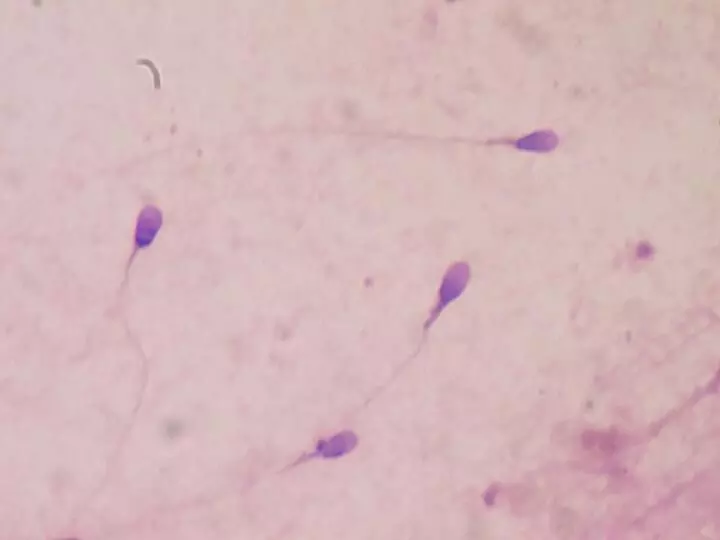
IMAGE: HUMAN SPERM STAINED FOR SEMEN QUALITY TESTING IN THE CLINICAL LABORATORY. view more
CREDIT: ©BOBJGALINDO


Assessment of sperm DNA fragmentation may help clinicians better counsel couples with unexplained infertility and guide decisions on assisted reproductive treatment, according to findings reviewed in Obstetrics and Gynecology International.
Traditional semen analysis, which measures sperm concentration, motility, and morphology, remains the standard first-line test for male infertility. However, these parameters may not fully predict fertility potential, particularly in couples with otherwise unexplained difficulty conceiving.
The review highlights sperm DNA integrity as an emerging marker of male reproductive health. The sperm chromatin structure assay, or SCSA, measures the DNA fragmentation index (DFI), which reflects the proportion of sperm with damaged DNA. Higher DFI levels have been associated with reduced chances of spontaneous pregnancy and poorer outcomes after intrauterine insemination.
Evidence cited in the article suggests that pregnancy chances decline when DFI exceeds 20%, and may become very low when levels rise above 30%. In couples undergoing intrauterine insemination, a DFI above 30% was linked with markedly lower delivery rates compared with lower DFI values.
Researchers note that sperm DNA damage may result from oxidative stress, abnormal sperm maturation, defective chromatin packaging, apoptosis, ageing, smoking, varicocele, fever or environmental exposures. While antioxidant therapy has been explored, the evidence remains limited and inconsistent.
Clinically, SCSA may be most useful for couples with unexplained infertility or normal semen parameters but persistent failure to conceive. A high DFI result could help clinicians avoid repeated unsuccessful intrauterine insemination cycles and consider earlier referral for IVF or ICSI.
Sperm DNA fragmentation testing is not a replacement for standard semen analysis, but it may add clinically useful information for selected infertile couples, especially where the cause remains unexplained.
Source: Hindawi Publishing Corporation Obstetrics and Gynecology International Volume 2012, Article ID 531042 doi:10.1155/2012/531042