Study Finds Office Hysteroscopy Detects Uterine Abnormalities in 40 Percent of Women With Infertility


Hysteroscopy is the gold standard procedure for uterine cavity exploration. However, the World Health Organization (WHO) recommends hysterosalpingography (HSG) alone for the management of infertile women. The explanation for this discrepancy is that HSG provides information on tubal patency or blockage.
Office hysteroscopy is recommended by the WHO only when clinical or complementary examinations, such as ultrasound or HSG, suggest an intrauterine abnormality, or after in vitro fertilization (IVF) failure. Nevertheless, many specialists feel that hysteroscopy is a more accurate tool because of the high false-positive and false-negative rates of intrauterine abnormalities with HSG.
This explains why many specialists use hysteroscopy as a first-line routine examination for infertility patients, regardless of guidelines. This retrospective study aimed to describe hysteroscopy findings in a population of 557 infertile patients.
Authors retrospectively studied 557 consecutive office hysteroscopies in patients referred for incapacity to conceive lasting at least one year or prior to in vitro fertilization. Rates of abnormal findings were reviewed according to age.
In 219 cases, hysteroscopy showed an abnormality, and more than a third of the population had abnormal findings that could be related to infertility. Rates of abnormal findings ranged from 30% at 30 years to more than 60% after 42 years. The risk of an abnormal finding was multiplied by a factor of 1.5 every five years.
Study found that first-line office hysteroscopy for infertility shows abnormal findings in 40% of women. This proportion increased with age, ranging from 30% at 30 years to more than 60% after 42 years. These findings are based on a large cohort of infertile women with homogeneous age distribution.
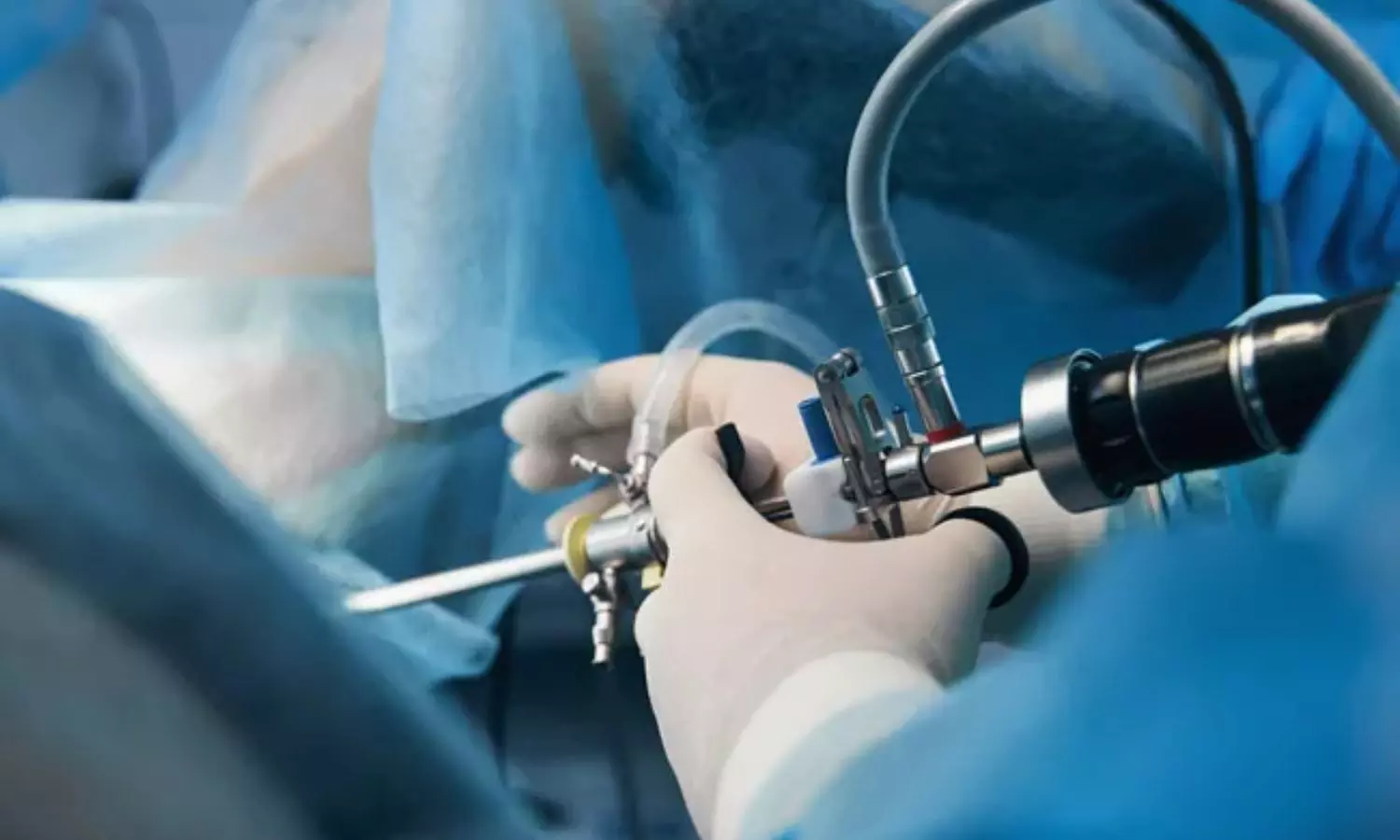
Hysteroscopies were performed consecutively by a single trained operator. All investigations were performed using a flexible minihysteroscope, which provides high patient acceptance because it makes hysteroscopy a painless and well-tolerated procedure.
However, symptoms, clinical examination, ultrasound findings, HSG results, and hormonal blood sampling characteristics were not available in this population. Moreover, there was no control group of fertile women to compare findings with. Patients were referred from many hospitals and private clinics, with no homogeneity in infertility investigations before hysteroscopy.
Finally, the absence of video recording did not allow control of findings by a different operator. No possibility of re-evaluation of the findings represents an important weakness of this study. However, the experience of the single operator who performed all hysteroscopies and the use of a standard report to record abnormal findings limit the impact of such a bias.
Rates of abnormal findings in unselected infertile patients who underwent diagnostic hysteroscopy ranged from 30% at 30 years to more than 60% after 42 years. The risk of an abnormal finding was multiplied by a factor of 1.5 every five years. These data provide an additional argument to propose office hysteroscopy as part of first-line examinations in infertile women, regardless of age.
Reference:
Koskas M, Mergui JL, Yazbeck C, Uzan S, Nizard J. Office hysteroscopy for infertility: a series of 557 consecutive cases. Obstet Gynecol Int. 2010;2010:168096. doi: 10.1155/2010/168096. Epub 2010 Apr 14. PMID: 20396413; PMCID: PMC2855076.