Acute Exercise Accelerates DNA Repair in Colon Cancer Cells: Study Finds
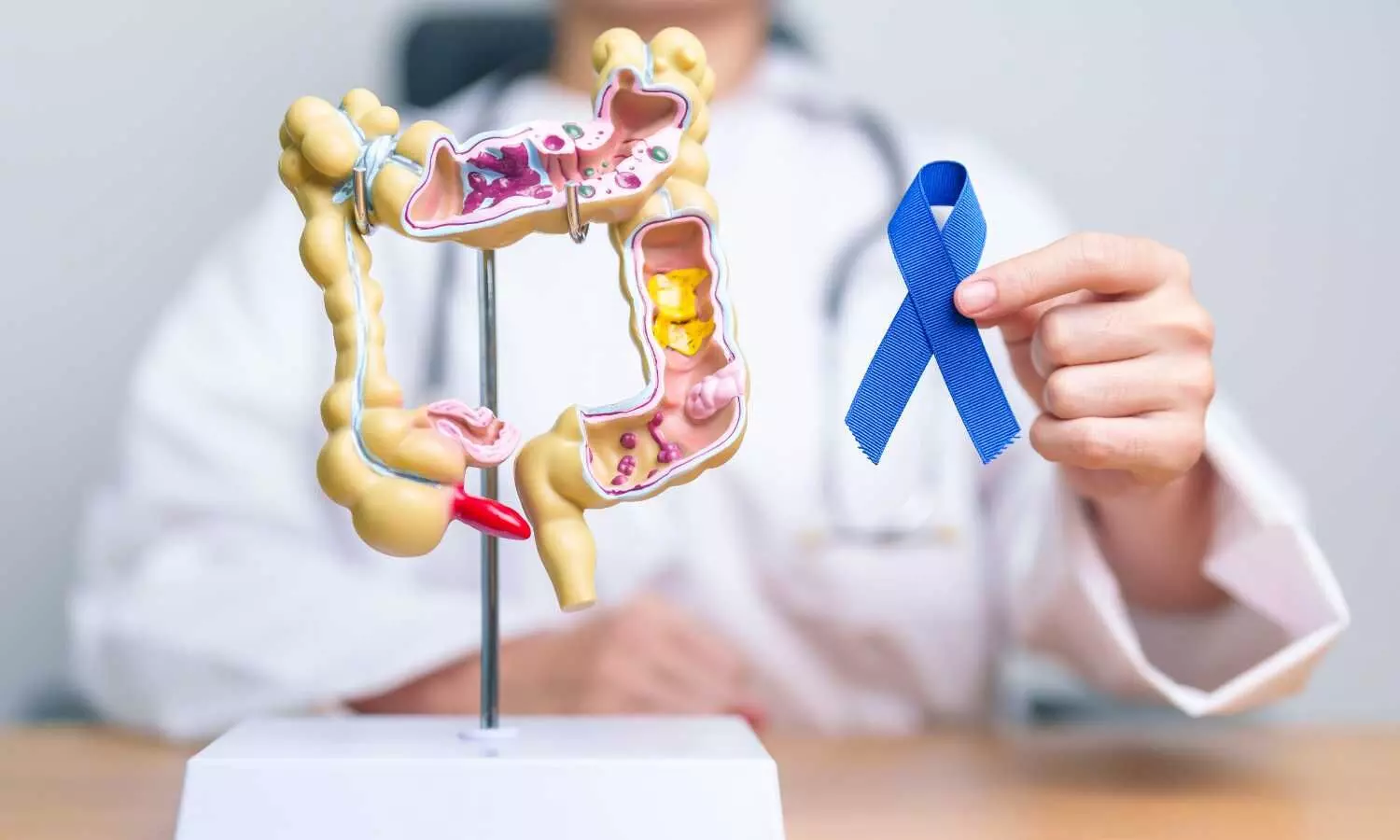


UK: A recent study finds that acute exercise suppresses colorectal cancer progression by altering the circulating proteome, accelerating DNA (deoxyribonucleic acid) repair, and boosting PNKP (polynucleotide kinase 3'-phosphatase) expression by 4.5-fold.
The study was published in the International Journal of Cancer in November 2025.
Although supervised exercise improves post-chemotherapy disease-free survival independently of adiposity-regulated factors like insulin resistance, the precise biological mechanisms remain poorly understood. To address this, Samuel T. Orange of the Faculty of Medical Sciences, Newcastle University, Newcastle, Tyne, UK, and colleagues investigated "exerkines"—systemic bioactive molecules—to evaluate how the proteomic response to acute exertion modulates DNA damage kinetics and transcriptomic signatures in colon cancer cells.
The study included thirty overweight or obese adults (aged 50–78; BMI [Body Mass Index] 25–39.9 kg/m²) who performed a maximal cycling test to exhaustion, providing paired serum samples that were applied to LoVo colon cancer cells. To evaluate the impact of 2 Gy (Gray) irradiation-induced DNA (Deoxyribonucleic Acid) DSBs (Double-Strand Breaks), researchers utilized γ-H2AX (Gamma-H2AX) foci quantification, RNA-seq (Ribonucleic Acid Sequencing), qPCR (Quantitative Polymerase Chain Reaction), and high-sensitivity proteomic profiling.
Key Findings of the Study:
- Systemic Molecular Shift: Acute exercise significantly increased the abundance of 13 serum proteins, including interleukin-6 (IL-6) and its soluble receptor IL-6R, reflecting the immediate activation of immune, vascular, and metabolic signaling pathways.
- Accelerated DNA Repair: Compared to pre-exercise serum, exposure to post-exercise serum significantly reduced the area under the curve (AUC) for γ-H2AX foci, with a notable 16.8% reduction in damage markers at the 6-hour post-irradiation mark, indicating faster cellular recovery.
- Genetic Upregulation: The study confirmed a significant increase in the expression of the DNA repair gene polynucleotide kinase 3'-phosphatase (PNKP), which rose 1.9-fold in non-irradiated cells and 4.5-fold in irradiated cells following stimulation with exercise.
- Metabolic Remodeling: Transcriptomic analysis revealed an upregulation of mitochondrial energy metabolism, specifically oxidative phosphorylation (OXPHOS), alongside the downregulation of pathways associated with the cell cycle and proteasomal protein degradation.
- Reduced Proliferation: These findings suggest that the systemic environment created by exercise encourages cancer cells to adopt a less proliferative transcriptomic state when faced with sublethal genotoxic stress.
The authors conclude that “These findings identify the regulation of DNA repair as a potential mechanistic link between acute exercise and the suppression of colorectal carcinogenesis, strengthening the rationale for integrating exercise as an adjunct to standard care in the treatment of colon cancer.”
The study suggests that integrating physical activity as a standard adjunct to conventional oncological care provides a powerful systemic intervention to improve disease-free survival by accelerating deoxyribonucleic acid (DNA) double-strand break repair and shifting colon cancer cells toward a less aggressive metabolic state.
The study consists of a few limitations: the use of a single two-dimensional cell culture model that lacks the complexity of a real tumor microenvironment, the recruitment of healthy adults instead of patients with cancer, and a maximal-intensity exercise protocol that may not be appropriate or feasible for all clinical populations.
Reference:
Orange ST, Dodd E, Nath S, et al. Exercise serum promotes DNA damage repair and remodels gene expression in colon cancer cells. Int J Cancer. 2025;1‐9. doi:10.1002/ijc.70271.