AI Potential in Transforming Management of Hematologic Malignancies- Latest Cureus Review
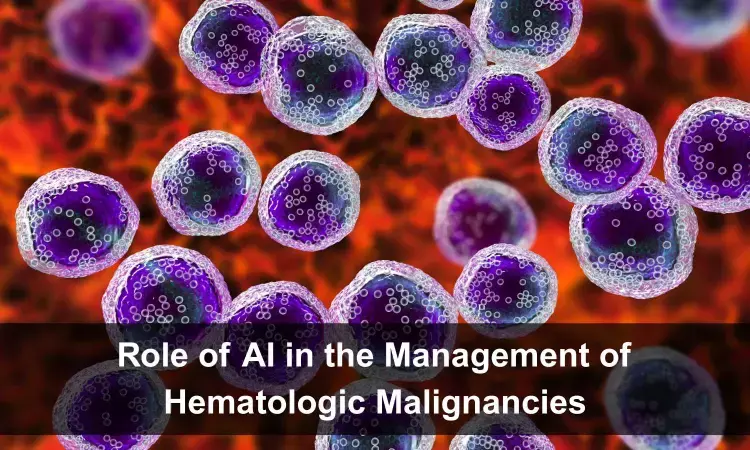


A recent review concluded that artificial intelligence (AI) is rapidly transforming the diagnosis and treatment of haematological malignancies by enhancing diagnostic accuracy and supporting personalized strategies. Machine learning (ML) and deep learning (DL) models have shown strong performance in subtype classification, prognosis, image interpretation, and treatment response prediction in leukaemia, lymphoma, and multiple myeloma (MM).
The study highlighted that these technologies integrate clinical, genomic, radiological, and histopathological data into decision-support tools, thereby improving risk stratification and individualised care, demonstrating AI's clinical promise in haematological malignancies.
The review was published in January 2026 in the journal Cureus
The Need for AI in Hematologic Malignancies
Haematology and oncology are data-intensive fields undergoing rapid innovation that require greater efficiency and improved diagnostic and treatment tools. With the rising global elderly population suggesting increased cancer incidence and improved diagnostic capabilities, there has been a massive increase in data and clinical complexity. AI tools have shown promise across medical disciplines, particularly in oncology. AI has three main applications:
- Clinical Care: AI can analyze cases to predict patient treatment responses, suggest treatments based on tumor traits and monitor patients.
- Research: AI helps derive scientific knowledge from clinical data by identifying new disease types and their mechanisms.
- Education: To advance understanding of the molecular-genetic makeup of cancer, reveal patterns in image data, identify therapy targets, and discover biomarkers.
Algorithms have been suggested for cancer risk assessment, segmentation, lesion identification, grading, staging and predicting patient outcomes
AI assistance in Leukaemia Diagnosis and Management
Diagnosing leukaemia is complex and time-consuming. Implementing ML techniques offers an opportunity to streamline the diagnostic phase and detect disease-specific genetic changes. Common ML techniques include the least absolute shrinkage and selection operator (LASSO), random forests (RFs), support vector machines (SVMs), and decision tree algorithms.
According to current evidence, ML can accurately classify leukaemia subtypes using peripheral blood smears, bone marrow microscopy, flow cytometry, and genetic data, often achieving diagnostic accuracies exceeding 90% and outperforming manual reviews. ML models predict survival, stratify risk, and support personalised treatment by integrating clinical and molecular patient data. These models identify prognostic features and biomarkers, enabling individualised follow-up and precision oncology approaches. ML has also shown promise in predicting treatment-related toxicities by combining genetic and clinical data, supporting personalised risk assessment and safer therapeutic decision-making across both high-resource and resource-limited healthcare settings.
AI assistance in Lymphoma Diagnosis and Management
ML tools have enhanced the precision of diagnosis and analysis of genomics, proteomics, and histopathology in lymphoma, facilitating personalized treatment and increasing survival rates.
According to current evidence, ML and DL models can accurately classify lymphoma subtypes from whole-slide histopathological images, achieving high diagnostic accuracy and enabling rapid, automated interpretation. ML has also been applied to genomic data to identify molecular lymphoma subtypes and prognostic gene signatures, enabling risk stratification and individualised treatment planning for patients with lymphoma. ML and DL techniques can automatically quantify the total metabolic tumour volume from FDG-PET/CT scans with accuracy comparable to that of experts. ML supports precision oncology by integrating imaging, genomic, and clinical data to guide therapy, predict outcomes, optimise chemotherapy, and enhance risk stratification, thereby improving the management of lymphoma.
AI assistance in Multiple Myeloma (MM) Diagnosis and Management
ML has been used to identify early-stage MM markers that can guide treatment and influence patient outcomes. Imaging is vital for detecting bone lesions, which are critical for diagnosis and planning, and ML is useful in this area.
According to current evidence, radiomics-based ML models applied to MRI have demonstrated the ability to differentiate MM-related vertebral lesions from metastatic disease with good diagnostic accuracy. ML models that integrate cytogenetic, tumour burden, and immune biomarkers can predict measurable residual disease (MRD) status in newly diagnosed MM patients. These models show moderate-to-good accuracy and identify patients likely to achieve deep treatment responses associated with improved progression-free and overall survival.
Potential Stakeholder Implications
AI has shown significant potential to enhance diagnostic accuracy, refine prognostic models, guide personalised treatment decisions, and improve clinical workflows. Across the spectrum of blood cancers, AI-based tools have demonstrated strong performance in tasks such as automated image classification, genomic and biomarker analysis, predicting treatment response and toxicity, and MRD estimation. Early successes, including automated leukaemia detection, DL-based lymphoma classification, radiomics-driven myeloma assessment, and AI-assisted toxicity prediction, highlight the significant clinical potential of AI in haematology.
Reference: Salem A, Teama M, Kassem H A, et al. Artificial Intelligence in Hematologic Malignancies: Opportunities, Challenges, and Clinical Integration. Cureus 18(1): e100950. Published January 06, 2026DOI 10.7759/cureus.100950