
Epigenetic therapy shows promise against treatment-resistant AML: Study
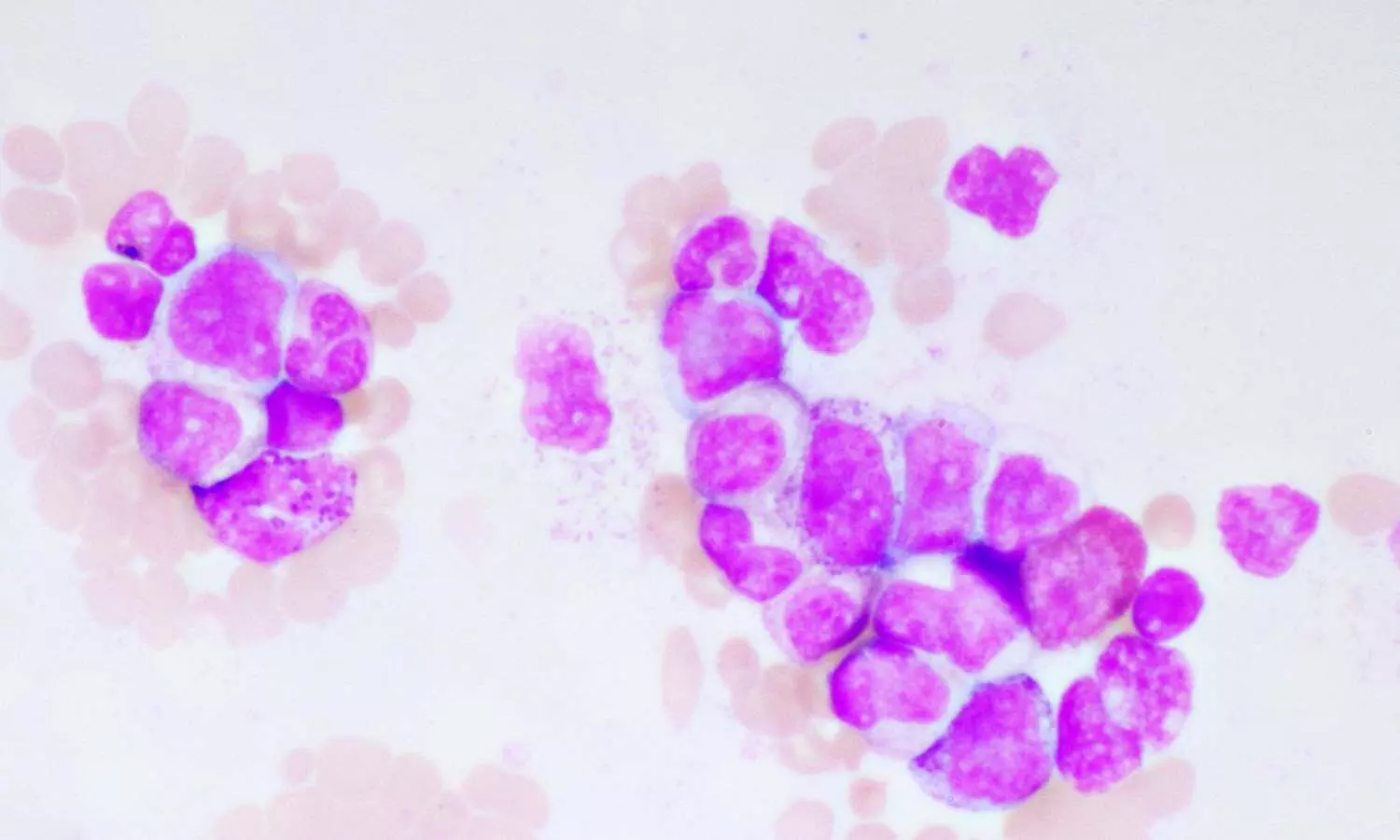


Researchers at The University of Texas MD-Anderson Cancer Center have discovered that an investigational epigenetic therapy remained effective in treatment-resistant acute myeloid leukemia (AML) through activating the Hippo pathway, a tumor-suppressing pathway linked to cancer growth and drug resistance.
In preclinical models, NTX-301, a hypomethylating agent, was more effective than standard hypomethylating therapy and retained anti-leukemia activity in therapy-resistant and TP53-mutant AML. Researchers also found that the therapy activated the Hippo pathway through targeted epigenetic changes, revealing a previously unrecognized mechanism that may contribute to its anti-leukemia effects.
The findings suggest a potential new strategy for patients whose disease relapses after frontline therapy, including those with TP53 mutations, one of the highest risk forms of AML. The study, led by Michael Andreeff, M.D., Ph.D., and Bing Z. Carter, Ph.D., both professors of Leukemia, was published in Clinical Cancer Research, a journal of the American Association for Cancer Research.
“Leukemia cells are remarkably adaptable and often find new pathways to survive after treatment,” Andreeff said. “These findings suggest NTX-301 may disrupt several of those survival mechanisms simultaneously while reactivating pathways that normally restrain cell growth. That dual effect could help explain why NTX-301 remained active in some of the most therapy-resistant forms of AML.”
Why do certain leukemias become treatment-resistant?
For many patients with AML, the frontline combination of hypomethylating agents and venetoclax works well initially, but resistance and relapse remain common.
The challenge is particularly significant in AML with mutations in the TP53 gene, which normally helps cells respond to damage and prevent uncontrolled growth. When that gene is mutated, leukemia cells can become resistant to therapy and more difficult to eliminate.
Why does NTX-301 remain active in resistant leukemia?
In this study, NTX-301 was evaluated across multiple preclinical models of treatment-resistant AML, including patient-derived xenograft (PDX) models of AML with acquired resistance. The therapy consistently reduced leukemia cell survival more effectively than azacitidine, a commonly used hypomethylating agent.
Importantly, NTX-301 remained active in leukemia cells that had already developed resistance to both hypomethylating therapy and venetoclax, and it showed anti-leukemia activity in TP53-mutant AML models. When combined with venetoclax in resistant leukemia samples, NTX-301 produced stronger anti-leukemia effects than either treatment alone. The combination was effective not only against leukemia blasts but also against leukemia stem and progenitor cells, which are believed to contribute to disease persistence and relapse.
Why is Hippo pathway activation important?
To understand why NTX-301 appeared more effective than existing drugs, researchers analyzed changes in DNA methylation, a process that can switch genes on or off without altering the underlying genetic code. Unlike current hypomethylating therapies, which broadly affect DNA methylation, NTX-301 focused on a more selective set of genes and pathways, including the Hippo pathway, which functions as a natural cell growth regulator.
NTX-301 increased activity of key Hippo pathway genes while reducing activity of YAP, a protein frequently linked to cancer cell survival, treatment resistance and stemness. These findings suggest Hippo pathway reactivation may be an important reason the therapy remained effective in resistant leukemia models and could represent a new strategy for overcoming treatment resistance in AML.
What's next for this research?
Additional studies are needed to determine whether these results translate to patients and to identify which populations may benefit most. The findings suggest that patients with relapsed AML, venetoclax-resistant disease and TP53 mutations may be important groups for future clinical evaluation.
“An encouraging aspect of this study is that it identified both a potential therapeutic opportunity and a biological explanation for why it may be effective,” Carter said. “The results provide a rationale for continued clinical development and suggest that targeting Hippo signaling may help address treatment resistance in AML.”
Reference:
Bing Z. Carte, Suresh Satpati, Edward Ayoub, The novel hypomethylating agent NTX-301 reprograms epigenetic and Hippo signaling pathways and exhibits pre-clinical activity in venetoclax-resistant and TP53-mutant AML., Clinical Cancer Research, https://doi.org/10.1158/1078-0432.CCR-25-4843
