
Oral microbes linked to increased risk of pancreatic cancer, finds research
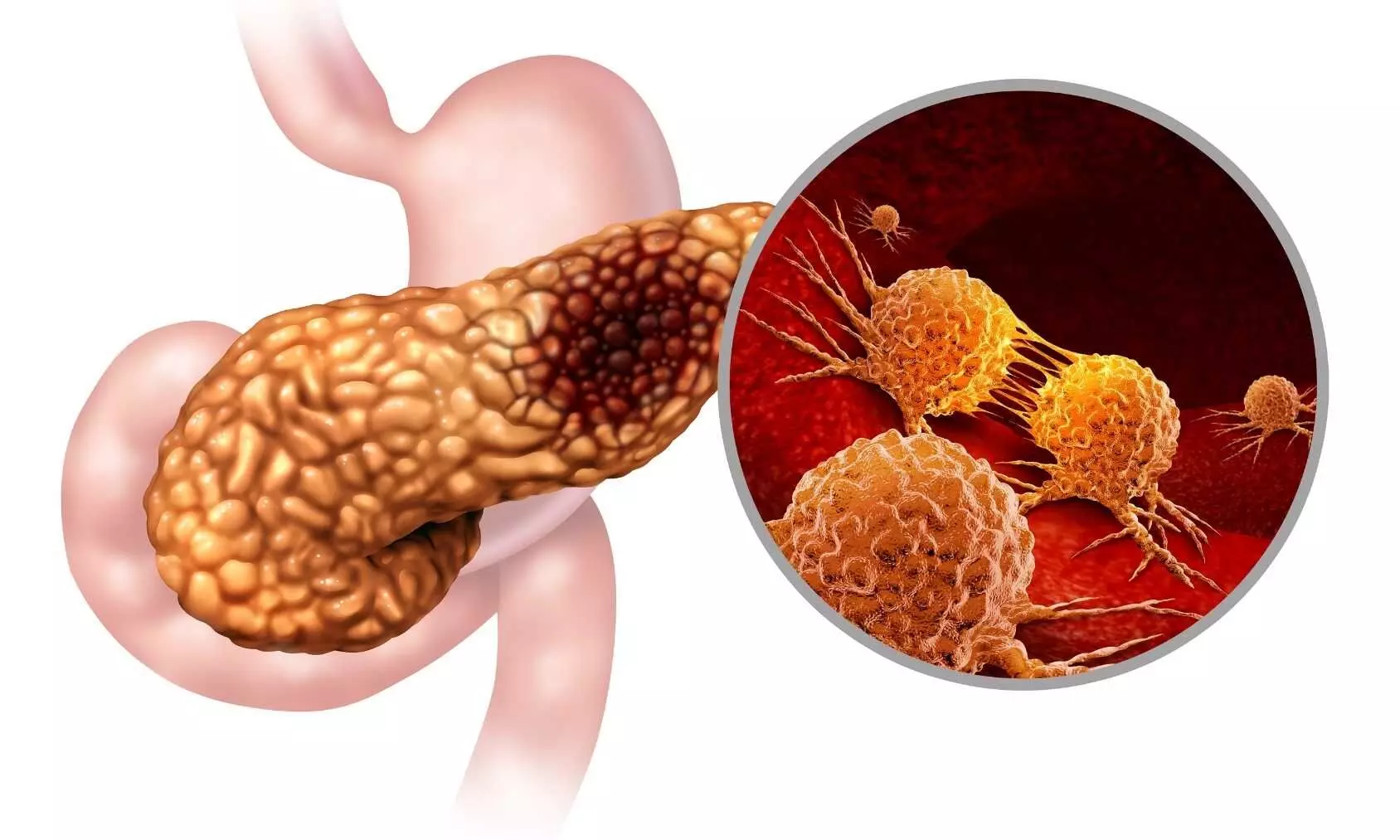


Twenty-seven species of bacteria and fungi among the hundreds that live in people's mouths have been collectively tied to a 3.5 times greater risk of developing pancreatic cancer, a study led by NYU Langone Health and its Perlmutter Cancer Center shows.
Experts have long observed that those with poor oral health are more vulnerable to pancreatic cancer than those with healthier mouths. More recently, scientists have uncovered a mechanism that could help explain this connection, finding that bacteria can travel through swallowed saliva into the pancreas, an organ that helps with digestion. However, precisely which species may contribute to the condition had until now remained unclear.
Publishing online Sept. 18 in JAMA Oncology, the new analysis assessed the genetic makeup of microbes collected from the saliva of 122,000 healthy men and women.
“Our findings provide new insight into the relationship between the oral microbiome and pancreatic cancer,” said study lead author Yixuan Meng, PhD, a postdoctoral fellow in the Department of Population Health at NYU Grossman School of Medicine.
The oral microbiome, the diverse community of bacteria and fungi that inhabit the mouth, is increasingly being studied for its potential role in human health.
Last year, the same team of scientists uncovered a link between certain oral bacteria and a heightened risk of developing head and neck squamous cell carcinoma, a group of cancers that arise in the mouth and throat. The researchers had also conducted a small study in 2016 that tied microbes living in the mouth to pancreatic cancer, but could not identify precise bacterial species.
Their latest report is the largest and most detailed analysis of its kind to date, says Meng. It is also the first to show that oral fungi — namely a type of yeast called Candida that naturally lives on the skin and throughout the body — may play a role in pancreatic cancer. The researchers also identified these oral Candida species in patients’ pancreatic tumors.
For the study, the team assessed data from two ongoing investigations tracking Americans from across the country to better understand how diet, lifestyle, medical history, and many other factors are involved in cancer. The data were gathered for the American Cancer Society Cancer Prevention Study II and the Prostate, Lung, Colorectal, and Ovarian Cancer Screening Trial.
Shortly after enrolling, participants rinsed with mouthwash, providing saliva samples that preserved the numbers and species of microbes for testing. Researchers then followed up for roughly nine years on average to record any presence of tumors.
In the current study, the investigators analyzed bacterial and fungal DNA from the spit samples. Then, they identified 445 patients who were diagnosed with pancreatic cancer and compared the DNA of their microbes with that of another 445 randomly selected study subjects who had remained cancer free. The team made sure to account for factors known to play a role in developing the condition, such as age, race, and how often subjects smoked cigarettes.
The findings identified 24 species of bacteria and fungi that individually either raised or lowered pancreatic cancer risk. Another three kinds of bacteria tied to the cancer were already known to contribute to periodontal disease, a serious gum infection that can eat away at the jawbone and the soft tissues surrounding teeth.
Altogether, the entire group of microbes boosted participants’ chances of developing the cancer by more than threefold.
In addition, by assessing the makeup of each participant’s oral microbiome, the scientists for the first time developed a tool that could estimate their cancer risk.
“By profiling bacterial and fungal populations in the mouth, oncologists may be able to flag those most in need of pancreatic cancer screening,” said study co-senior author Jiyoung Ahn, a professor in the Departments of Population Health and Medicine at NYU Grossman School of Medicine.
Ahn, who is also the associate director for population sciences at Perlmutter Cancer Center, notes that there are currently few effective screening methods for the disease, which is among the deadliest forms of cancer.
“It is clearer than ever that brushing and flossing your teeth may not only help prevent periodontal disease but may also protect against cancer,” said study co-senior author Richard Hayes, DDS, MPH, PhD, a professor in the Department of Population Health at NYU Grossman School of Medicine.
Hayes, who is also a member of Perlmutter Cancer Center, emphasizes that the study was designed to identify correlations between disease risk and certain microbes in the mouth, but not to establish a direct cause-and-effect link. That will require further investigation.
The research team next plans to explore whether oral viruses could contribute to cancer and how the mouth’s microbiome may affect patients’ chances of survival, adds Hayes.
Reference:
Meng Y, Wu F, Kwak S, et al. Oral Bacterial and Fungal Microbiome and Subsequent Risk for Pancreatic Cancer. JAMA Oncol. Published online September 18, 2025. doi:10.1001/jamaoncol.2025.3377
