AI-Assisted OCT Screening May Reduce Unnecessary Diabetic Eye Referrals in macular edema patients: JAMA
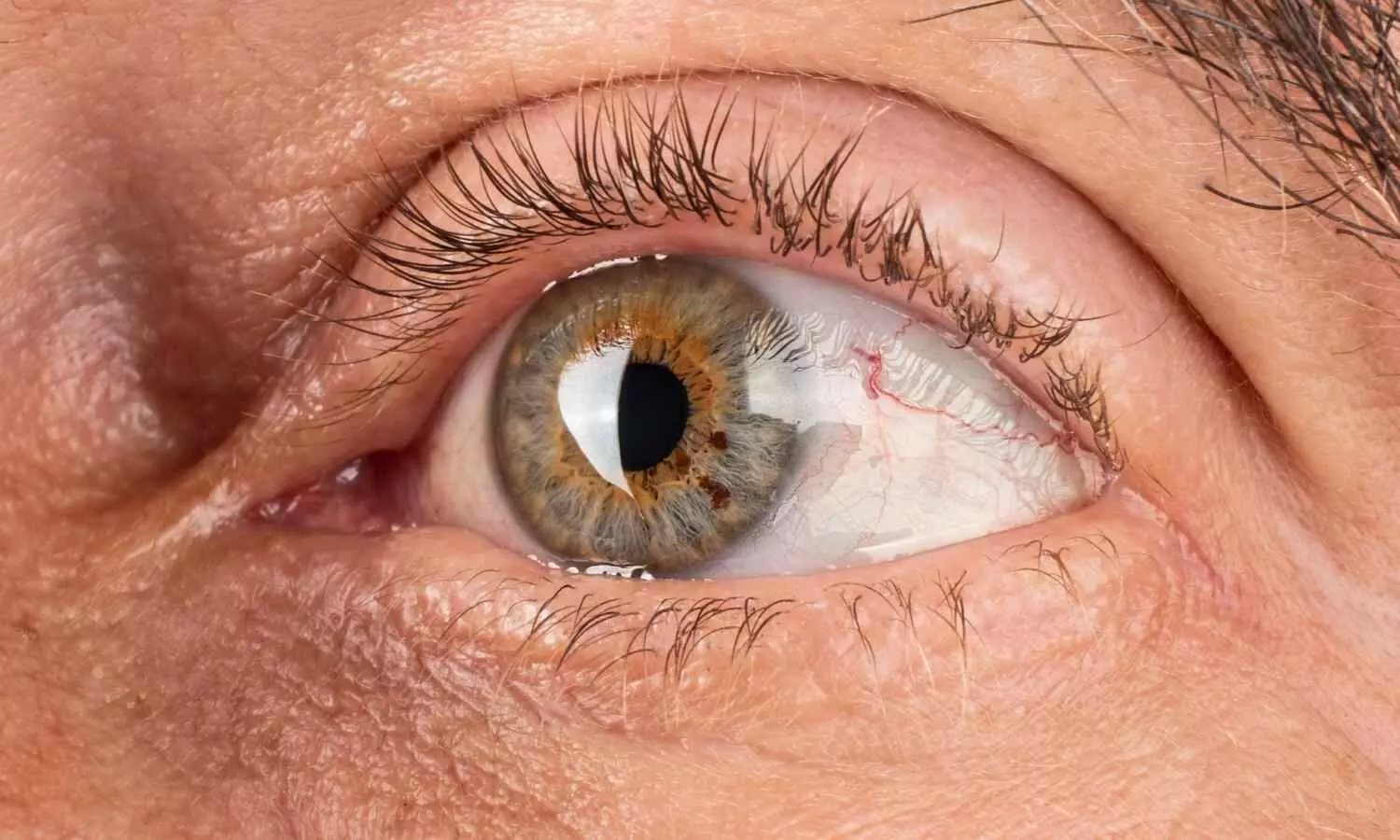


Researchers have found in a new study that using an AI-based optical coherence tomography (AI-OCT) system as a secondary screening tool was noninferior to standard practice regarding false-positive referral rates in macular edema patients. It substantially reduced potentially unnecessary referrals for diabetic macular edema (DME) without compromising diagnostic sensitivity, suggesting that AI-assisted screening could improve the efficiency of diabetic eye-care pathways. The study was published in JAMA by Shuyi Z. and colleagues.
In order to prove the effectiveness of both diagnostic accuracy and referral efficiency in the real world, a two-step study protocol was carried out over several years of the system’s clinical implementation. In the first prospective silent validation study period (February 2020-July 2023), a total of 603 diabetes patients were included in the study conducted at the triage of a tertiary care hospital for the training and validation of the system's algorithm using automated quality control of images, DME detection models and uncertainty flags.
After the validation step, a multicenter non-inferiority randomized controlled trial (September 2023-April 2025, with follow-up ending in May 2025) included 276 patients with suspected DME who had been referred from the territory-wide screening program. They were randomly allocated either to the intervention group (referrals made based on fundus photography and secondary AI-OCT report, n=137) or control group (automatic referrals made based on traditional fundus photography only, n=139).
Key findings:
- In the initial 603-patient validation phase (1,200 total scans), 7.2% (86 scans) were deemed ungradable and 4.4% (49 gradable scans) were flagged as uncertain, with the system achieving 98.8% sensitivity (95% CI, 94.5%–100.0%) and 90.7% specificity (95% CI, 88.7%–92.4%) for DME detection.
- In the randomized trial (mean age, 63.9 years; 54.7% male), true DME prevalence was balanced between the intervention (30.9%) and control (29.9%) cohorts.
- The false-positive DME referral rate dropped from 69.1% (95% CI, 61.0%–76.1%) in the control group down to 24.1% (95% CI, 14.6%–37.0%) in the AI-OCT intervention group, demonstrating a significant absolute reduction of −45.0% (95% CI, −58.2% to −31.9%; P < .001 for noninferiority).
- Referral sensitivity reached 100.0% (95% CI, 100.0%–100.0%) in both study arms, with zero cases of DME missed or non-referred in the intervention cohort.
- Referral specificity rose from 0.0% (95% CI, 0.0%–0.0%) under standard fundus-only screening to 86.5% (95% CI, 79.3%–92.9%) with secondary AI-OCT integration.
In summary, the inclusion of the AI-OCT system as a second-tier screening tool was no less effective regarding false-positive referral rates and yielded a significant reduction in unnecessary DME referrals. These trial statistics provide an empirical basis for the development of new diabetic eye screening guidelines on a national scale.
Reference:
Zhang S, Ran A, Zhou J, et al. An AI-Based OCT System to Detect Diabetic Macular Edema: A Prospective Validation and Noninferiority Randomized Clinical Trial. JAMA. 2026;336(3):215–223. doi:10.1001/jama.2026.7025