
AmblyoPlay App Improves Vision and Motor Skills in Children With Amblyopia, suggests research
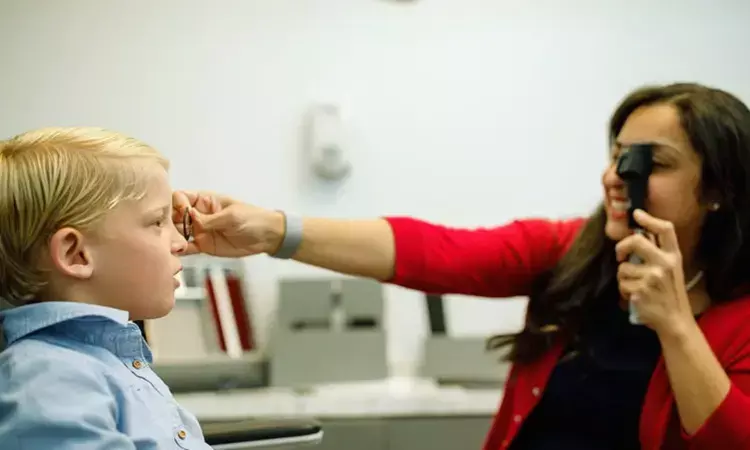


Turkey: A pilot study published in BMC Ophthalmology suggests that a gamified, app-based multimodal visual therapy may offer meaningful benefits for children with anisometropic amblyopia that extend beyond improvements in vision alone.
The study, led by Yuşa Basoglu from the Department of Audiology, Graduate School of Health Sciences, Istanbul Medipol University, Istanbul, Turkey, found that children who used the AmblyoPlay application regularly over six months experienced significant gains in visual acuity, oculomotor control, motor coordination, and postural stability.
Amblyopia remains one of the most common causes of visual impairment in childhood, and conventional treatments such as patching often face challenges related to compliance and limited functional outcomes. Digital dichoptic therapies have emerged as a promising alternative by stimulating binocular vision through interactive tasks. However, evidence on their broader sensorimotor effects has been scarce. This exploratory study aimed to evaluate whether a structured, app-based visual therapy could influence not only visual outcomes but also eye movement control and motor performance.
The non-randomized controlled study included 29 children aged 7 to 13 years. Fourteen children with anisometropic amblyopia formed the intervention group and completed a daily 20-minute AmblyoPlay training session five days a week for six months. Fifteen age- and sex-matched typically developing children served as controls and did not receive any intervention. Visual acuity, stereopsis, oculomotor parameters, motor proficiency, and postural stability were assessed at baseline and during follow-up, with repeated evaluations performed in the amblyopia group at one, three, and six months.
The study led to the following findings:
- Children using the AmblyoPlay program for over six months showed significant improvement in visual acuity in the amblyopic eye.
- Stereopsis improved markedly in the intervention group during the study period.
- Oculomotor function improved, with reduced saccadic latency and enhanced smooth pursuit and optokinetic responses.
- Eye movement control became more efficient following the multimodal visual therapy.
- Benefits extended beyond vision, with significant gains observed in motor proficiency.
- Postural stability and balance improved in children receiving the intervention.
- No significant visual, oculomotor, or motor changes were observed in the control group.
The authors noted that these findings support the concept that amblyopia is not solely a visual disorder but one that can affect motor coordination and postural control. By targeting multiple functional domains simultaneously, the AmblyoPlay program appears to address some of the limitations of traditional monocular therapies.
Despite encouraging results, the researchers acknowledged several limitations. The lack of randomization and absence of a parallel conventional treatment arm restrict direct comparisons with standard care. The relatively small sample size, single-center design, and six-month follow-up also limit conclusions regarding long-term efficacy and generalizability. In addition, certain assessment tools used for visual measurements have inherent methodological constraints.
The study provides valuable preliminary evidence that app-based multimodal visual therapy may serve as a feasible and comprehensive rehabilitation approach for pediatric anisometropic amblyopia. The authors emphasized the need for larger, multicenter randomized trials with longer follow-up to confirm the durability of benefits and further explore the cognitive and functional impact of digital dichoptic therapies.
Reference:
Basoglu, Y., Serbetcioglu, M.B. & Cicek, F.D. AmblyoPlay-based multimodal visual therapy in pediatric anisometropic amblyopia: a pilot study of visual, oculomotor and sensorimotor outcomes. BMC Ophthalmol 25, 648 (2025). https://doi.org/10.1186/s12886-025-04481-2

Next Story