
BMA Shows Better Safety and Efficacy Than Sterile Acupuncture in Dry Eye: Study
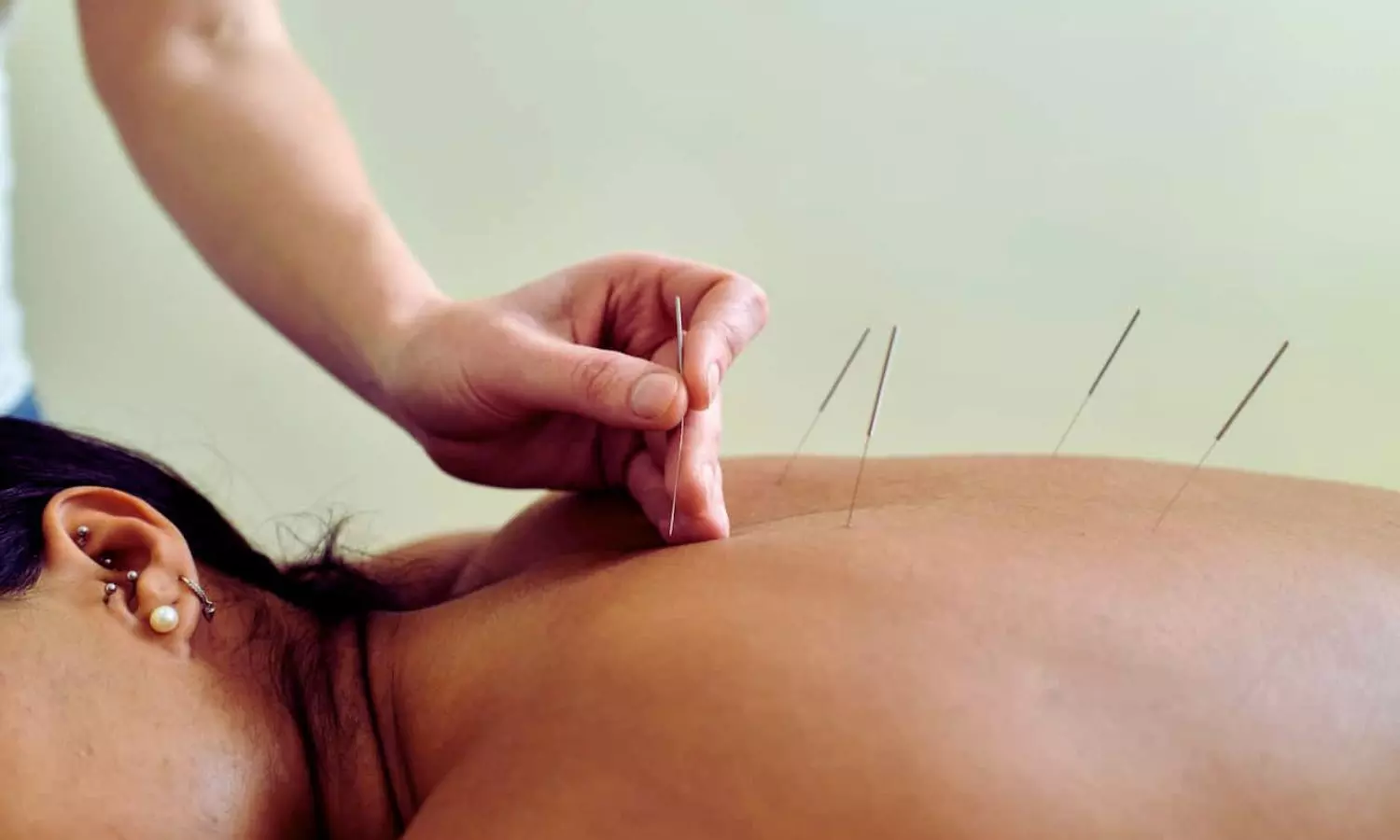


A new clinical trial published in the Integrative Medicine Research revealed that biodegradable microneedle acupuncture (BMA) among patients with dry eye (DE) resulted in fewer treatment-related adverse events and greater clinical improvement when compared with sterile acupuncture (SA), suggesting it may be a safer and more effective option for managing the condition.
Dry eye is often more than a minor irritation which can lead to chronic discomfort, blurred vision, and reduced productivity. Current treatment options range from artificial tears to prescription medications and lifestyle adjustments, but many patients continue to seek alternative therapies for better symptom control. Acupuncture has long been explored as an option, though concerns about side effects and inconsistent results have limited its widespread adoption.
The introduction of biodegradable microneedle technology could change the existing narrative by minimizing adverse reactions and enhancing therapeutic benefits, BMA may represent a meaningful step forward in integrative eye care.
The study enrolled 224 participants diagnosed with dry eye and randomly assigned them into a group receiving BMA and the other undergoing conventional sterile acupuncture. The treatments were administered 3-times a week over a 4-week period, targeting commonly used acupoints around the eyes and face.
What sets BMA apart is its use of tiny, biodegradable microneedles designed to deliver stimulation while gradually dissolving into the skin. This approach aims to reduce tissue irritation and other complications sometimes linked to traditional acupuncture needles.
The patients treated with BMA experienced far fewer treatment-related adverse events than those in the sterile acupuncture group. Statistically, the risk was reduced by more than 80%, marking a significant improvement in treatment safety. Also, no cases of skin allergy-related side effects were reported in the BMA group, while such reactions did occur among patients receiving standard acupuncture.
The participants receiving BMA reported greater relief from dry eye symptoms, using clinical tools such as the Ocular Surface Disease Index (OSDI) and visual analog scales assessing discomfort. Improvements extended to quality-of-life measures as well, with patients indicating better daily functioning and overall satisfaction with their treatment.
While the findings are promising, this study emphasize the need for longer-term studies to confirm durability of results and to assess broader applicability across diverse patient populations.
Source:
Park, S.-Y., Kim, M.-J., Jung, M.-Y., Son, S.-E., & Chae, H.-G. (2026). Safety and efficacy of biodegradable microneedle acupuncture for dry eye: A multicenter, randomized, active-controlled pivotal trial. Integrative Medicine Research, 15(3Part A), 101338. https://doi.org/10.1016/j.imr.2026.101338

