Epioxa Therapy Slows Keratoconus Progression, finds study
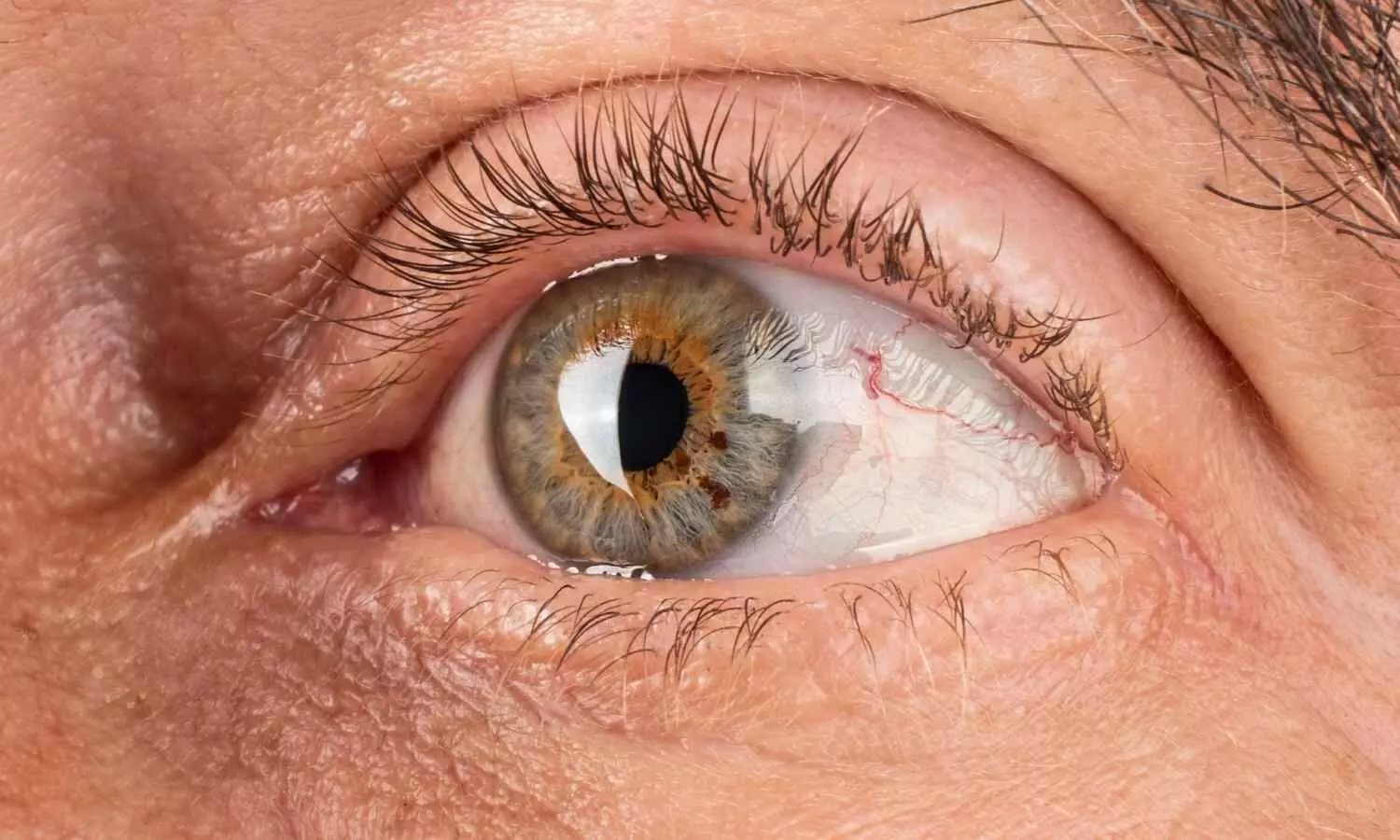


A study published in Ophthalmology and Therapy found that Epioxa, an epithelium-on corneal collagen cross-linking treatment, significantly slowed keratoconus progression over 12 months. Treated eyes improved by an average of 0.5 diopters, while untreated eyes worsened by 0.4 diopters. The findings also highlighted the value of collaboration between optometrists and ophthalmologists in managing keratoconus patients. The study was conducted by Kenneth A. and colleagues.
A well-designed phase 3 clinical trial was employed for achieving unbiased results from various medical institutions specializing in such diseases. For assessing the efficacy of the treatment, a group of 312 eyes from subjects aged between 13 and 51 years with progressive keratoconus were selected randomly using a 2:1 distribution among two groups.
The treatment group for active CXL included 200 eyes, whereas the control/sham group without any active treatment included 112 eyes. The active treatment group was exposed to an effective, non-invasive approach whereby the eyes were subjected to riboflavin 5′-phosphate ophthalmic solutions with a concentration of either 0.239% or 0.177% followed by targeted UV-A illumination along with oxygen supplementation. On the other hand, the control group was subjected to the placebo version of the solution coupled with simulated irradiation therapy. The key endpoint of the experiment in question was numerically determined based on the inter-group difference in LS mean changes in the maximum corneal curvature (Kmax).
Key findings:
- For the active CXL treatment, there was an improvement in the LS mean Kmax value indicating a flattening and decrease in corneal curvature by 0.5 Diopters (D) (95% Confidence Interval [CI] 0.7, 0.3; p < 0.0001).
- For the placebo/sham treatment, there was continuous progression of the condition where the LS mean Kmax worsened with the eye having a steeper curvature by 0.4 D (95% CI 0.1, 0.8; p = 0.0045).
- The overall net difference in the stability of corneal curvature was thus −1.0 D (95% CI −1.3, −0.6; p < 0.0001).
- The most frequently observed minor adverse event reported by investigators was punctate keratitis, a form of minor inflammation of the cornea occurring in 6.5% eyes for the active CXL treatment and 1.8% for the placebo/sham treatment.
In summary, the phase 3 multicenter trial succeeded in satisfying the primary efficacy criterion with statistical significance and clinical relevance for Kmax. Scientific evidence clearly shows that the use of epithelium-on CXL with riboflavin ophthalmic solutions (riboflavin 5’-phosphate ophthalmic solutions 0.239% and 0.177%) together with UV-A radiation and oxygen supplementation is safe and effective for treating keratoconus among children and adults. This non-surgical method marks a turning point in ophthalmology therapy and presents itself as a gentler and more predictable alternative in managing progressive corneal disease.
Reference:
Beckman, K.A., Parkhurst, G.D., Lee, J.H. et al. Randomized, Controlled Study to Evaluate the Safety and Efficacy of Oxygen-Enriched Epithelium-On Corneal Cross-Linking for the Treatment of Keratoconus. Ophthalmol Ther 15, 1463–1484 (2026). https://doi.org/10.1007/s40123-026-01364-7