Face Masks Do Not Significantly Affect Intraocular Pressure in Glaucoma Patients: Study
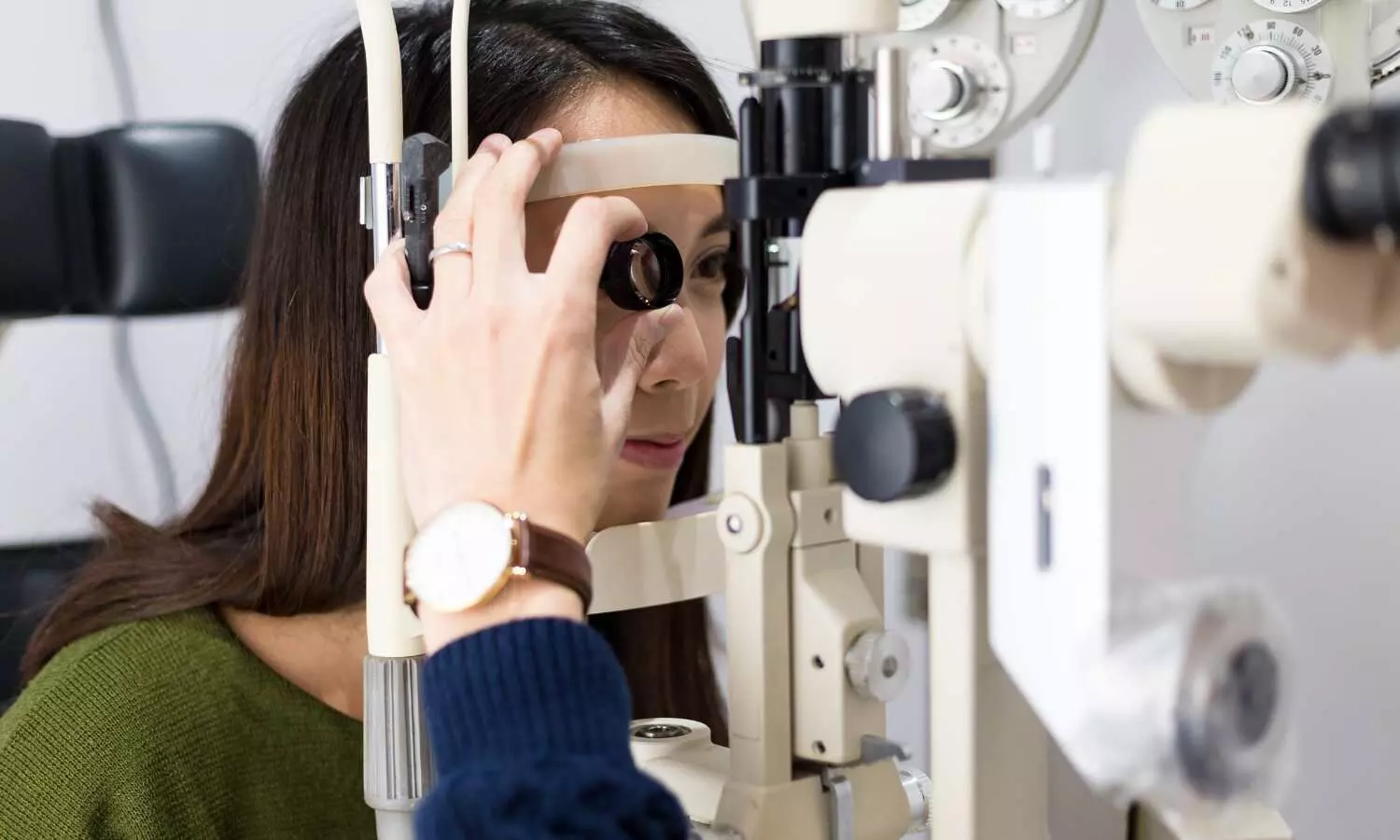


A study published in the Journal of Glaucoma has found that wearing surgical or KN95 masks did not significantly affect average intraocular pressure (IOP) readings compared with wearing no mask in glaucoma patients. However, individual patients may experience potentially clinically significant variations, possibly influenced by mask fit, patient positioning and breathing patterns. The study was conducted by Ortal F. and colleagues.
To critically examine possible biases that masks could introduce, scientists involved 50 adults with glaucoma (100 eyes) who visited a clinic during their usual appointments within the period of November-January 2023. After excluding 3 extreme outliers, further analysis included 47 patients (94 eyes) with an average age of 71.0 ± 12.9 years; 22 of them were men, and 25 women.
All subjects were tested for IOP in 3 randomly assigned conditions: wearing a regular mask of earloop type, wearing a non-valved mask of the KN95 type, and without wearing any mask at all as a baseline condition. Examiners were blinded to tonometry results prior to completing all measurements, and 5-minutes breaks were allowed in between the conditions in order to provide time for recovery of the aqueous humor.
Key findings:
- Statistical analysis in 47 patients (94 eyes; average number of prior IOP medications 1.7 ± 1.5; 25.5% prior laser; 19.1% prior glaucoma surgery) yielded reliable overall mean values along with individual variability.
- There was no statistically significant difference in mean IOP measurements in different conditions (P = 0.116): without mask control value was 15.1 ± 4.3 mm Hg (range 6.0–28.5), surgical mask was 14.7 ± 4.3 mm Hg (range 6.0–24.0), and KN95 mask was 15.1 ± 4.5 mm Hg (range 7.0–26.0).
- Similarly, the comparison between surgical mask and control (P = 0.075) or KN95 mask (P = 0.092) did not show any statistical significance.
- In overall mean IOP values (<0.5 mm Hg), the individual IOP variability between conditions ranged from 0 to 7.5 mm Hg.
- In 16 patients (34.0%), the difference in IOP measurement was 3 mm Hg or more, while in 10 patients (21.8%), the difference was 4 mm Hg or more.
- No statistically significant difference was seen in various subgroups depending on sex (P = 0.560), eye laterality (P = 0.384), number of IOP lowering medications (P = 0.730), prior glaucoma laser treatment (P = 0.456), and prior glaucoma surgery (P = 0.425).
Conclusively, the results of a prospective randomized study reveal that even though face masks do not influence average IOP measurement, individual changes of 3 mmHg or more are seen in one third of the patients. The findings of the study indicate that clinicians should make sure that masks are fitted properly and breathing is normal before the IOP is measured without a mask.
Reference:
Tempelhof, O. F., Reich, Y., Rachmiel, R., Berliner, O., Waisbourd, M., & Kurtz, S. (2026). Intraocular Pressure Measurement Variability Associated With Face Mask Use. Journal of Glaucoma, 35(8), e107-e111. https://doi.org/10.1097/IJG.0000000000002715