
Faricimab Improves Macular Edema and Visual Acuity in Retinal Vein Occlusion: Study
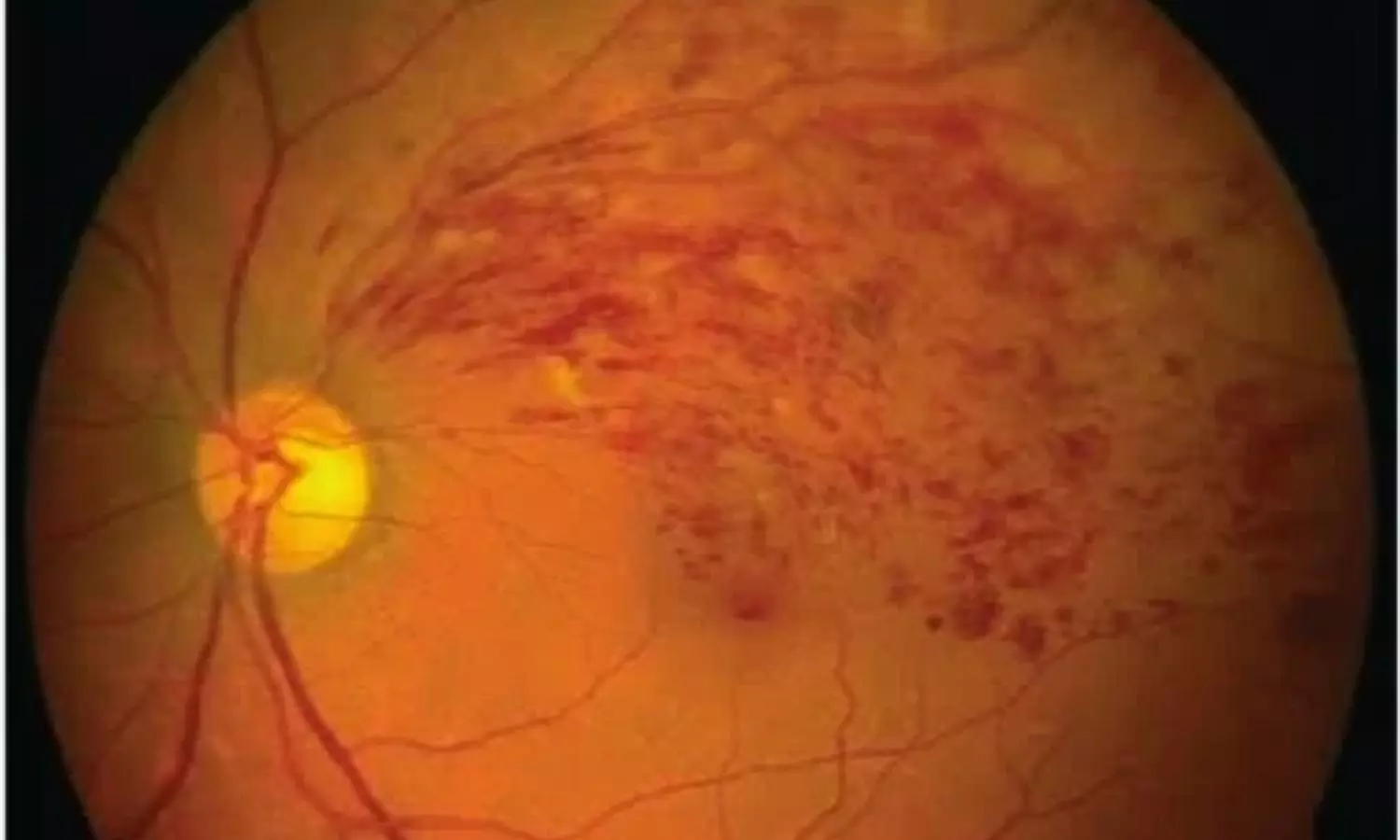


Switzerland: Faricimab demonstrated sustained treatment benefits for up to six months in patients with macular edema secondary to retinal vein occlusion, findings published in Ophthalmology and Therapy. Macular fluid significantly decreased, and best-corrected visual acuity (BCVA) improved in treatment-naïve eyes. No cases of intraocular inflammation or vasculitis were reported during the study.
The study, conducted by Katharina Heck, Medical Retina & Clinical Research Department, Vista Augenklinik, Binningen, Switzerland, and colleagues, assessed the real-world effectiveness and safety of faricimab in patients with macular edema associated with branch or central retinal vein occlusion (RVO). The findings provide evidence on its performance in routine clinical practice, including patients whose condition had previously been treated with other therapies.
Macular edema develops when fluid accumulates in the macula, the central part of the retina responsible for detailed vision. Anti-vascular endothelial growth factor (anti-VEGF) injections are commonly used to manage this condition. Faricimab is an intravitreal treatment that targets both VEGF-A and angiopoietin-2 (Ang-2), two pathways involved in vascular dysfunction and leakage.
Published in Ophthalmology and Therapy, the multicenter, retrospective study evaluated 112 eyes from 111 patients who received faricimab under a treat-and-extend regimen and had at least six months of follow-up. Of these, 13 eyes had not received previous treatment, while 99 had been treated before switching to faricimab. Researchers assessed visual acuity, retinal thickness, fluid accumulation, injection frequency and adverse events at baseline and during follow-up.
The findings revealed the following:
- Improved vision in treatment-naïve eyes: Mean BCVA improved from 0.46 logMAR at baseline to 0.32 logMAR at six months.
- Stable vision after switching treatment: In previously treated eyes, BCVA remained stable, changing from 0.20 to 0.21 logMAR.
- Reduced retinal thickness: Central retinal thickness decreased from 522 to 267 µm in treatment-naïve eyes and from 275 to 253 µm in previously treated eyes. Central subfield thickness also declined significantly in both groups.
- Resolution of retinal fluid: Significant reductions in intra- and subretinal fluid were observed across the central 1 mm, 3 mm, and 6 mm regions of the retina in both groups.
- Treatment frequency and safety: Both groups received an average of five injections over six months. One systemic adverse event was recorded, and no intraocular inflammation was reported.
The researchers noted that the anatomical improvements were particularly encouraging among previously treated patients, many of whom had difficult-to-treat macular edema. The findings suggest that faricimab's dual-pathway inhibition may offer benefits in routine RVO management, although further research is needed to establish its comparative effectiveness.
The study had limitations, including its retrospective observational design, absence of a control group and relatively short follow-up. The small number of treatment-naïve patients and the exclusive inclusion of a Swiss population also limit the generalisability of the results. Further studies involving larger populations and longer follow-up are needed to confirm these findings.
Reference:
Heck, K., Hatz, K., Cattaneo, M. et al. Six-Month Real-World Data in Macular Edema Due to Retinal Vein Occlusion Treated with Faricimab: Swiss Retina Research Network Report. Ophthalmol Ther 15, 2643–2657 (2026). https://doi.org/10.1007/s40123-026-01442-w

Next Story