
Gas-Permeable Contact Lenses Improve Visual Outcomes After Congenital Glaucoma Surgery: JAMA
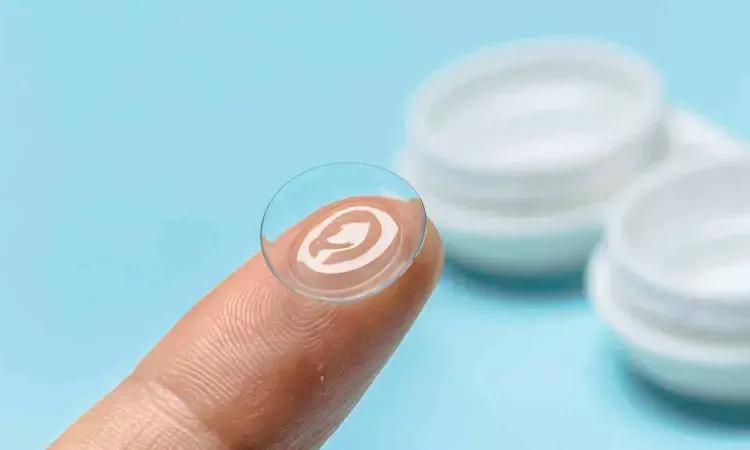


A new study published in the Journal of the American Medical Association showed that in the year after primary congenital glaucoma (PCG) surgery, rigid gas-permeable contact lenses (RGPCLs) produced better visual results than glasses.
Despite effective intraocular pressure management, primary congenital glaucoma is a vision-threatening disease in children that is frequently compounded by significant refractive errors and amblyopia. For visual growth, appropriate refractive correction is consequently essential. The relevance of various refractive correction techniques in maximizing visual acuity, binocular function, and total visual rehabilitation in afflicted children can be better understood by evaluating the visual results associated with these techniques.
In attempt to improve children's visual results following PCG surgery, this study compared the usage of RGPCLs with continuing to wear spectacles. 56 kids with surgically treated PCG and weak spectacle reaction, ages 4 to 15, made up the participants. From October 11, 2023, to March 21, 2024, data were examined. This research evaluated RGPCLs (n = 29) against glasses (n = 27) throughout a 12-month period, along with standardized amblyopia patching.
The Early Treatment Diabetic Retinopathy Study chart with tumbling-E optotypes and children wearing their current best refractive correction was used to quantify the change in worse-eye best-corrected visual acuity (BCVA) at 12 months. Near stereoacuity and contrast sensitivity function were secondary results.
Of the 83 individuals who underwent screening, 56 were randomly assigned, and 48 (85.7%) of them finished at least one follow-up and were incorporated into the main analysis. The RGPCL and glasses groups had similar baseline demographics and ocular features. 76.0% and 70.4% of participants, respectively, completed the final follow-up at 12 months.
When compared to the spectacle group, the RGPCL group showed a considerably better improvement in best-corrected visual acuity (BCVA) after one year (adjusted difference −0.19 logMAR; P =.03), with a higher proportion attaining ≥2 lines of BCVA improvement (62.5% vs. 37.5%). With RGPCLs, improvements in near stereoacuity and contrast sensitivity were also more significant.
There were no documented significant adverse effects. Overall, these results imply that RGPCLs improved children's visual acuity and contrast sensitivity more than continuing to wear glasses following PCG surgery.
Source:
Jiang, J., Hu, Y., Zhu, Y., Zhong, Y., Xiang, C., Chen, S., Yu, M., Fang, L., Lin, S., Tang, X., Lu, M., Chen, W., Jin, L., Liu, X., & Yang, X. (2025). Visual outcomes of children with primary congenital glaucoma receiving different refractive corrections: The CLEVR-PCG randomized clinical trial: The CLEVR-PCG randomized clinical trial. JAMA Ophthalmology, 143(12), 1006–1013. https://doi.org/10.1001/jamaophthalmol.2025.3976

