Oral Nicotinamide mononucleotide safe and may mitigate age related changes in retina: Study
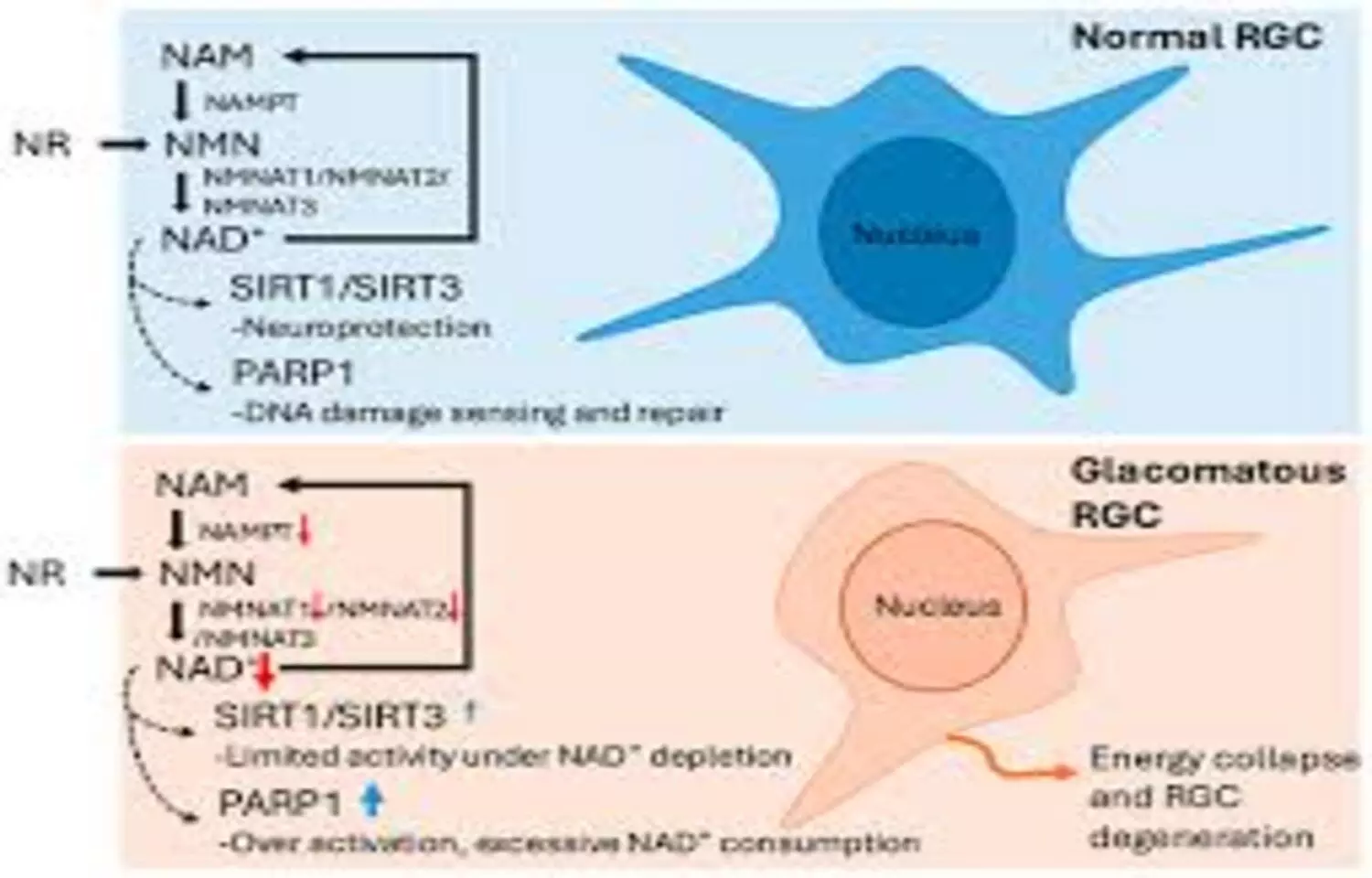


Oral Nicotinamide mononucleotide administration was found to be safe with no significant systemic or ocular adverse effects. Additionally, improvements in retinal thickness suggest that Nicotinamide mononucleotide may help reduce or slow age-related changes in the retina.
Nicotinamide mononucleotide (NMN) improves the pathogenesis of age-related changes and diseases by increasing intracellular nicotinamide adenine dinucleotide+. We aimed to evaluate retinal thickness changes after oral NMN administration according to the Early Treatment Diabetic Retinopathy Study (ETDRS) grid.
Before and 24 weeks after the study initiated, 240 × 240 mm macular cube scan optical coherence tomography images were obtained from male patients with type 2 diabetes aged ≥ 65 years with physical frailty; changes in the automatically measured mean retinal thickness within the 9 ETDRS grid regions were compared between groups. Participants were randomly assigned to receive 250 mg/day NNicotinamide mononucleotide or placebo orally for 24 weeks. Retinal thickness changes at 24 weeks were compared between groups. Each group included 14 eyes of 7 patients; 8 eyes had ocular disease. Best-corrected visual acuity did not change significantly between baseline and 24 weeks for both groups. In the temporal subretinal field of the outer circle, the retinal thickness change from baseline to 24 weeks differed significantly between the Nicotinamide mononucleotide and placebo groups (+1.14 ± 2.85 μm and −2.77 ± 3.30 μm, respectively; p = 0.006). Among patients without ocular disease, the Nicotinamide mononucleotide group demonstrated a trend toward suppressed reduction in retinal thickness in the temporal region (+0.75 ± 3.20 μm and −2.45 ± 3.33 μm in the Nicotinamide mononucleotide and placebo groups, respectively; p = 0.07). Systematic and ophthalmic adverse events were not observed in the NMN group.
The oral Nicotinamide mononucleotide administration was safe both systemically and locally in the eyes. Based on the retinal thickness results, Nicotinamide mononucleotide may be efficacious in mitigating age-related alterations in the retina.
Reference:
A.Shiraki, C.Hara, H.Akasaka, et al., “Effect of Nicotinamide Mononucleotide on Retinal Thickness of Older Patients With Diabetes Mellitus: A Placebo-Controlled, Double-Blind Study,” Geriatrics & Gerontology International26, no. 5 (2026): e70516, https://doi.org/10.1111/ggi.70516.
Keywords:
Oral, Nicotinamide, mononucleotide, safe, mitigate, age related, changes, retina, Study, A.Shiraki, C.Hara, H.Akasaka