
- Home
- Medical news & Guidelines
- Anesthesiology
- Cardiology and CTVS
- Critical Care
- Dentistry
- Dermatology
- Diabetes and Endocrinology
- ENT
- Gastroenterology
- Medicine
- Nephrology
- Neurology
- Obstretics-Gynaecology
- Oncology
- Ophthalmology
- Orthopaedics
- Pediatrics-Neonatology
- Psychiatry
- Pulmonology
- Radiology
- Surgery
- Urology
- Laboratory Medicine
- Diet
- Nursing
- Paramedical
- Physiotherapy
- Health news
- Fact Check
- Bone Health Fact Check
- Brain Health Fact Check
- Cancer Related Fact Check
- Child Care Fact Check
- Dental and oral health fact check
- Diabetes and metabolic health fact check
- Diet and Nutrition Fact Check
- Eye and ENT Care Fact Check
- Fitness fact check
- Gut health fact check
- Heart health fact check
- Kidney health fact check
- Medical education fact check
- Men's health fact check
- Respiratory fact check
- Skin and hair care fact check
- Vaccine and Immunization fact check
- Women's health fact check
- AYUSH
- State News
- Andaman and Nicobar Islands
- Andhra Pradesh
- Arunachal Pradesh
- Assam
- Bihar
- Chandigarh
- Chattisgarh
- Dadra and Nagar Haveli
- Daman and Diu
- Delhi
- Goa
- Gujarat
- Haryana
- Himachal Pradesh
- Jammu & Kashmir
- Jharkhand
- Karnataka
- Kerala
- Ladakh
- Lakshadweep
- Madhya Pradesh
- Maharashtra
- Manipur
- Meghalaya
- Mizoram
- Nagaland
- Odisha
- Puducherry
- Punjab
- Rajasthan
- Sikkim
- Tamil Nadu
- Telangana
- Tripura
- Uttar Pradesh
- Uttrakhand
- West Bengal
- Medical Education
- Industry
Patients with floaters or flashes could face higher risk of retinal detachment, reveals research
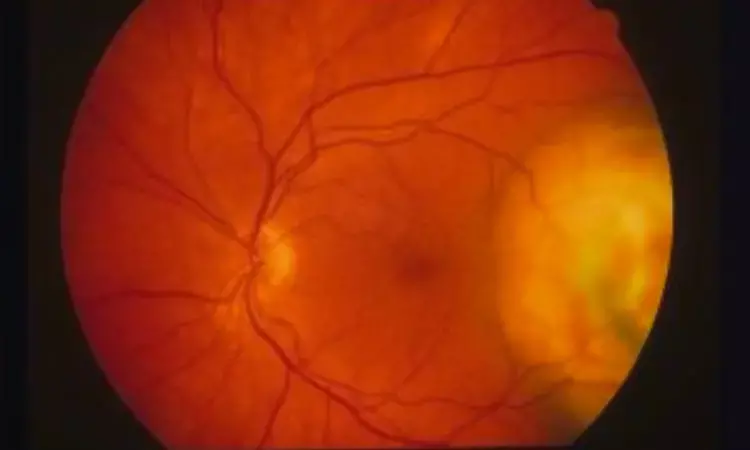
Data from ophthalmology practices showed that experiencing newly emerging floaters in vision is more strongly associated with retinal tears than experiencing flashes. However, these associations have not been studied in primary care.
In this study, researchers conducted a retrospective cohort study using electronic records from seven family practices in the Netherlands to examine whether patients presenting with floaters, flashes, or both had different risks of retinal detachment in primary care.
Researchers reviewed 1,181 episodes of care between 2012 and 2021 involving adults with floaters or flashes. Retinal detachment occurred in 77 of these episodes. The absolute risk of retinal detachment was 6.1% among episodes with floaters alone, 4.7% among episodes with flashes alone, and 8.4% among episodes with both floaters and flashes.
Episodes with new or recently changed acute floaters, more than 10 floaters, or floaters described as a cloud, haze, or curtain, showed higher relative risk compared with flashes alone. The most common final diagnoses were vitreous floaters without a specific disease diagnosis, posterior vitreous detachment, and migraine.
The study findings suggest that floaters, with or without flashes, are an important warning sign for retinal detachment.
Reference:
Bart van Zon, Marcia Spoelder, Hans J. Peters, Reinier Akkermans, Niels Crama, Do Vitreous Floaters Predict Retinal Detachment? Retrospective Cohort Study in Primary Care, The Annals of Family Medicine.

Dr Kamal Kant Kohli-MBBS, DTCD- a chest specialist with more than 30 years of practice and a flair for writing clinical articles, Dr Kamal Kant Kohli joined Medical Dialogues as a Chief Editor of Medical News. Besides writing articles, as an editor, he proofreads and verifies all the medical content published on Medical Dialogues including those coming from journals, studies,medical conferences,guidelines etc. Email: drkohli@medicaldialogues.in. Contact no. 011-43720751

