Novel Fixation Technique Successfully Heals Complex Periprosthetic Tibial Fracture in 93-Year-Old Woman: Case Report
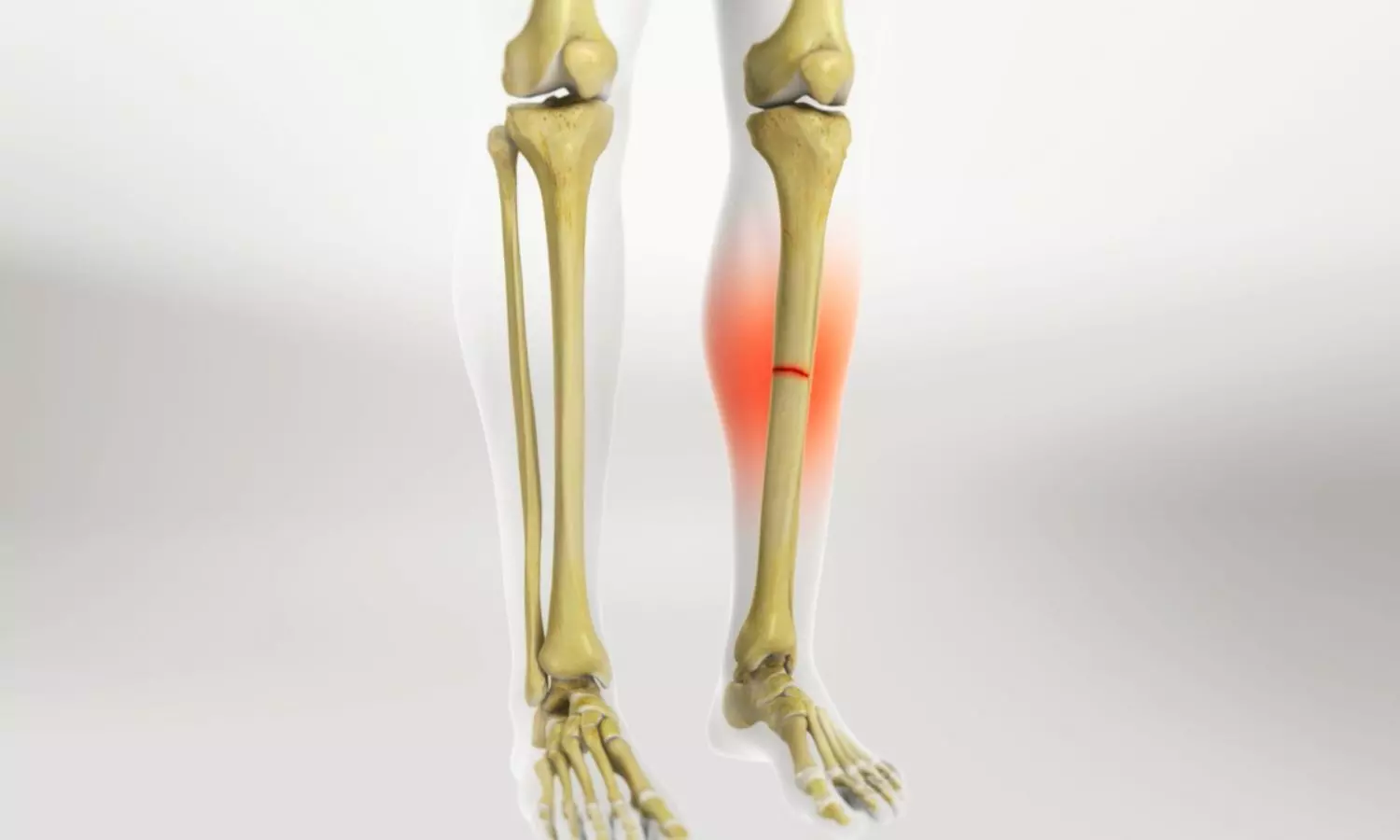


A recent case report highlights a novel dual-fixation approach combining light-cured photodynamic stabilization with a lateral locking plate to successfully heal a complex periprosthetic tibial fracture. This minimally invasive technique promoted complete bone healing while protecting fragile soft tissue in a high-risk elderly patient.
These findings of the case report were published in the Indian Journal of Orthopaedics in September 2026 by Dr. Ahmed Nageeb Mahmoud
Clinical Case Overview
Managing complex periprosthetic fractures adjacent to joint replacements presents a formidable clinical challenge in geriatric orthopedic surgery. High-energy trauma in super-elderly individuals frequently results in multi-fragmentary fracture patterns complicated by compromised bone quality and fragile soft tissue envelopes. Traditional open reduction through compromised tissue can lead to elevated rates of wound failure, deep infection, and nonunion. The present clinical report evaluates a tailored biomechanical solution designed to overcome these anatomical and physiological hurdles.
A 93-year-old female patient presenting following high-energy trauma sustained during a motor vehicle collision. The patient's baseline medical profile was characterized by severe systemic comorbidities, including diabetes, an elevated body mass index, and established osteoporosis. In addition, the patient had a surgical history involving a prior right total knee arthroplasty. Diagnostic assessment revealed a severe right-sided injury consisting of a lateral tibial plateau fracture occurring simultaneously with a comminuted fracture of the ipsilateral tibial shaft near the knee prosthesis. Physical examination demonstrated acute soft tissue trauma along the medial lower leg, highlighted by a prominent contusion and clinical indicators of potential cellulitis. This localized soft tissue compromise created a significant surgical dilemma, as standard surgical exposures across the medial lower leg carried high risks of infectious complications and soft tissue breakdown.
To achieve robust skeletal stability while respecting the vulnerable medial cutaneous envelope, the surgical team engineered a hybrid, minimally invasive construct. Fixation was executed by applying a lateral submuscular proximal tibia locking plate to stabilize the plateau and proximal shaft segments. To reinforce structural integrity without requiring extensive medial soft tissue dissection or placing hardware through compromised skin, a photodynamic intramedullary bone stabilization system was deployed from the medial side. This combination provided multiplanar stability across the comminuted fracture zones.
Postoperatively, the comminuted periprosthetic fracture demonstrated complete, uneventful osseous consolidation within a six-month follow-up period. The soft tissue envelope healed without infectious sequelae, skin necrosis, or cellulitis progression, and the hybrid construct provided excellent mechanical support throughout recovery.
The clinical case demonstrates that integrating photodynamic intramedullary bone stabilization with lateral submuscular locking plate fixation offers a viable, soft-tissue-sparing solution for complex periprosthetic tibial fractures in high-risk, osteoporotic geriatric patients.
Reference
Mahmoud AN, Brule NR, Elabd MA, Ferrante S, Horwitz DS. Photodynamic intramedullary stabilization system in a complex periprosthetic tibial fracture: A case study and narrative literature review. Indian J Orthop. Published online September 7, 2026.