
Abdominal Aortic Calcification on Lumbar X-rays Predicts Hip Fracture Risk: Study Reveals
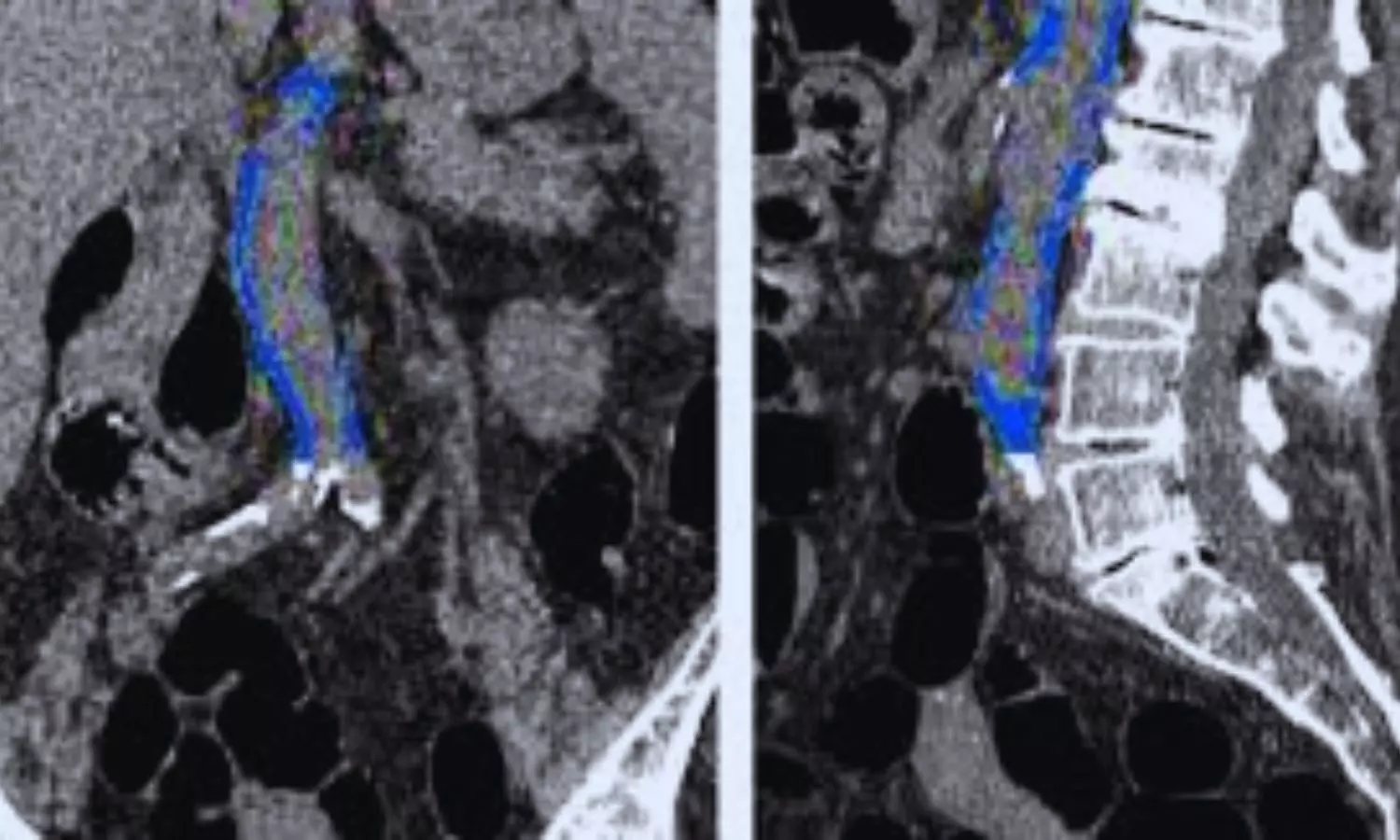


Japan: A study involving 1,395 patients with hip fractures and 1,075 control subjects found that abdominal aortic calcification (AAC) visible on routine lumbar spine X-rays is significantly associated with an increased risk of hip fractures in older adults. Researchers reported that an AAC score of 5 or higher was strongly linked to hip fracture occurrence.
The findings suggest that assessing AAC on commonly performed lumbar spine radiographs may serve as a simple and cost-effective tool to identify elderly individuals at elevated fracture risk, enabling earlier preventive interventions.
Published in Scientific Reports, the study by Yuto Shibata and colleagues from Kumamoto University, Japan, evaluated whether abdominal aortic calcification (AAC) visible on routine lumbar spine X-rays could serve as a marker for hip fracture risk in older adults.
Hip fractures are among the most severe complications of osteoporosis, often resulting in disability, loss of independence, increased need for long-term care, and higher mortality. Yet many patients remain unaware of their fracture risk and are not receiving osteoporosis treatment before a fracture occurs.
For the study, researchers analyzed lateral lumbar spine X-rays from 1,395 patients with hip fractures and 1,075 individuals without hip fractures. AAC was assessed using a semi-quantitative scoring system across the L1-L4 vertebral levels, with total scores ranging from 0 to 24. The average age of participants was 85 years in the hip fracture group and 79 years in the control group.
The study led to the following findings:
- Participants with an abdominal aortic calcification (AAC) score of 5 or higher had a significantly increased risk of hip fracture, with an odds ratio of 1.47.
- The risk was even greater among individuals with an AAC score of 6 or higher, who had an odds ratio of 1.59 for hip fracture.
- Calcification at the level of the fourth lumbar vertebra (L4) showed the strongest association with hip fracture risk.
- An AAC score of 4 or higher at L4 was linked to a 50% higher likelihood of experiencing a hip fracture.
- The researchers suggested that evaluating AAC at the L4 level alone may be sufficient for routine clinical screening.
- AAC assessment on lumbar spine X-rays took approximately 10 seconds per patient, making it faster than FRAX (about 15.5 seconds) and the K-STOP scoring system (more than four minutes).
- The findings indicate that AAC assessment is a rapid and practical method for identifying older adults at increased risk of hip fracture.
- Notably, 93% of patients who experienced hip fractures were not receiving osteoporosis treatment and were unaware of their fracture risk at the time of injury.
The researchers proposed that identifying AAC during routine lumbar spine imaging for low back pain could help raise awareness of fracture risk and encourage timely preventive interventions, including osteoporosis treatment.
The authors concluded that AAC assessment on standard lumbar spine radiographs is a rapid and practical approach that may help clinicians recognize elderly patients at increased risk of hip fracture and encourage timely osteoporosis management.
Reference:
Shibata, Y., Nakamura, T., Uragami, M., Takata, S., Karasugi, T., Masuda, T., Uehara, Y., Tokunaga, T., Hisanaga, S., Yugami, M., Sugimoto, K., Takata, K., Yoshimura, N., Matsunaga, H., Tanimura, S., Shimada, M., Tateyama, M., Miyamoto, K., Tian, X., . . . Miyamoto, T. (2026). Abdominal aortic calcification is associated with hip fracture in the elderly. Scientific Reports. https://doi.org/10.1038/s41598-026-53150-x

Next Story