
Artificial intelligence predicts success of hip operations, finds research
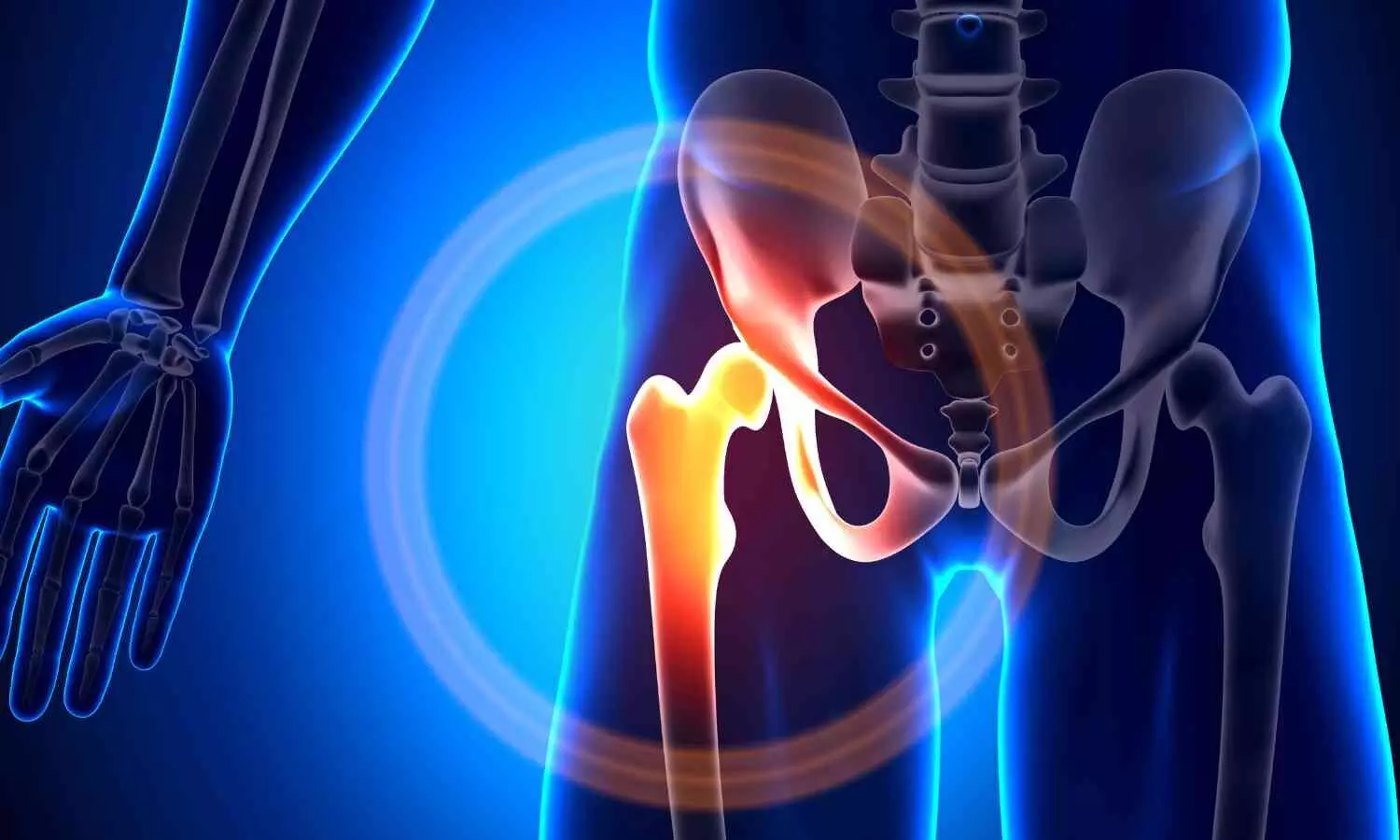


In 2024, approximately 200,000 people in Germany received artificial hip joints, making this operation one of the most common orthopedic procedures in German hospitals. In most cases, such operations are performed to treat hip osteoarthritis, which is the result of wear on the cartilage surfaces of the femoral (thigh bone) head and the hip socket. In terms of mobility and freedom from pain, patients react differently to total hip replacement.
Understanding these differences is the goal of a joint project involving the traumatology and orthopedic clinic (Klinik für Unfallchirurgie und Orthopädie) at Universitätsmedizin Frankfurt and the Institute of Sports and Sports Science (IfSS) at KIT; the project (Improving surgical treatment outcomes in Hip Osteoarthritis based on Biomechanical and BIomarker Discoveries (HOBBID)) is sponsored by the German Research Foundation.
The KIT researchers used gait biomechanics data obtained before and after operations on patients with hip osteoarthritis to develop an AI model for analyzing the patients’ movement patterns. The data were obtained and processed by Universitätsmedizin Frankfurt, which provided them to KIT for AI-based analysis.
Making Highly Complex Biomechanical Data Usable in Applications
“The biomechanical data that describe movement in biological systems with methods from mechanics, anatomy, and physiology are extremely complex,” said Dr. Bernd J. Stetter, who heads a musculoskeletal health and technology research group at the IfSS and is the study’s corresponding author. “With our AI model, we’re making the data available for applications. This is a step toward personalized treatment.” According to Stetter, the model is trained for and focused on the use of artificial hip joints but could conceivably be used for other joints and diseases in the future. Such an AI model could aid physicians in their decision-making, convey realistic expectations to patients, and enable personalized postoperative rehabilitation.
Various Gait Change Patterns Identified
For the study, the researchers analyzed the gait biomechanics of 109 patients with unilateral hip osteoarthritis before total hip replacement; 63 of these patients were re-evaluated after the operation while 56 healthy individuals served as a control group. For all participants, three-dimensional joint angle and joint loading data were obtained from musculoskeletal modeling. The AI-based analysis revealed that individuals with hip osteoarthritis could be assigned to three groups with different gait change patterns. Certain biomechanical gait parameters, such as hip angles and loads, were shown to be particularly useful in determining which group an individual belonged to. The three groups also differed in age, height, weight, walking speed and the severity of their osteoarthritis.
The three groups responded to the operation differently. For some patients, the improvement in gait biomechanics with the artificial hip joint was significant; for others it was less so. In other words, some individuals were able to walk almost normally afterward while others continued to show clear deviations from the control group. “Our model makes it possible to predict who will benefit especially well from an operation and who will need additional intensive therapy afterward,” Stetter said. “Since the algorithms are explainable and transparent, we expect the model to enjoy a high level of clinical acceptance.”
Reference:
Stetter, B.J., Dully, J., Stief, F. et al. Explainable machine learning for orthopedic decision-making: predicting functional outcomes of total hip replacement from gait biomechanics. Arthritis Res Ther 27, 229 (2025). https://doi.org/10.1186/s13075-025-03709-2
