
Biopsychosocial Self-Management and Spinal Manipulation Effective in Acute or Subacute Low Back Pain: Study
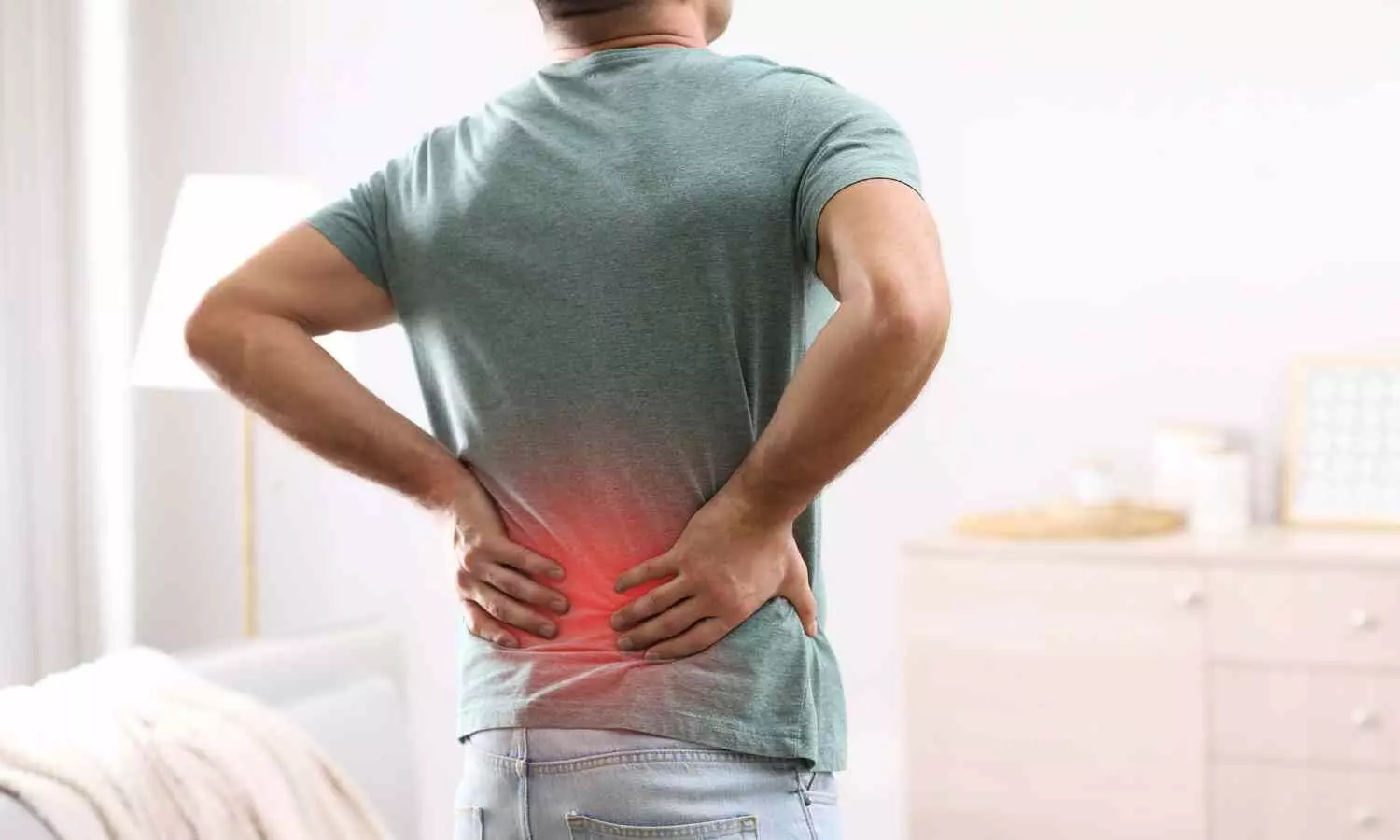


USA: Researchers have found in a new study that in adults with acute and subacute low back pain, a biopsychosocial-oriented supported self-management approach led to a statistically significant but small reduction in disability, without improvement in pain. Spinal manipulation showed no advantage over standard medical care, and adding spinal manipulation to supported self-management did not provide any additional benefit.
These findings come from the PACBACK randomized clinical trial, published in JAMA by Gert Bronfort of the Integrative Health and Wellbeing Research Program at the Earl E. Bakken Center for Spirituality & Healing, University of Minnesota, Minneapolis, and colleagues. The trial examined whether treatments that address physical, psychological, and social dimensions of low back pain offer added value over guideline-based medical care in patients at increased risk of developing chronic disability.
Low back pain is a leading cause of disability worldwide and is increasingly recognized as a condition influenced by intertwined biological, psychological, and social factors. Despite this, most routine treatments remain focused on symptom relief rather than broader self-management strategies. The PACBACK trial was designed to evaluate whether clinician-supported biopsychosocial self-management, spinal manipulation, or a combination of both could improve outcomes in adults with acute or subacute low back pain who were at moderate to high risk of chronicity.
The 2×2 factorial randomized trial enrolled participants across three research clinics at the Universities of Minnesota and Pittsburgh between November 2018 and May 2023. A total of 1,000 adults with acute or subacute low back pain were randomized to one of four groups: spinal manipulation therapy, clinician-supported self-management, a combination of both approaches, or guideline-based medical care. Interventions were delivered over a period of up to eight weeks by physical therapists and chiropractors, with outcomes assessed over a one-year follow-up.
Participants had a mean age of 47 years, and 58% were women. Trial completion was high, with 93% of participants completing follow-up. The primary outcomes were disability related to low back pain, measured monthly using the Roland–Morris Disability Questionnaire, and pain intensity, measured weekly using a numerical rating scale.
The study led to the following findings:
- Over the 12-month follow-up, significant differences between treatment groups were observed for disability outcomes, but not for pain intensity.
- Clinician-supported self-management alone was associated with a small but meaningful reduction in disability compared with guideline-based medical care.
- Supported self-management combined with spinal manipulation also resulted in reduced disability relative to medical care.
- Spinal manipulation alone did not significantly reduce disability when compared with standard medical care.
- None of the interventions showed a statistically significant advantage in reducing pain intensity.
- A higher proportion of patients receiving supported self-management, with or without spinal manipulation, achieved a 50% or greater reduction in disability compared with those receiving medical care alone.
- Adding spinal manipulation to supported self-management did not provide additional benefit beyond self-management alone.
The authors concluded that for patients with acute or subacute low back pain at increased risk of chronic disability, clinician-supported biopsychosocial self-management offers modest improvements in function but does not reduce pain. Spinal manipulation alone provided no clear benefit, highlighting the importance of self-management–focused strategies rather than symptom-driven interventions alone.
Reference:
Bronfort G, Meier EN, Leininger B, et al. Spinal Manipulation and Clinician-Supported Biopsychosocial Self-Management for Acute Back Pain: The PACBACK Randomized Clinical Trial. JAMA. Published online December 29, 2025. doi:10.1001/jama.2025.21990

Next Story